Primary source Grifols: Grifols breaks ground on new manufacturing site in Spain
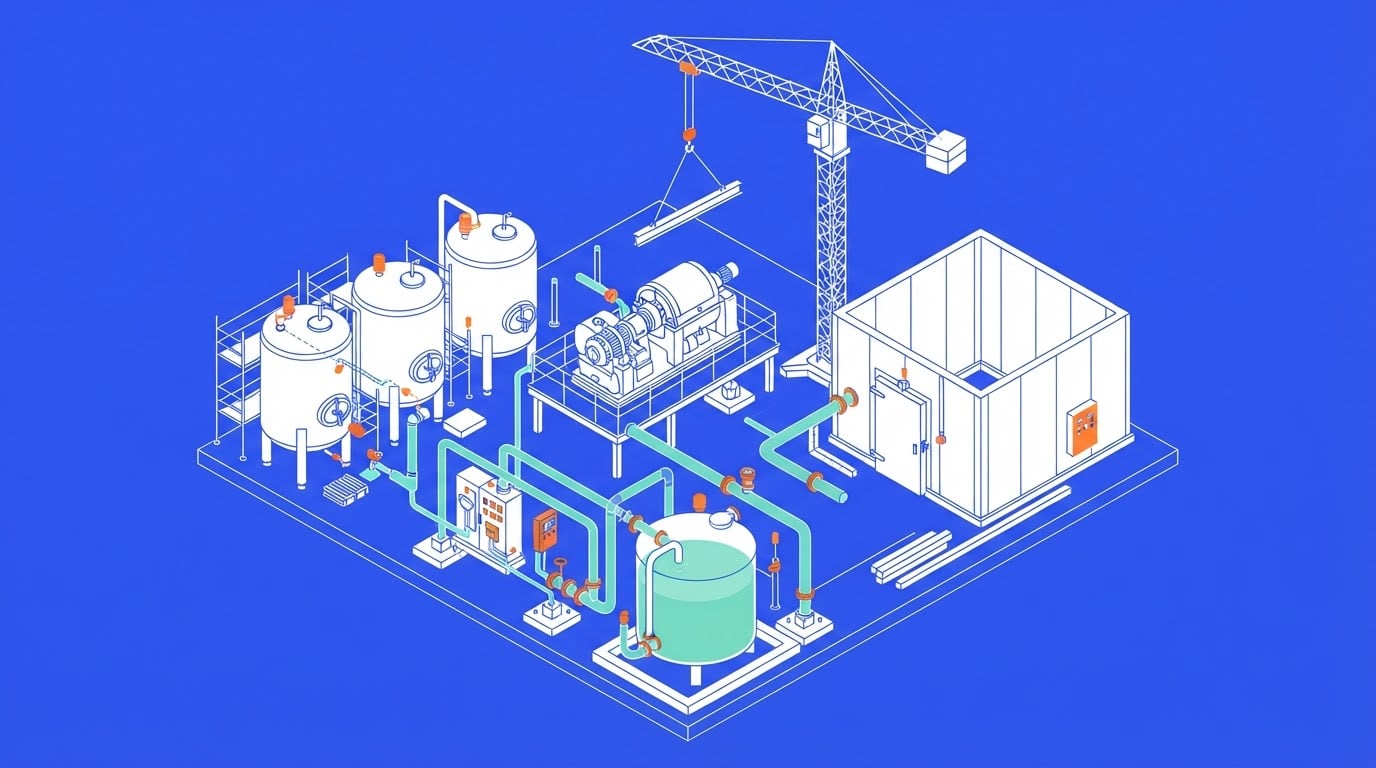
On 3 June 2026, Grifols broke ground on a new plant in Lliçà de Vall (Barcelona). The initial phase is an investment of EUR 160 million and, once completed, will increase Grifols' plasma fractionation capacity in Europe by three million litres a year. Operations are expected to begin in 2030.
What will be on the site
- A plasma fractionation plant, logistics operations, a testing laboratory and warehouses.
- A new space for Grifols Engineering, which will design and build the expansion.
- Together with the existing Parets del Vallès complex, a 25-hectare hub with more than 3,700 employees, including 400 new jobs.
Products named in the release are immunoglobulins and other plasma-derived medicines. The Government of Catalonia has designated the expansion a strategic project, and the ceremony was attended by the President of the Government of Spain, Pedro Sánchez.
Utilities and digital design
Grifols describes the plant as a highly digitalised smart factory that will use data systems to optimise production and reduce energy and water use. The company expects it to run on 100% renewable electricity and is exploring a biogas facility able to supply up to 30% of its natural gas needs, building on an anaerobic treatment plant at Parets del Vallès that it says has cut organic pollutant load by 85%. Its targets for the campus are 15% better energy efficiency, 60% lower emissions and about 20% water savings. The release does not state the baseline these percentages are measured against.
The release also does not give Grifols' current fractionation capacity in Europe, the size of later phases or the total cost beyond the initial EUR 160 million.
What it means for a plant
Plasma fractionation is sized in litres of plasma processed per year, not in bioreactor volume, and three million litres a year is the figure to track for this site from 2030. For engineers in the region, the project is a large, multi-year design and construction job designed and built by Grifols Engineering, with utilities (renewable power, a biogas supply under study, water savings) included in the stated design targets.