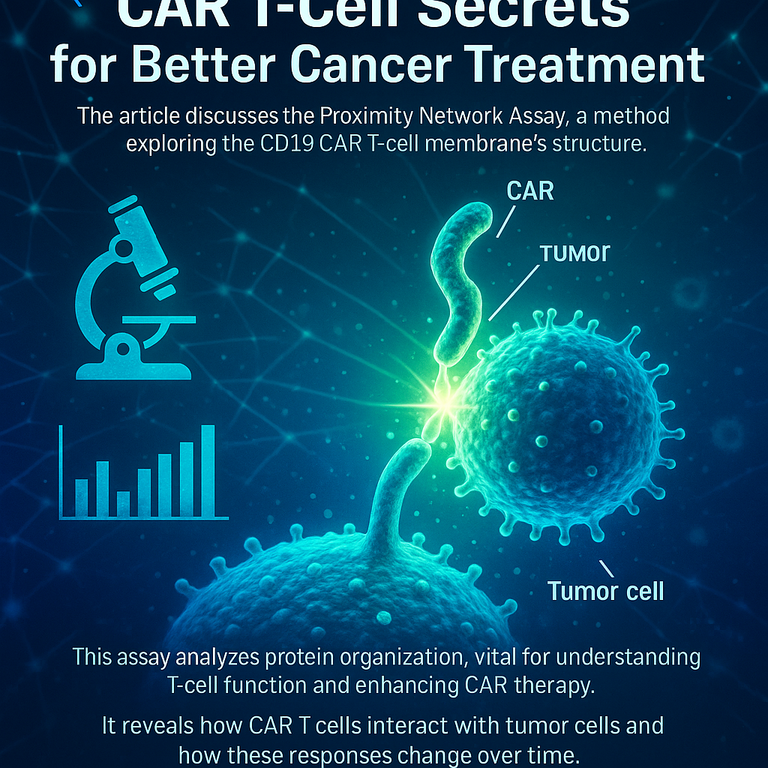
🔬 This assay analyzes protein organization, vital for understanding T-cell function and enhancing CAR therapy.
📊 It reveals how CAR T cells interact with tumor cells and how these responses change over time.
✨ Insights could lead to improved cancer treatment.
Introduction:
The article “Dissecting the CAR T-Cell Membrane Using the Proximity Network Assay” discusses advancements in understanding the molecular mechanisms regulating CAR T-cell therapy, particularly in the context of tumor engagement. Through the use of Pixelgen’s Proximity Network Assay, researchers aim to elucidate the complex spatial organization of membrane proteins that informs T-cell activation and function.
- CAR T-cell therapy has shown promise in treating hematologic cancers but faces challenges such as antigen loss and T-cell dysfunction.
- The spatial arrangement of membrane proteins on T cells is critical for effective signaling and activation when engaging with tumor cells.
- The Proximity Network Assay provides a sequencing-based method to examine protein organization and interactions at a single-cell resolution.
- In the study, CD19-targeting CAR T cells were analyzed to understand protein localizations and dynamics, revealing significant interactions with signaling and adhesion molecules.
- Observations indicate that CAR T cells undergo substantial membrane remodeling and dynamic changes in protein expression in response to tumor cell interactions.
Conclusion:
The findings from the study highlight the importance of membrane architecture in CAR T-cell function and adaptability during tumor engagement. By employing the Proximity Network Assay, researchers can gain critical insights into the regulatory mechanisms governing CAR T-cell activity, which may inform strategies to optimize their therapeutic application. Further exploration into membrane dynamics could lead to improved efficacy and longevity of CAR T-cell therapies in clinical cancer treatment.