Primary source bioRxiv: Scalable generation of human stem cell-derived ureteric bud and collecting duct organoids in stirred bioreactors

A team from Cornell University, Harvard University and Utrecht University has posted a bioRxiv preprint reporting a method to generate human kidney ureteric bud and collecting duct organoids in stirred tank bioreactors, compared against static, matrix-embedded controls. The organoids are derived from human induced pluripotent stem cells (hiPSCs).
Microcarriers in suspension culture
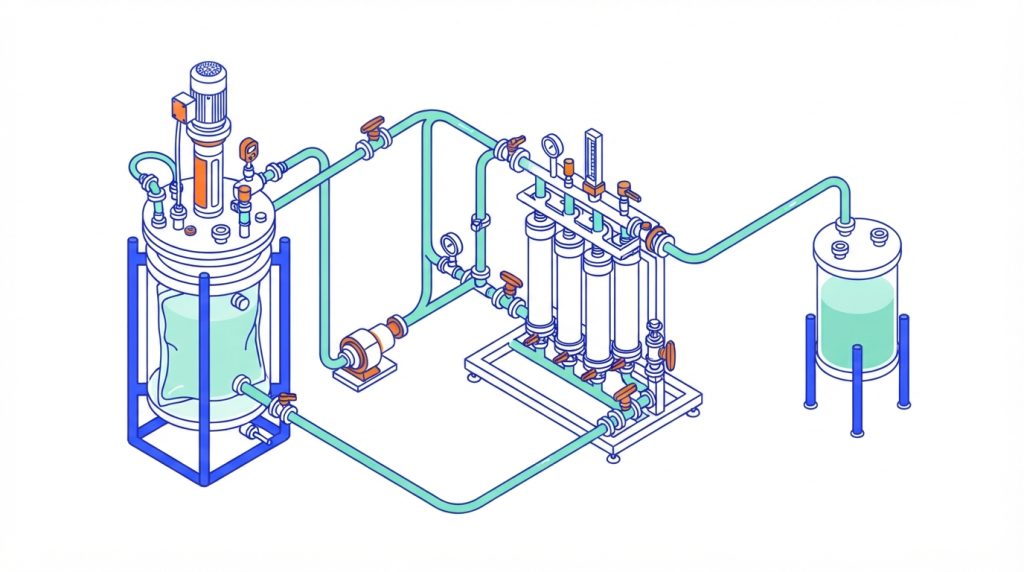
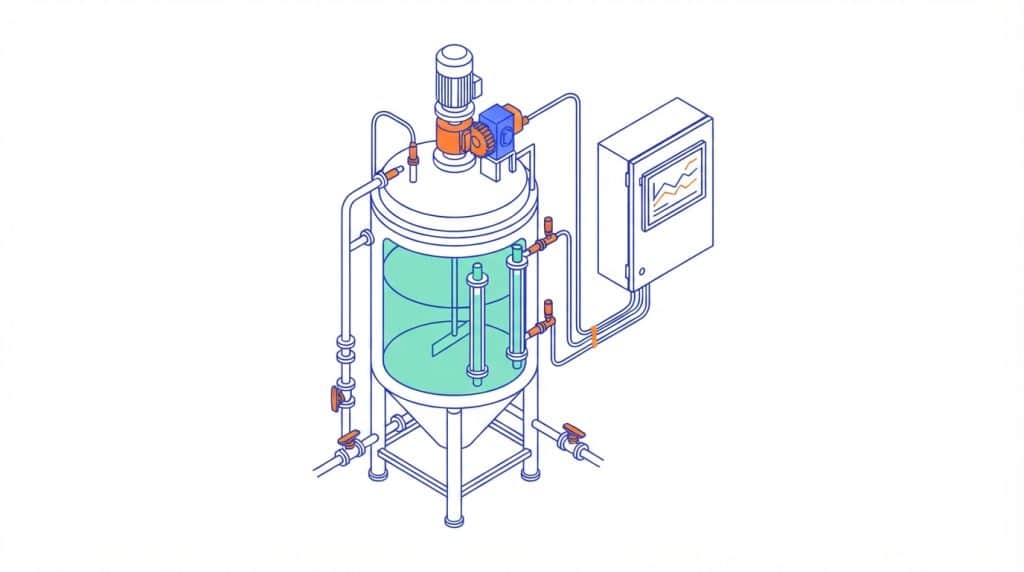
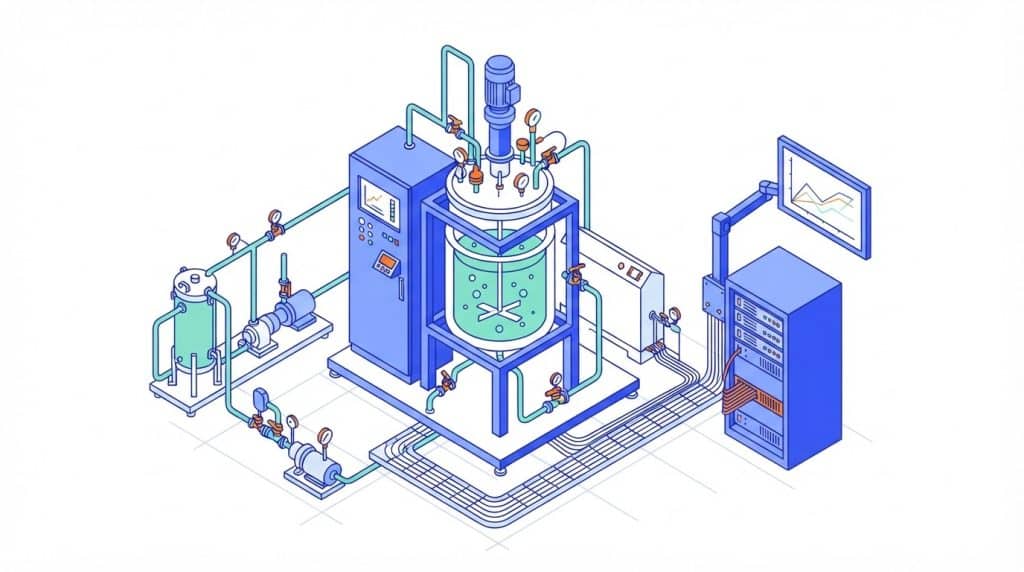
The authors report that extracellular matrix (ECM) microcarriers facilitate organoid expansion and are compatible with suspension bioreactor methods. According to the preprint, combining cell-coated ECM microcarriers with stirred bioreactors “promotes maturation marker expression” relative to static controls made of matrix-embedded organoids. The abstract frames the goal as generating epithelial organoids that serve as multicellular models and organ building blocks for scalable biofabrication.
What the preprint does not say
This piece is based on the abstract and metadata page; the full text was not reviewed. The manuscript has not been certified by peer review. The abstract does not give bioreactor working volumes, agitation rates, seeding densities or fold-expansion numbers, so this piece cannot state how far the suspension format has been scaled.
Commercial and funding context
The competing interest statement discloses that Trestle Biotherapeutics, Inc. has licensed patents related to kidney tissue engineering from Harvard University, and that corresponding author Jennifer A. Lewis sits on the company’s scientific advisory board, together with those of Roche Institute for Human Biology and Cell Biomaterials. Several of the authors are co-inventors on a patent application (PCT/US2025/044423). The work was funded by the NIH Common Fund (grants UC2DK126023 and DK131821), the Office of Naval Research (N00014-21-1-2958) and the Dutch Research Council (019.201EN.005).
What it means for a plant
For teams evaluating organoid or tissue-building-block manufacturing, the result is a process signal rather than a production number: for this kidney epithelial organoid type, a microcarrier-based format in stirred bioreactors is reported to give higher maturation marker expression than static, matrix-embedded controls. Process design decisions on vessel scale, agitation and harvest still depend on data the abstract does not disclose.