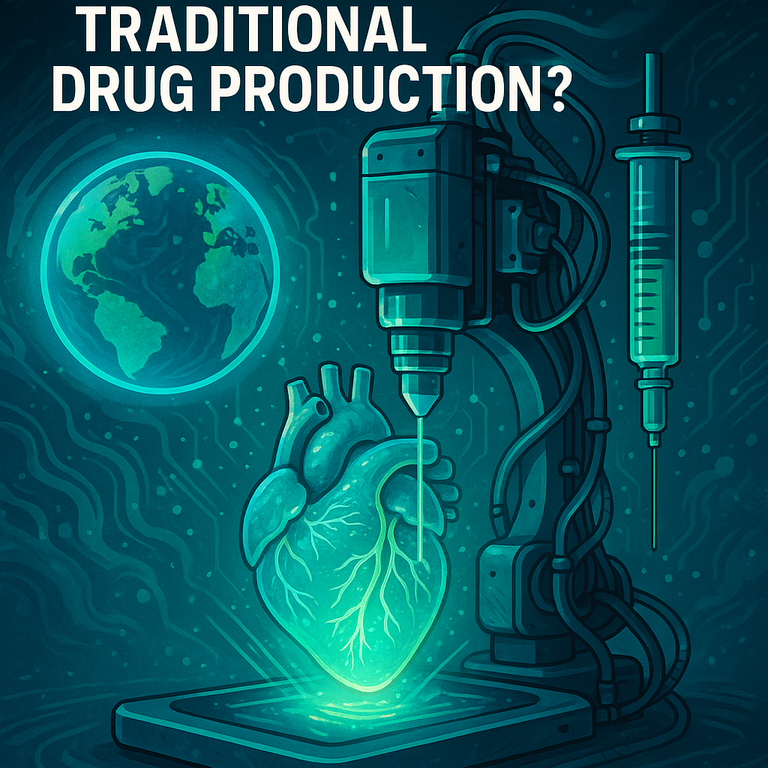
💉 Bioprinting may enable creating organs, like hearts, for transplants. Researchers have developed new techniques for creating organ-like tissues.
✅ Their method ensures high cell survival rates and can adapt for various medical applications.
🔮 The future might see bioprinted organs replacing biopharmaceutical treatments!
Introduction:
The article discusses the potential integration of bioprinting technology within the realm of bioprocessing, a field traditionally associated with the production of biologically-based drugs. It explores how bioprinting could revolutionize the approach to organ treatment and regeneration, aligning with advances in tissue engineering and custom biological applications.
- Bioprocessing is broadly defined as a method using living cells or their components to create desired products, extending beyond just drug production.
- Bioprinting may act as a transformative method for producing organ-like tissues, potentially enabling the creation of implantable organs.
- Researchers have developed new protocols for bioprinting that maintain cell viability and improve the quality of printed tissues, allowing for complex structures.
- The bioprinting method significantly enhances cell survival rates and can be tailored for various applications, including drug testing, disease modeling, and regenerative medicine.
- While bioprinting is not expected to replace biopharmaceutical manufacturing soon, it presents a future where bioprinted organs could be used for transplants.
Conclusion:
In summary, the article emphasizes the promising future of bioprinting within bioprocessing, highlighting recent advancements that enhance tissue creation and potential organ replacement therapies. As this technology develops, it could significantly shift paradigms in organ treatment and regenerative medicine, fostering a new landscape in healthcare.