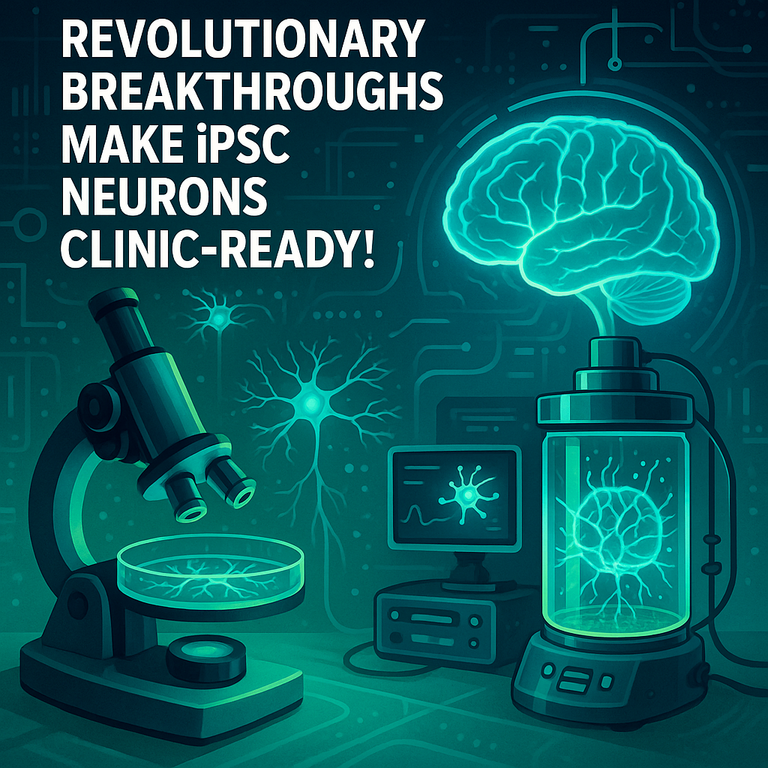
🔬 These neurons hold potential for neurodegenerative disease research and therapies.
⚙️ New methods improve neuron production speed and consistency, crucial for clinical applications.
🚀 Automation and real-time monitoring enhance scalability, while strategies like 3D cultures promote adult-like characteristics.
💡 The future of regenerative therapy now hinges on engineering breakthroughs.
Introduction:
The article discusses advancements in bioprocessing techniques that are making it increasingly feasible to manufacture human neurons from induced pluripotent stem cells (iPSCs) for applications in neuroscience, drug discovery, and regenerative medicine. Authored by Satoru Morimoto and colleagues, the review outlines current progress, engineering challenges, and future directions in the field.
- Efficient production of iPSC-derived neurons is essential for advancing research and therapies related to neurodegenerative diseases.
- Innovations in bioprocessing, including small-molecule cocktails and transcription-factor programming, are pivotal for enhancing neuronal differentiation speed and scalability.
- Standardized validation methods, such as electrophysiology and transcriptomic profiling, are necessary to ensure the quality and maturity of produced neurons.
- Emerging technologies like automated robotic platforms and biosensors are addressing challenges related to scalability and real-time quality monitoring in neuron production.
- Recent advancements are enabling iPSC-derived neurons to better mimic adult physiology, thus improving their suitability for studying adult-onset neurological diseases.
Conclusion:
With the continuous evolution of bioprocessing technologies, the transition from laboratory-scale neuron production to practical clinical applications is becoming more attainable. The review emphasizes that the synergy between engineering advancements and biological research is crucial for the successful implementation of iPSC-based therapies in treating neurodegenerative diseases.