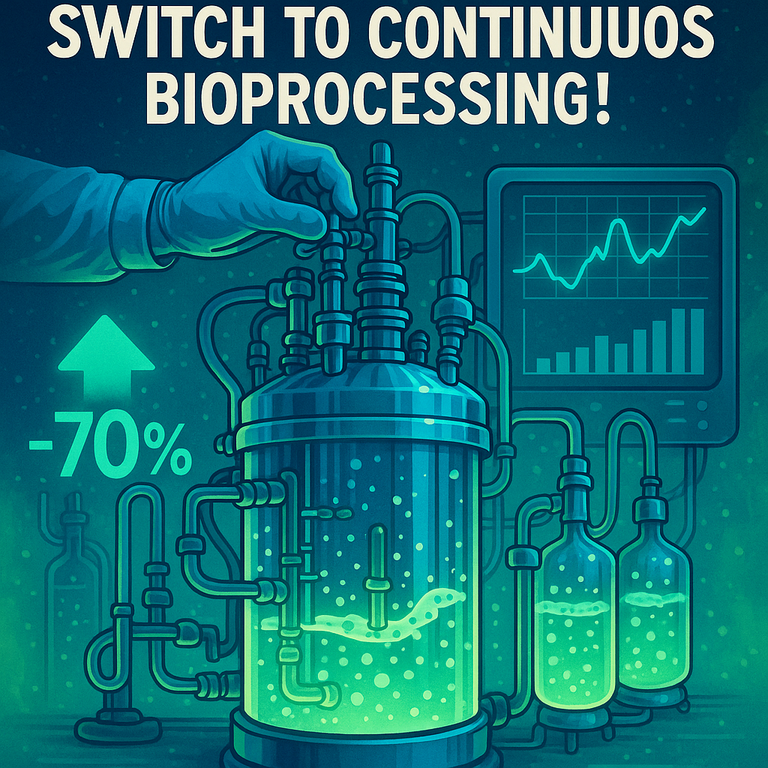
🚀 Niazi highlights quantitative benefits like a 70% reduction in equipment size, 3-5 times higher productivity, and improved quality.
🛠️ Continuous processes require sophisticated control systems for real-time monitoring.
📊 Despite complexities, the advantages make this shift nearly mandatory for bioprocessing firms.
💰 The economic benefits support taking this step!
Introduction:
This article discusses the transition from batch-based to continuous bioprocessing in the production of recombinant proteins and biosimilars. It highlights a review by Sarfaraz Niazi, which examines the various technical, economic, and regulatory implications of implementing continuous manufacturing systems.
- The transition from batch to continuous processing is complex and requires a sophisticated control strategy that includes real-time monitoring and detection of process deviations.
- Continuous processing streamlines downstream operations, which traditionally rely on discrete steps in batch processing; notable innovations include periodic counter-current chromatography for protein capture.
- Despite the challenges associated with the implementation of continuous methods, the analysis indicates that the benefits outweigh the difficulties, making the transition almost imperative.
- Significant advantages of continuous bioprocessing include a potential reduction in equipment footprint by up to 70% and increases in volumetric productivity of 3 to 5 times compared to batch methods.
- Continuous manufacturing can enhance the consistency of product quality and lead to substantial facility cost reductions ranging from 30% to 50% against traditional batch processes.
Conclusion:
The review underscores the compelling reasons to adopt continuous bioprocessing, presenting it as a necessary evolution in the biopharmaceutical sector. By quantifying the various benefits, it serves as a pivotal reference for industry stakeholders contemplating this transition, emphasizing both its economic and operational advantages.