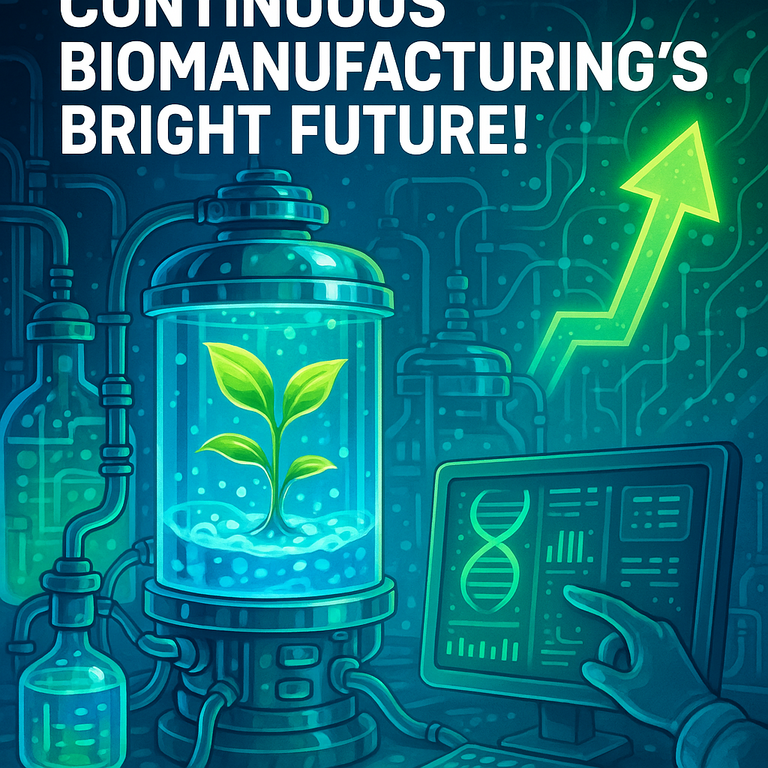
🔍 A recent paper by Dr. Sarfaraz Niazi highlights its efficiency, showing up to 70% smaller equipment needs and significant cost savings.
💡 It offers productivity boosts, real-time monitoring, and is supported by global regulatory frameworks.
🚀 Despite resistance from some big firms, benefits suggest a promising future.
Introduction:
The article discusses the advancements in continuous biomanufacturing, asserting its readiness for a wider application across various commercial sectors. Dr. Sarfaraz Niazi’s comprehensive research underscores the technological, regulatory, and economic benefits associated with this manufacturing process for producing recombinant proteins and biosimilars.
- Continuous biomanufacturing has reached a level of maturity suitable for commercial use across multiple products and geographic regions.
- This approach significantly reduces equipment footprint and increases productivity and cost-efficiency compared to traditional batch processing.
- Implementing continuous manufacturing can lead to substantial savings in facility qualification costs and buffer consumption, enhancing overall product quality and lead time.
- Regulatory bodies, including the US and European Union, have adopted frameworks that support continuous manufacturing, facilitating its implementation worldwide.
- Despite its advantages, large biopharma companies remain hesitant to adopt continuous manufacturing due to substantial investments in existing infrastructure and associated regulatory challenges.
Conclusion:
Continuous biomanufacturing presents a transformative opportunity for the biopharmaceutical industry by enhancing efficiency, reducing costs, and ensuring product quality. However, its widespread adoption may require overcoming significant barriers, including established companies’ reluctance to change. Future developments may rely on cross-functional collaborations and alignment of regulatory practices to address these concerns and maximize the benefits of this innovative manufacturing approach.