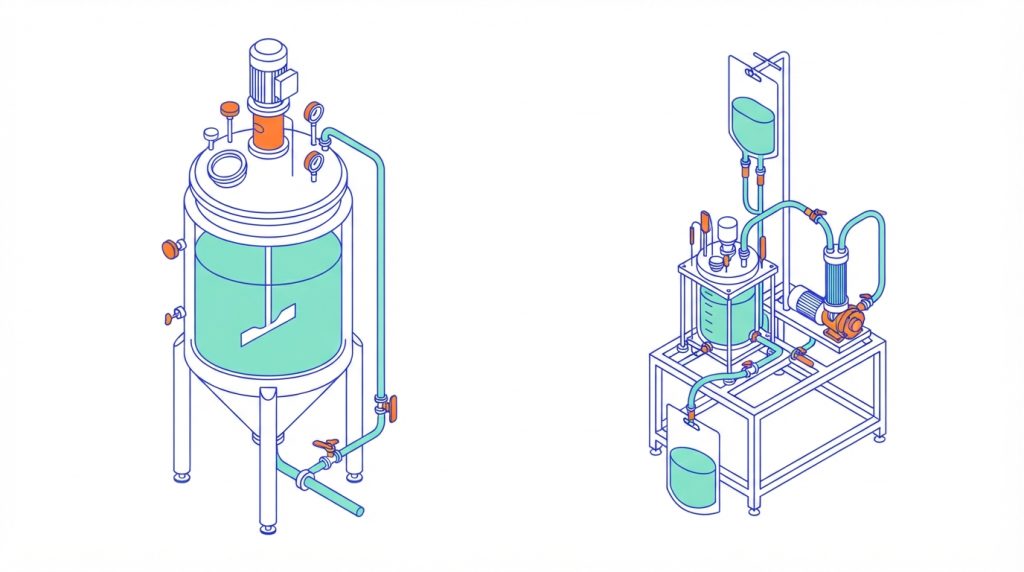
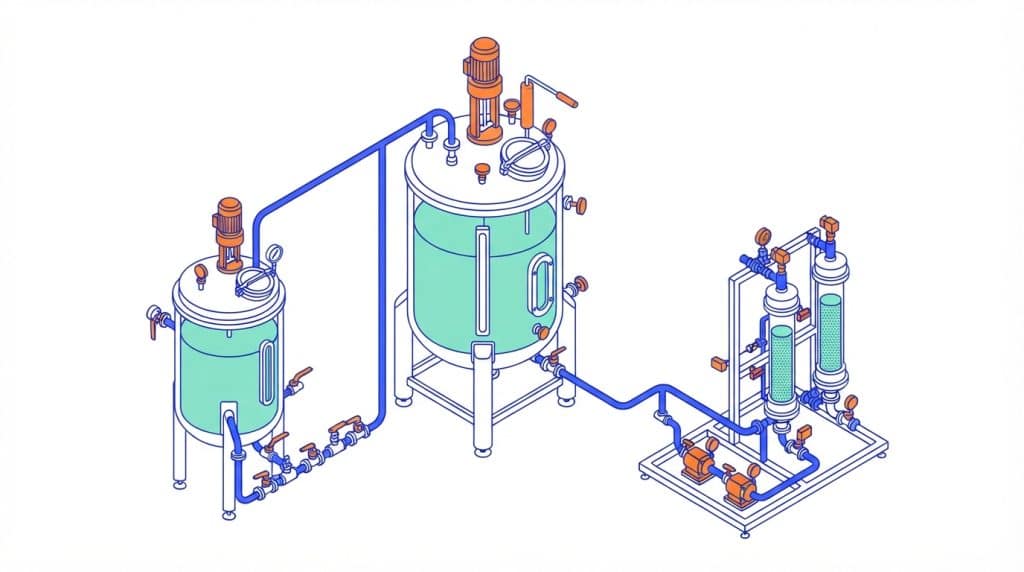
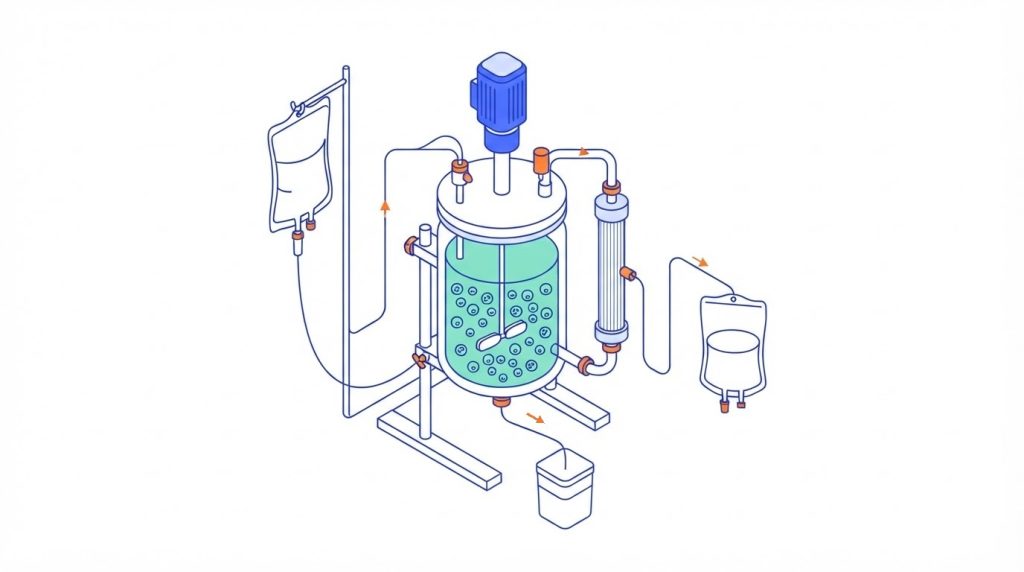
A team at McGill University and the McGill University Health Centre has posted a preprint describing a bioreactor pipeline for pluripotent stem cell-derived pancreatic islet-like clusters (SC-islets) that adds an alginate microencapsulation step to stop the cell clumping that suspension bioreactors can cause during scale-up.
The preprint, posted on bioRxiv on 18 September 2026, has not been peer reviewed. This brief is based on the preprint abstract.
The scale-up problem
The authors note that “SC-islet can be cultured in suspension using stirred tank or vertical wheel bioreactors, but these can impart hydrodynamic damage and lead to cellular agglomeration, particularly upon scale-up.”
Encapsulation as a unit operation
The group had previously described “a robust emulsion-based process to encapsulate murine pancreatic beta cells in high-concentration alginate beads which improved graft survival in allogeneic recipients.” In this study they apply an emulsion-generated, high-concentration alginate bead process to Stage 6 SC-islets before returning them to suspension culture, testing the hypothesis that “encapsulation would prevent cellular agglomeration, reduce mechanical stress, and preserve differentiation potential during scale-up.”
Results in the bioreactor
Over an extended 25-day suspension culture, encapsulation “prevented cellular agglomeration during extended suspension culture (25 days) and increased cell recovery (91 ± 3%) compared with non-encapsulated aggregates (60 ± 10%).” The authors also report “no significant differences in glucose-stimulated insulin secretion were observed with vs without microencapsulation,” so on that readout the preprint reports no significant difference with the added alginate step.
The preprint also reports transplantation experiments with Stage 7 SC-islets matured in the bioreactor. This brief does not cover in vivo outcomes. The authors describe the overall pipeline as a “scalable, robust, transplantation-ready encapsulation platform.”
What it means for a plant
The authors state that stirred tank and vertical wheel bioreactors can impart hydrodynamic damage and lead to agglomeration, particularly upon scale-up. In this study, emulsion-based alginate microencapsulation prevented agglomeration over 25 days of extended suspension culture, with higher cell recovery than non-encapsulated aggregates. For a plant running SC-islet or comparable organoid processes, the result argues for evaluating encapsulation as a scale-up tool rather than only a delivery format. The abstract does not state culture volumes, so a plant would still need to validate the step at its own process scale.