
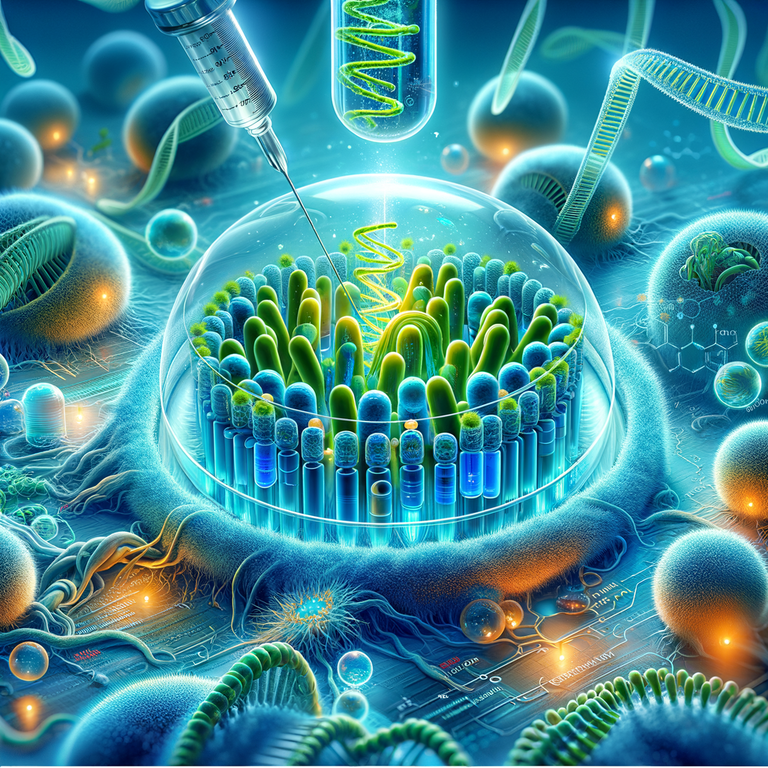
🔍 The study found that using the *tef1* promoter enables multiple gene copies to integrate, boosting protein output.
💡 Findings suggest using this method could significantly benefit biopharmaceutical production and other industries.
📊 The approach may lead to more efficient industrial-scale protein synthesis.
Introduction:
This article discusses a recent advancement by researchers at the French Institute of Petroleum (IFP Energies Nouvelles) in enhancing protein production capabilities using the filamentous fungus Trichoderma reesei. The study addresses the molecular underpinnings of multicopy gene integration to improve the expression of heterologous proteins, focusing on the application of a specific promoter in gene expression.
- Trichoderma reesei is recognized for its ability to secrete high levels of proteins, making it a valuable platform for expressing heterologous genes.
- Researchers integrated a circular plasmid containing the eGFP transgene under the control of the tef1 promoter, which was shown to favor multicopy integration and enhance protein production.
- Prior studies linked high levels of eGFP expression to the presence of the tef1 promoter and its compatibility with flow cytometry techniques.
- The current study identified optimal transgene integration sites, determining that the most productive strains had 5 to 11 copies of the expression cassette located upstream of the tef1 locus.
- The findings suggest that the use of the tef1 promoter may significantly facilitate multicopy insertions beneficial for industrial-scale production of heterologous proteins.
Conclusion:
The research highlights the potential for using the tef1 promoter in the multicopy integration of transgenes to boost heterologous protein expression within Trichoderma reesei. This advancement not only broadens the scope of protein production applications but also paves the way for enhanced processes in biopharmaceutical development and other industrial sectors.