
📅 June 21, 2024.
This article discusses how automation can help overcome the challenges faced in mRNA manufacturing. 💪
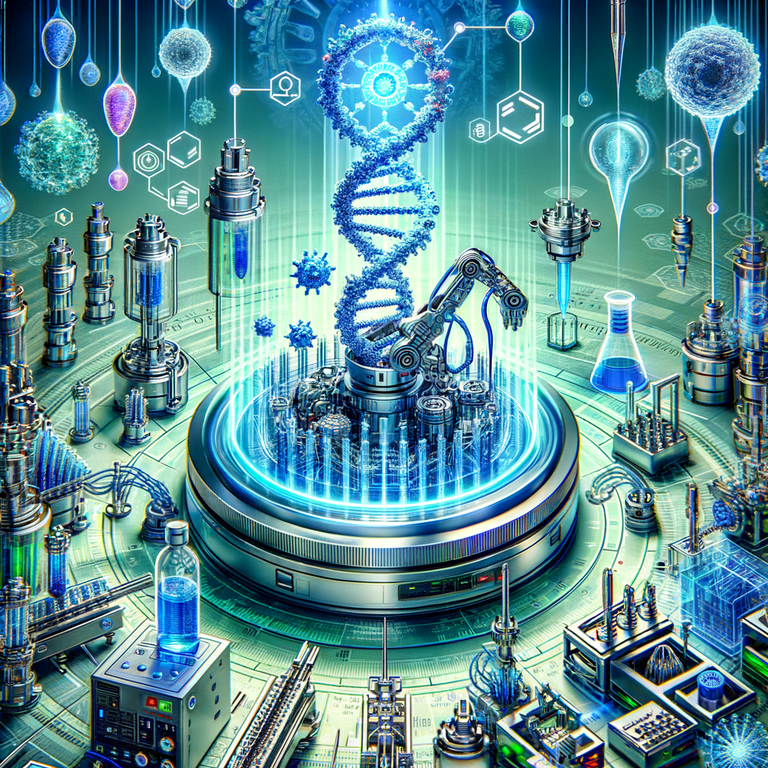
Automation can improve production efficiency, reduce manual errors, and increase scalability in mRNA manufacturing. 🤖
It can automate critical processes such as mRNA synthesis, purification, and formulation, leading to faster production and faster response to outbreaks. ⚡️🌍
Automation also improves data management, traceability, and regulatory compliance in mRNA manufacturing. 🔐
Overall, automation plays a crucial role in addressing the challenges and expanding the capabilities of mRNA manufacturing. 🏭✨
Introduction:
This article discusses the challenges faced in mRNA manufacturing and how automation can address these challenges. mRNA (messenger RNA) has emerged as a promising tool for gene therapy and vaccine development. However, the production of mRNA is complex and time-consuming, requiring several steps and high levels of accuracy. This article highlights the main challenges in mRNA manufacturing and explores how automation can improve efficiency and quality control.
- Complexity and time-consuming nature of mRNA manufacturing: The production of mRNA involves several steps, including DNA synthesis, transcription, purification, and quality control. Each step requires careful handling and monitoring, making the process labor-intensive and time-consuming.
- Challenges in maintaining quality control: Ensuring the quality and consistency of mRNA products is crucial for their safety and efficacy. However, manual processing and human error can lead to variations in product quality. Automation can help in maintaining consistent quality control by minimizing human intervention and reducing errors.
- Scalability issues: The demand for mRNA-based therapies and vaccines is increasing rapidly. However, traditional manufacturing methods may not be able to meet this demand due to their limited scalability. Automation allows for the rapid and efficient production of mRNA, making it easier to scale up manufacturing processes.
- Benefits of automation in mRNA manufacturing: Automation can improve efficiency, reduce production time, and increase output in mRNA manufacturing. It offers precise control over process parameters, minimizing variability and ensuring product consistency. Automation also enables real-time monitoring and data collection, facilitating quality control and process optimization.
- Future directions and implications: The use of automation in mRNA manufacturing is expected to revolutionize the field, making mRNA-based therapies more accessible and cost-effective. Advances in automation technologies, such as robotics and machine learning, will further enhance the efficiency and scalability of mRNA manufacturing.
Conclusion:
Addressing the challenges in mRNA manufacturing is essential for the widespread adoption of mRNA-based therapies and vaccines. Automation offers a solution to these challenges by improving efficiency, scalability, and quality control in the manufacturing process. By leveraging automation technologies, researchers and manufacturers can accelerate the development and production of mRNA products, paving the way for more effective and accessible treatments.