Researchers at Tosoh Bioscience (King of Prussia, USA, and Griesheim, Germany) and Tosoh Corporation (Shunan, Japan) report a single-step chromatography method for a synthetic oligonucleotide. The paper appeared in the November 2026 issue of the Journal of Separation Science (volume 49, issue 11) and is peer reviewed. We could open only the abstract, so this brief is limited to what it states.
What was done
The abstract says therapeutic oligonucleotides are most often purified by ion pair-reversed phase (IP-RP) and anion-exchange (AEX) chromatography. The authors instead use hydrophobic interaction chromatography (HIC), which separates molecules by how strongly they bind through hydrophobic surface contact. The test molecule was a 5′-dimethoxytrityl (5′-DMT)-protected, 20-mer single-stranded DNA oligonucleotide. A 20-mer is a chain of 20 nucleotides, and the DMT group is a protective cap on one end of the chain.
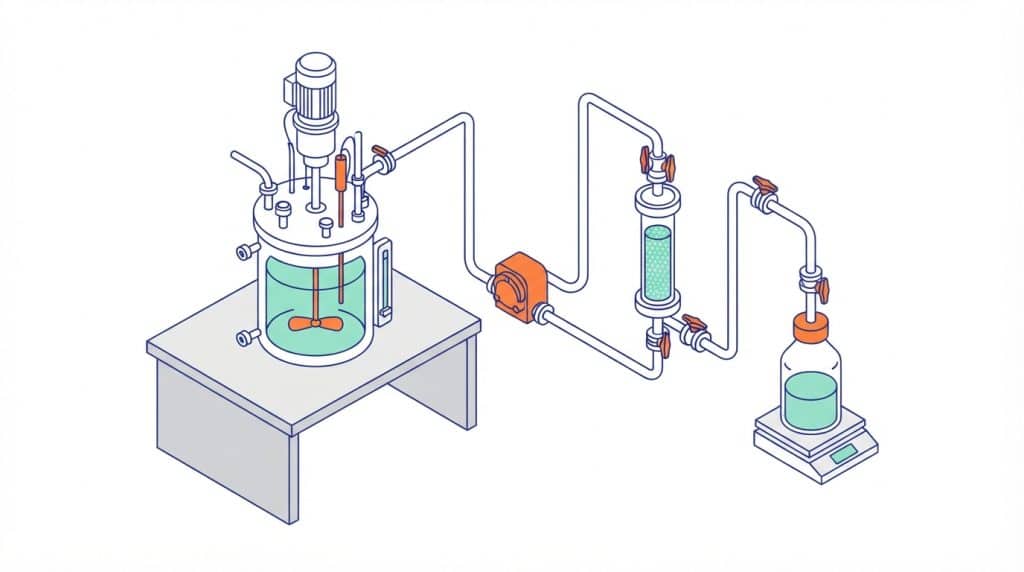
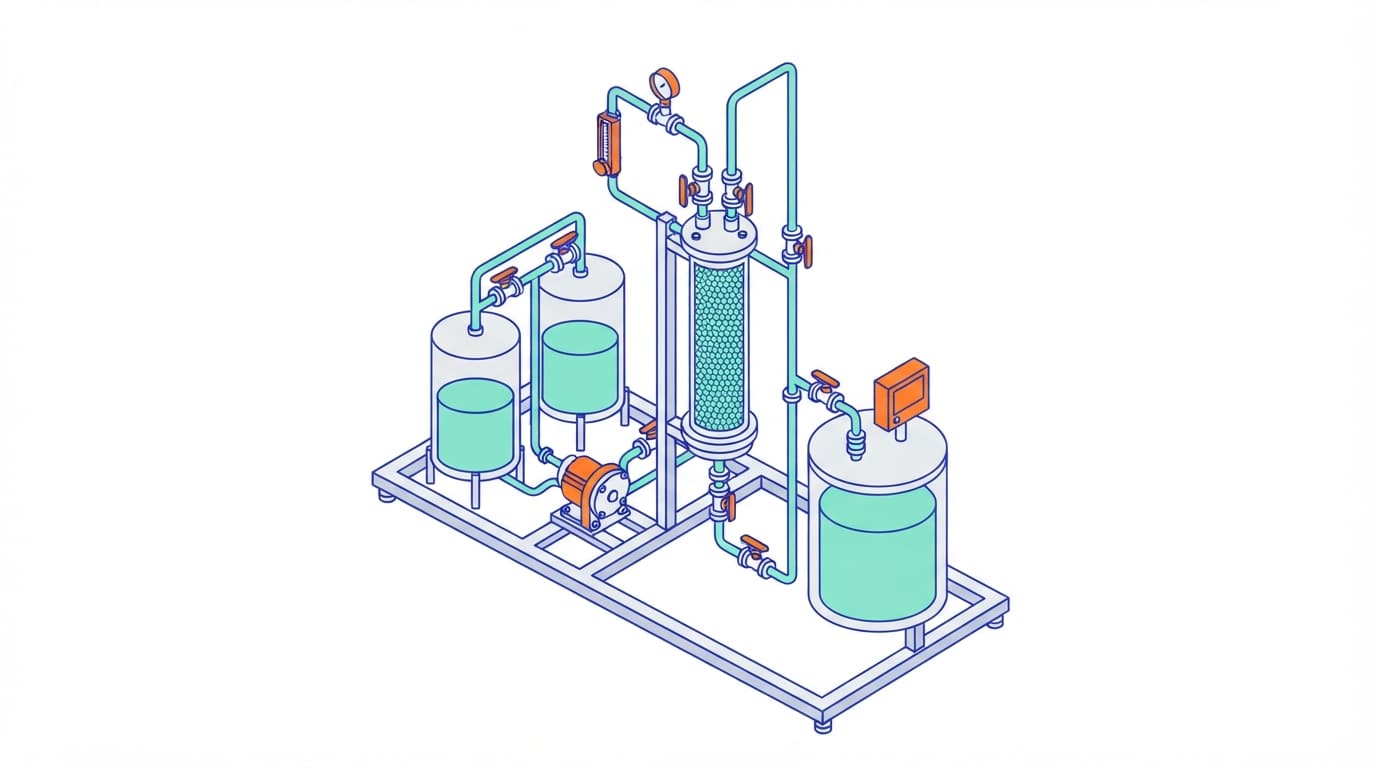
The HIC process includes an optimized on-column detritylation step at pH 4.0. Detritylation means removing the DMT cap, and here it happens on the column, removing the cap from the purified oligonucleotide within the same single chromatography step.
Reported results
- Analytical RP and AEX chromatography confirmed 99.6% removal of the 5′-DMT cap from the oligonucleotide.
- Recovery of the oligonucleotide in the final product was 96.9%.
- The method eliminated the majority of impurities shorter than 20 nucleotides. These were present as deprotected (uncapped) oligonucleotides in the crude starting material.
- An RP chromatographic depurination assay showed that the acidic detritylation did not cause detrimental loss of adenine or guanine purine bases. Depurination is the loss of these bases from the DNA chain under acid.
The abstract also describes the HIC process as all-aqueous and environmentally friendly, and says it avoids the flammability risks associated with the reversed phase technique.
What the abstract does not say
The abstract does not give the resin, the salt and buffer conditions, the column scale, the purity of the final product, or the yield of the full process at larger scale. Results are for one 20-mer DNA oligonucleotide, and the abstract does not report other sequences, lengths or modified chemistries. The work was funded by Tosoh Bioscience LLC, and the authors are affiliated with Tosoh.
Sources
- Journal of Separation Science, Dimethoxytrityl-Protected Oligonucleotide Purification With On-Column Detritylation in Hydrophobic Interaction Chromatography, 1 Nov 2026 (abstract read via Europe PMC).