Primary source Cytotechnology: Development of a simplified intensified fed-batch CHO cell culture process based on a commercial single-feed strategy
A paper published in Cytotechnology on 2 November 2026 describes a way to keep a fed-batch CHO process simple while raising productivity. The authors combine one commercial feed medium with a high-density start from an N-1 perfusion culture, using a CHO-K1 cell line that expresses a bispecific antibody. The paper is peer reviewed. We could read only the abstract and figure captions, because the full text is behind a subscription, so this brief is limited to what the abstract states.
What the authors did
The aim was to reduce the operational complexity of conventional dual-feed fed-batch processes (two separate feed streams) while maintaining high productivity. They first evaluated six commercially available single-feed media in shake-flask cultures. The selected medium gave cell growth, metabolic performance, antibody titer and product quality comparable to those of a conventional dual-feed process.
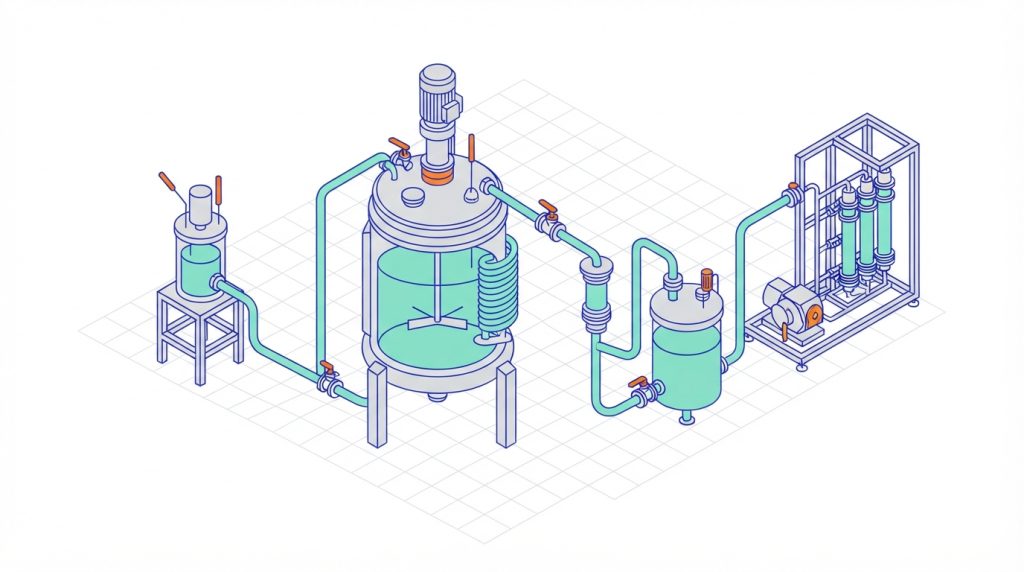
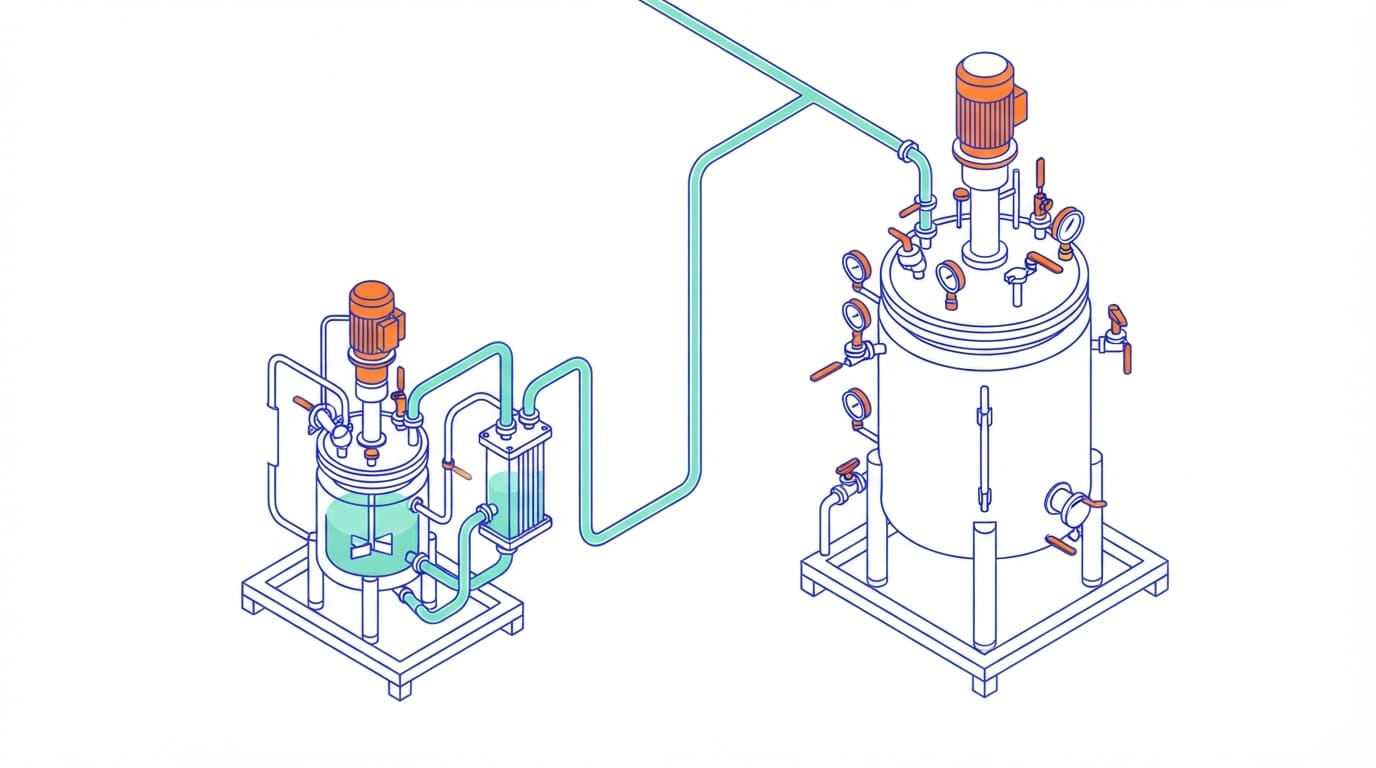
To raise productivity further, they used N-1 perfusion intensification, which let them inoculate 2 L bioreactors at 10 x 106 cells/mL. The abstract reports that these high-density cultures entered the stationary phase earlier while keeping elevated viable cell densities throughout production.
Results
- The single-feed intensified process (IFB-Single) reached a final antibody titer of 9.4 g/L, approximately 24% higher than the conventional fed-batch process (FB) at 7.6 g/L.
- The intensified dual-feed process (IFB-Dual) reached 10.2 g/L, so IFB-Single had the lower titer of the two intensified runs.
- IFB-Single showed lower culture osmolality (the concentration of dissolved solutes in the culture). The authors read this as an opportunity for further feed optimization.
- Monomer content, charge variants and N-glycan profiles remained comparable across all conditions.
The authors conclude that combining single-feed supplementation with high-density inoculation is a practical and scalable strategy for process intensification, simplifying operation without compromising product quality. The abstract reports work in shake flasks and 2 L bioreactors only. It does not state any larger scale.