💊 These ADCs aim to target cancer cells more effectively by using two different cytotoxic agents.
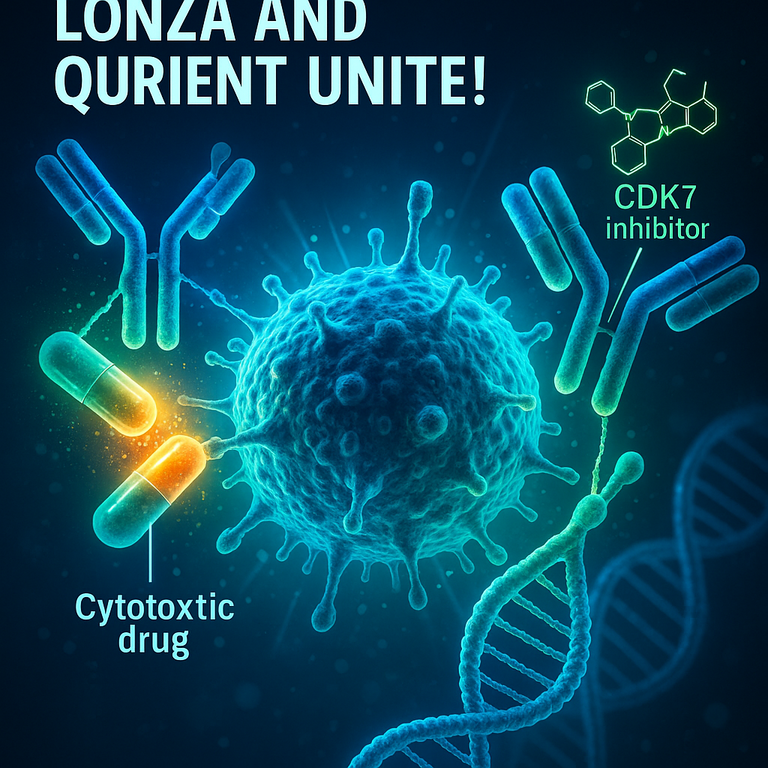
🔬 This collaboration will leverage Synaffix’s technology with Qurient’s CDK7 inhibitor to meet unmet medical needs in treating solid tumors.
🚀 The partnership highlights advancements in targeted cancer therapies.
Introduction:
The article discusses a recent collaboration between Lonza’s Synaffix and South Korea’s Qurient Therapeutics focused on the development of dual-payload antibody-drug conjugates (ADCs). This partnership aims to leverage innovative biopharmaceutical technologies to improve cancer treatment effectiveness while reducing the toxicity associated with traditional therapies.
- Lonza’s Synaffix has entered into a licensing agreement with Qurient Therapeutics to develop a dual-payload ADC.
- Dual-payload ADCs aim to administer two cytotoxic agents with different mechanisms to enhance cancer treatment efficacy and reduce resistance.
- The collaboration will use Synaffix’s exatecan-based technology in conjunction with Qurient’s CDK7 inhibitor to target unmet medical needs in solid tumors.
- Qurient will handle research and development, while Lonza is responsible for manufacturing components related to its proprietary technology.
- Both companies express optimism regarding the potential of dual-payload ADCs to broaden therapeutic applications and improve patient outcomes in challenging cancer cases.
Conclusion:
This partnership represents a significant step forward in the realm of targeted therapies, with the potential to enhance treatment options for patients with solid tumors. The innovative approach of dual-payload ADCs may pave the way for future developments in oncology, addressing current limitations and improving the effectiveness of cancer treatments.