Researchers at Jiangsu University of Science and Technology (Zhenjiang, China) report a yeast production route for urease from mulberry (Morus alba), an enzyme intended for industrial silkworm rearing. The paper was first published online on 28 October 2026 in a peer-reviewed journal. This note is based on the abstract only, because the full text is behind a subscription. Anything not in the abstract is not covered here.
What the abstract reports
The authors codon-optimized the M. alba urease gene (accession AB479106.1), applied rational design-guided protein engineering, and expressed the enzyme in Pichia pastoris. The abstract names the gap it addresses: a fermenter-compatible M. alba urease with reproducible functional performance remains a challenge in the sericulture industry.
A Box-Behnken design (a statistical method for testing several process settings at once) identified the settings that maximized extracellular urease activity: media pH 6.5, 220 rpm agitation, and 0.75% (v/v) methanol.
Enzyme properties
The purified synthetic wild-type enzyme had a Km of 1.60 mM (the substrate concentration at which the enzyme works at half its maximum rate), a kcat of about 10,141 per second (substrate molecules converted per active site per second), and a specific activity of about 2,967 U per mg of protein. Its T50 was 71.4 °C (the temperature at which it keeps half its activity after a set heat exposure), and its optimal pH was 9. The abstract describes these properties as comparable to those of M. alba urease. It also reports cytotoxicity assays on Bombyx mori ovarian cells and on silkworm-associated microbiota, and says these confirm biocompatibility.
Scale-up
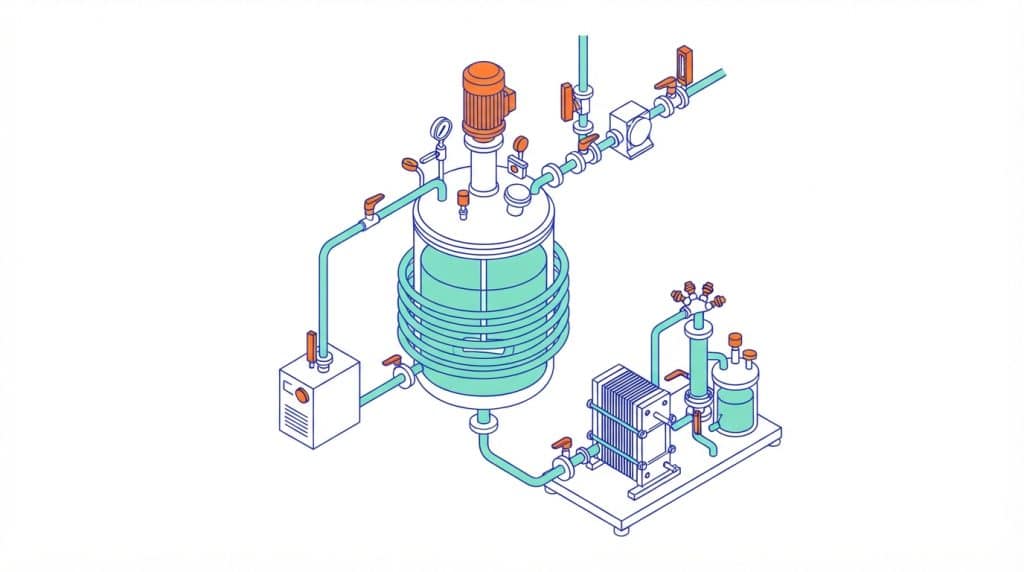
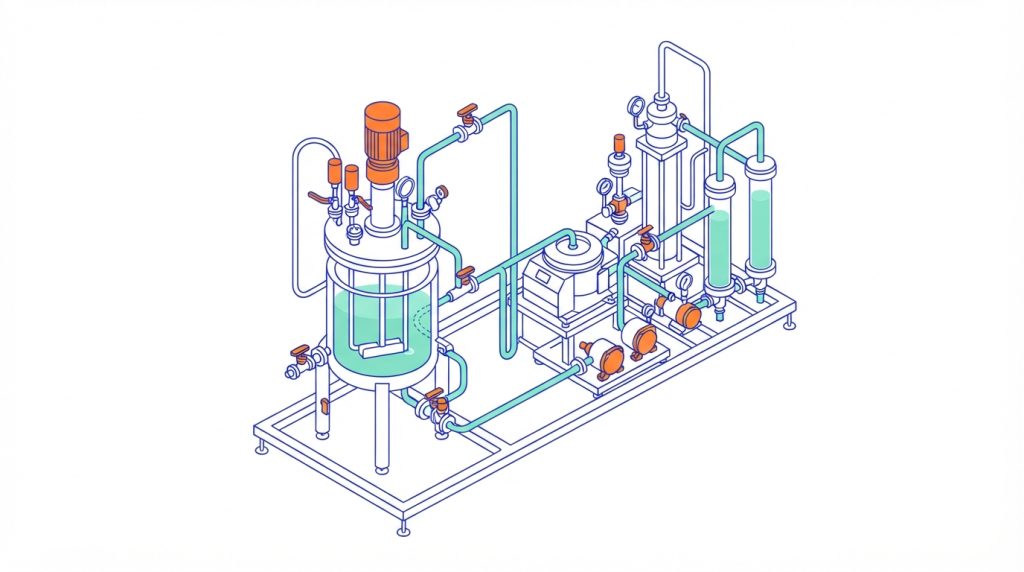
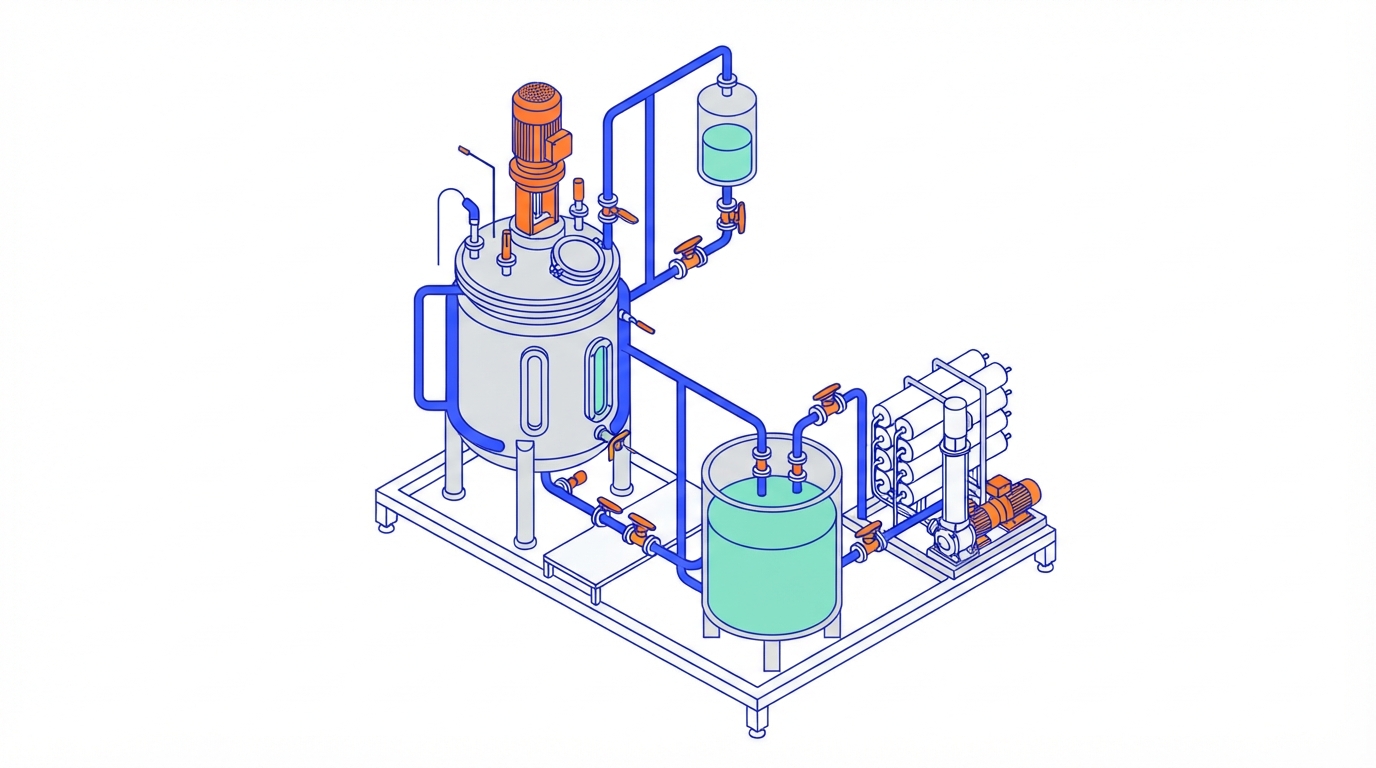
Moving to a 3 L fed-batch biofermenter raised protein yield by 2.4 to 2.7 times, thermal stability by up to 1.4 times, and productivity by about 1.3 times. The abstract does not say what these multiples are measured against, and it does not give absolute titres, run times or batch counts. The text available here cannot say whether the baseline was a smaller-scale culture.
Sources
- International Journal of Biological Macromolecules, Rational engineering-based scalable production of Morus alba urease in Pichia pastoris optimized biofermenter for industrial silkworm rearing, 28 Oct 2026 (abstract via Europe PMC, PMID 42950921).