Primary source Bühler Group: Pow.Bio and Bühler join forces to advance next-generation precision fermentation
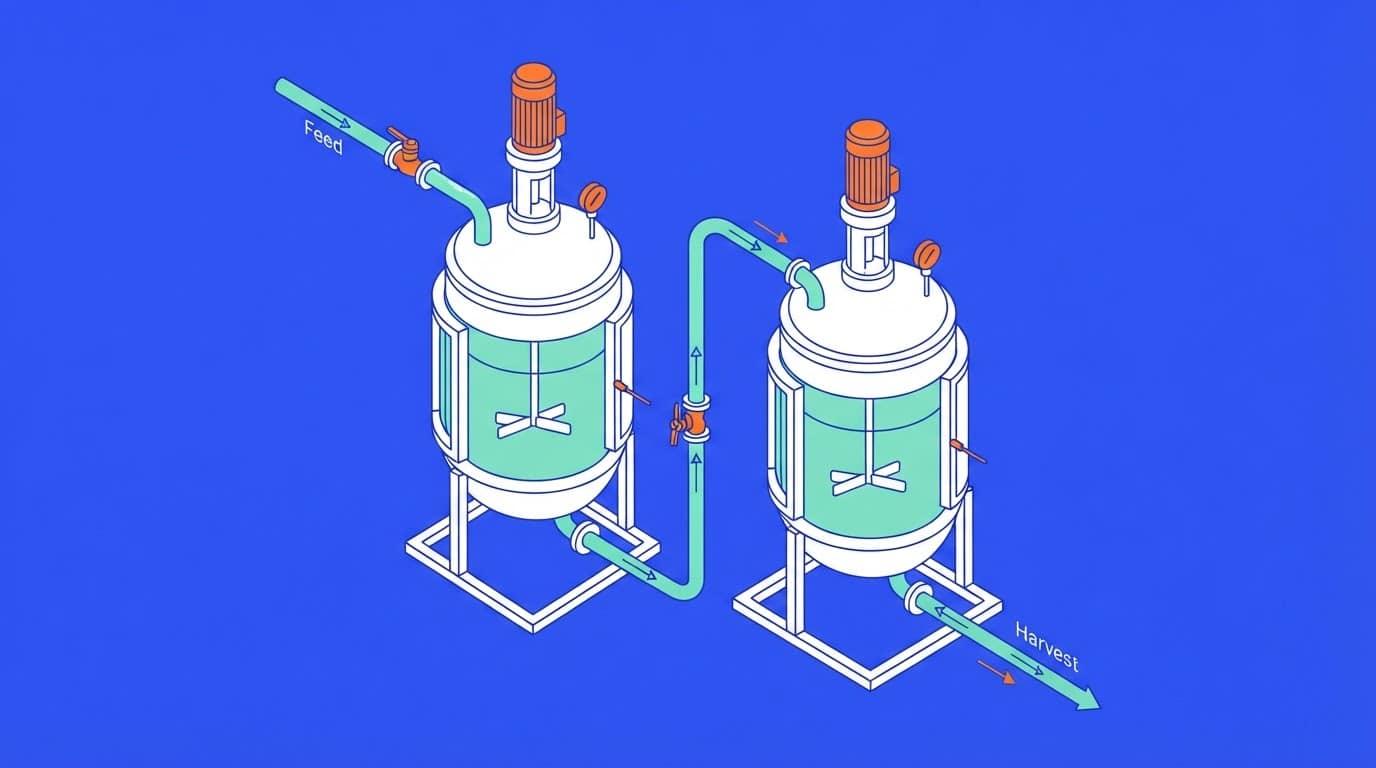
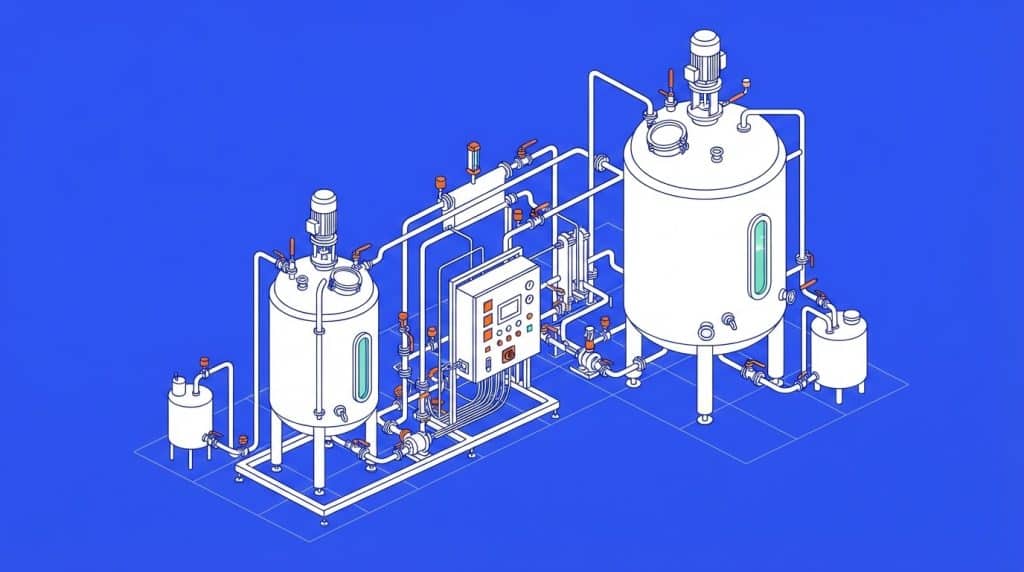
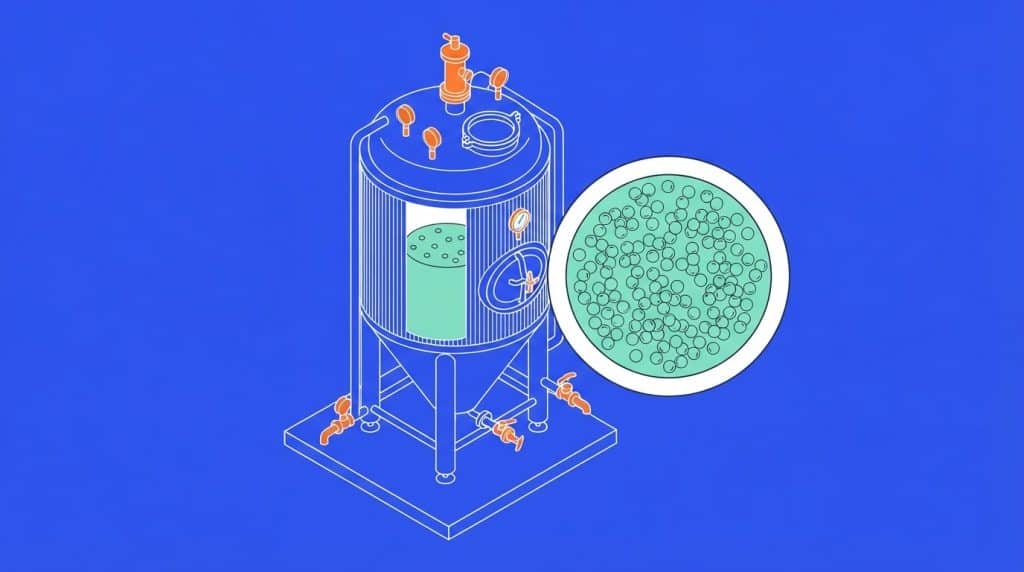
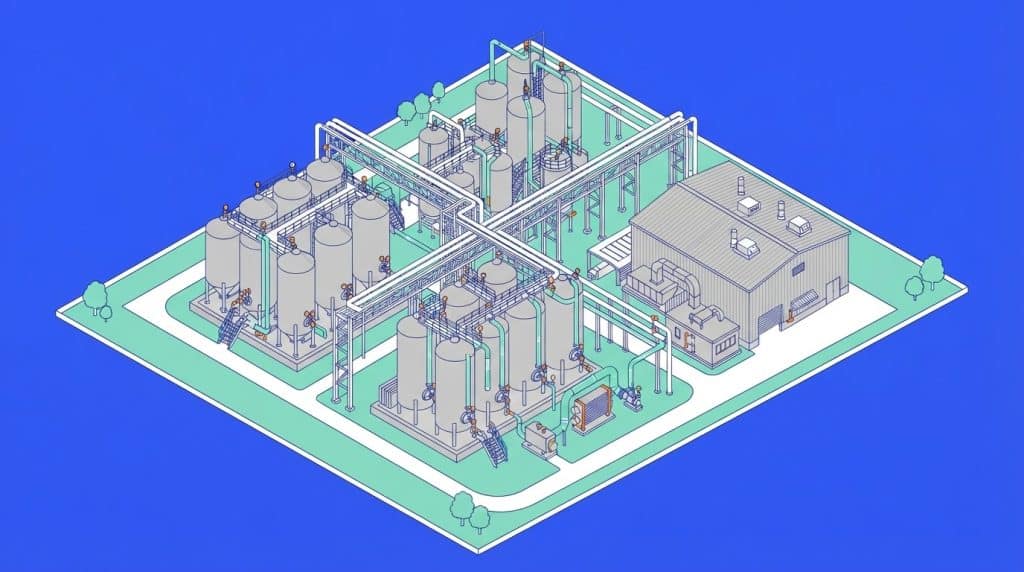
Batch and fed-batch fermentation run in cycles, with the tank emptied and cleaned between runs. Continuous fermentation keeps the tank producing while fresh medium goes in and broth comes out. On 9 December 2025, Pow.Bio, a US company selling AI-enabled continuous fermentation technology, and the Swiss engineering group Bühler announced a joint continuous precision fermentation platform and said they were ready to onboard customers. A month earlier, Pow.Bio, Bühler and the CDMO ATV Technologies had announced a 3,000 L continuous run. This explainer sets out what the companies claim, what their releases leave out, and the main technical risk of continuous operation, using a published study.
What was announced
- The offer. Pow.Bio’s proprietary continuous fermentation technology, combined with Bühler’s engineering, delivery, installation and commissioning services, supported by model-driven control software.
- Target customers. Companies whose fermentation-derived products are made in fed-batch today but are constrained by cost, scalability or inconsistent output. Named product classes: enzymes, organic acids, functional proteins, specialty lipids and bioactive compounds.
- The contrast drawn. Batch and fed-batch are described as stop-and-start methods that require the tank to be emptied and cleaned between runs.
- Claimed benefits. Faster process development, lower unit production costs from continuous operation, higher productivity and process consistency, and a path from lab to pilot and industrial scale. These are company claims; the December release gives no figures for them.
Bühler frames the market in the same release: it says companies already use precision fermentation to produce dairy, meat and egg substitutes, alternative oils and fats, and novel pet food. That places the platform in food, feed and specialty ingredients, not in biopharmaceutical manufacturing.
The 3,000 L run at ATV
The November 2025 release reports the scale-up of Pow.Bio’s continuous platform to 3,000 L at ATV Technologies’ facility in Compiègne, France. According to the companies:
- The platform more than tripled productivity for a dairy protein compared with fed-batch methods.
- Projected cost of goods sold fell by over 50% compared with a typical process.
- ATV’s existing facility was adapted with little capital spending, and Bühler pre-qualified the site, supported the adaptation of existing infrastructure for continuous operation, and helped with technology transfer.
- Machine learning and model predictive control adjusted the process in real time.
- Bühler’s innovation director is quoted saying the method can be retrofitted into existing plants.
Not in either release: run duration, dilution rate, titer or volumetric productivity in absolute units, host organism, the specific protein, what the fed-batch baseline and the “typical process” were, and the assumptions behind the projected cost figure. The November release said additional results and a case study would follow; this piece does not use any such document.
The known risk: strain stability over many generations
In continuous culture, faster-growing cells can take over. A study in Trends in Biotechnology (September 2025), by groups at Washington University in St. Louis, Lawrence Berkeley National Laboratory, the University of Delaware, Pacific Northwest National Laboratory and Imperial College London, measured this with a beta-carotene-producing Yarrowia lipolytica strain. Pow.Bio is not among its listed affiliations, and we read only its abstract. In shake-flask subcultures the strain kept producing for about 30 generations. In continuous fermentation, the population shifted toward faster-growing low producers, with significant production losses within about 18 generations. Oxygen limitation and high dilution rates accelerated the shift. The authors’ kinetic modeling suggests that strains optimized for the highest production in the lab may be less robust in industrial conditions, where faster-growing variants gain the edge.
That is the question any continuous fermentation vendor has to answer with data: how many generations does a given strain hold productivity at the chosen dilution rate, and how does the control system detect and respond to a drift in the producing population. The releases describe ML-driven control but do not report stability data.
What it means for a plant
For a fermentation site or CDMO, the notable claim is the retrofit: continuous operation in existing fed-batch tanks rather than a new build. Before committing a tank, a plant would want the numbers the releases omit: run length and generation count at scale, sterility and contamination record over the run, absolute productivity and titer against its own fed-batch baseline, and the basis of the cost-of-goods projection. It also needs a downstream that can take a continuous harvest stream, or hold tanks sized for it. For product owners the offer is commercial now; the published evidence is still the companies’ own.
Sources
- Bühler Group, Pow.Bio and Bühler join forces to advance next-generation precision fermentation, 9 December 2025.
- Pow.Bio, Bühler and ATV Technologies (GlobeNewswire), Pow.Bio, Bühler, and ATV Technologies Announce Major Advancement in Continuous Biomanufacturing with 3,000-Liter Scale Success, 6 November 2025.
- Worland A. M. et al., Staying productive under pressure: systems evaluations of β-carotene production in Yarrowia lipolytica under continuous fermentation, Trends in Biotechnology, 22 September 2025 (abstract only).