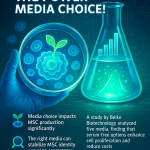

🧬 Traditional methods rely on personal experience, making reproducibility challenging.
📊 Machine learning enables systematic experiments, improving predictions about cell growth factors.
⚗️ This innovation could revolutionize drug production in biomanufacturing, highlighting the importance of data in life sciences.
Introduction:
The article discusses the potential of machine learning to enhance cell culture productivity, a crucial factor in drug production. Highlighting insights presented by Bei-Wen Ying, PhD, at PEGS Europe, it underscores the shift from traditional, experience-based methods to a data-driven approach for optimizing cell culture media.
- Machine learning can systematically analyze various cell culture media experiments to improve drug production efficiency.
- Traditionally, optimizing cell culture media has been more art than science, reliant on individual experience rather than reproducible methods.
- Ying advocates for the integration of data science and predictive models to enhance the precision of biological experiments.
- The successful implementation of machine learning necessitates substantial datasets, often generated through automated processes.
- Findings from machine learning experiments revealed critical trade-offs in cell growth dynamics and highlighted the potential of alternative carbon sources to glucose.
Conclusion:
The integration of machine learning into cell culture practices promises to significantly enhance productivity in drug production by providing objective, data-driven insights. This paradigm shift could lead to revolutionary advances in biotechnology, although it requires further exploration and expansion of automated methodologies and large datasets.