Primary source Zakrzewski et al., Biotechnology Progress: miniature bioreactor model of pH and DOT fluctuations in CHO culture
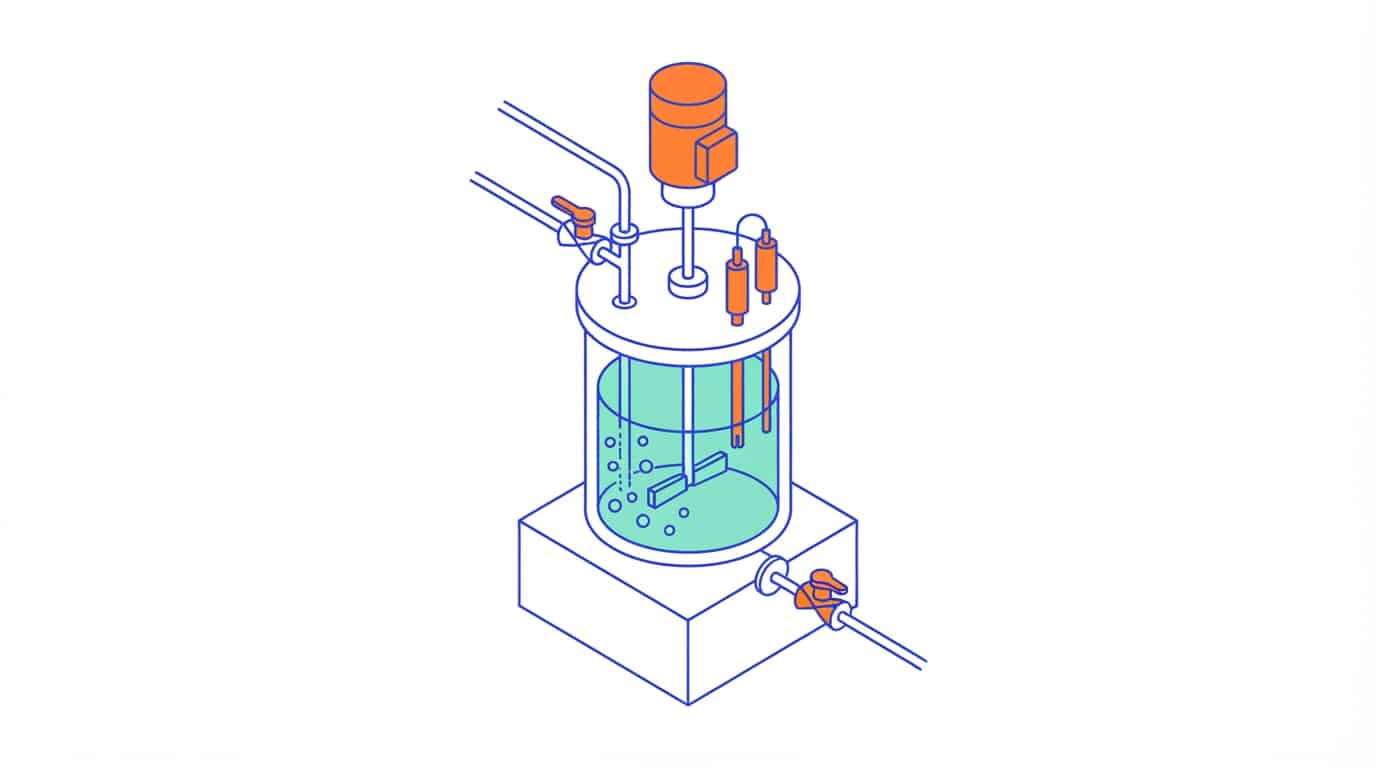
A bioreactor holds pH (how acidic the liquid is) and dissolved oxygen (the oxygen dissolved in the liquid) at set points with automated feedback loops. For pH the controller adds CO2 or base; for dissolved oxygen it adds gas to the liquid.
The pH loop
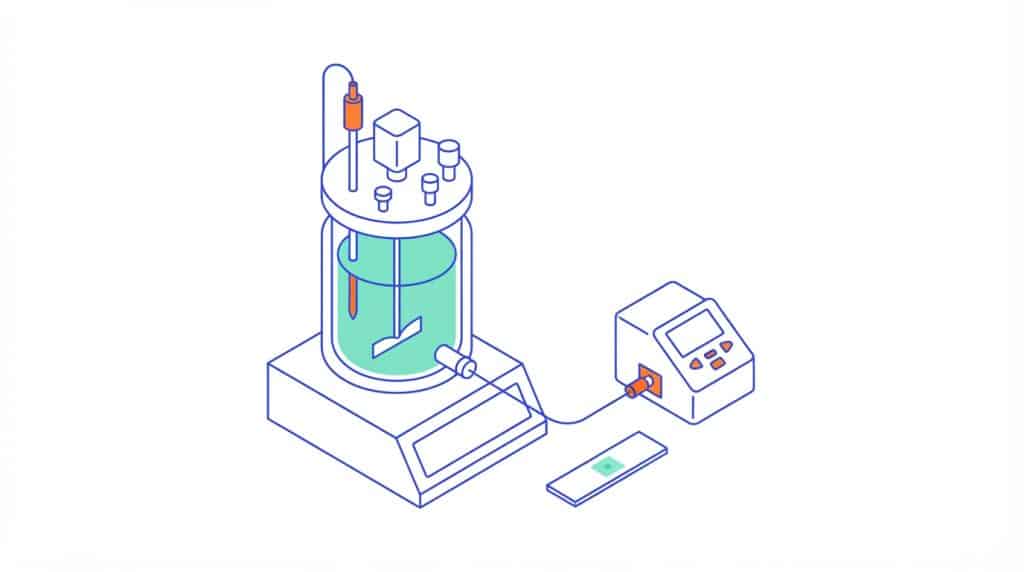
Cells acidify their own medium. In mammalian culture, pH changes are mainly caused by lactate (a waste product of glucose use) or carbon dioxide building up. A probe reads the pH, and the controller acts when it leaves the band. In one miniature CHO (Chinese hamster ovary) system, pH was held at 7.0 with a tolerance of 0.1, using CO2 gas and 1 M sodium bicarbonate, a base. To raise pH, the system stops CO2 flow, lets nitrogen strip CO2 out of the liquid, and adds bicarbonate.
Lactate cannot be driven out of the culture the way CO2 can. It builds up in the later stages of a fed-batch run and pulls pH down.
The dissolved oxygen loop
Dissolved oxygen is reported as DOT (dissolved oxygen tension), a percentage of the oxygen level in air-saturated medium. In the same system, DOT was held at 50% of air saturation by sparging (bubbling in) oxygen. The 30 L antibody study controlled it at 60%. In that 30 L study, changing the DOT set point between 40% and 60% altered neither pH nor antibody titre (concentration in the harvest).
What happens when they drift or swing
Drift: in a 30 L CHO fed-batch, poor CO2 removal was the main cause of pH problems. Raising agitation speed and headspace aeration kept pH at 6.95 to 7.1 and gave a 51% higher final antibody titre than before the change.
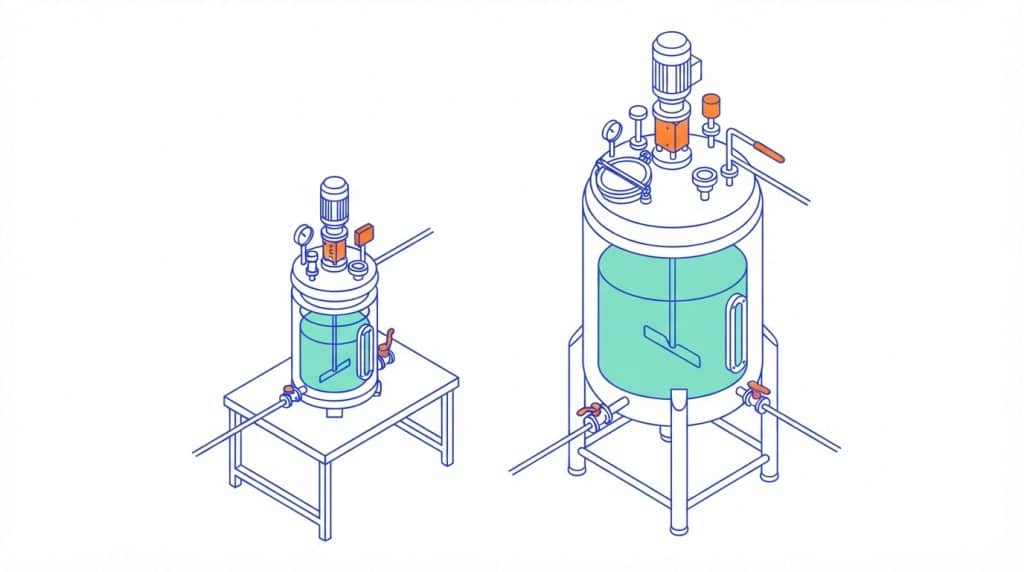
Fluctuation: large tanks mix slowly, so cells meet local extremes, for example high pH near the base inlet. Mixing times of over 100 s were reported in a 5 m3 vessel. In miniature bioreactors, cycling the pH set point between 7.0 and 7.5 had minimal impact on growth, productivity and product quality. Cycling the DOT set point between 10% and 30% cut cell growth and titre by 35%, compared with control cultures held at steady set points, in the fastest-growing of four cell lines, and all four lines made more lactate. The response depends on the cell line.
Trade-offs
- In the 30 L study, adding bicarbonate buffer kept pH in range but substantially raised osmolality (the dissolved-solute load on cells), and it did not improve titre.
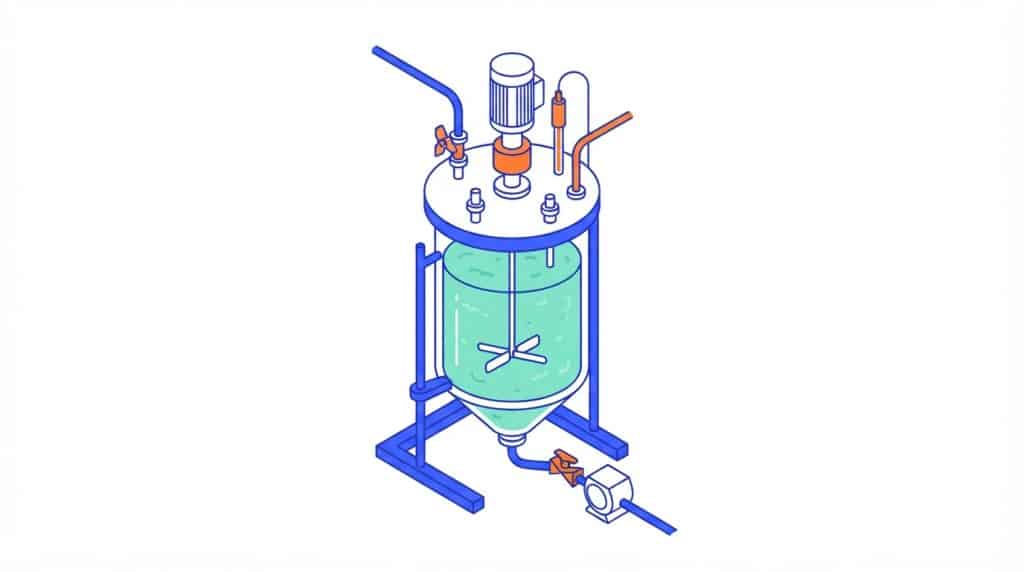
- Stripping CO2 with more agitation risks shear stress on cells, and air or nitrogen sparging to control pH risks foam and a higher contamination rate.
Sources
- Zakrzewski, Lee, Lye, Biotechnology Progress, Development of a miniature bioreactor model to study the impact of pH and DOT fluctuations on CHO cell culture performance, accepted 7 Apr 2022.
- Ahleboot et al., Avicenna Journal of Medical Biotechnology, Designing a Strategy for pH Control to Improve CHO Cell Productivity in Bioreactor, accepted 26 Dec 2020.