Primary source BMC Proceedings: Design space definition for a stirred single-use bioreactor family from 50 to 2000 L scale
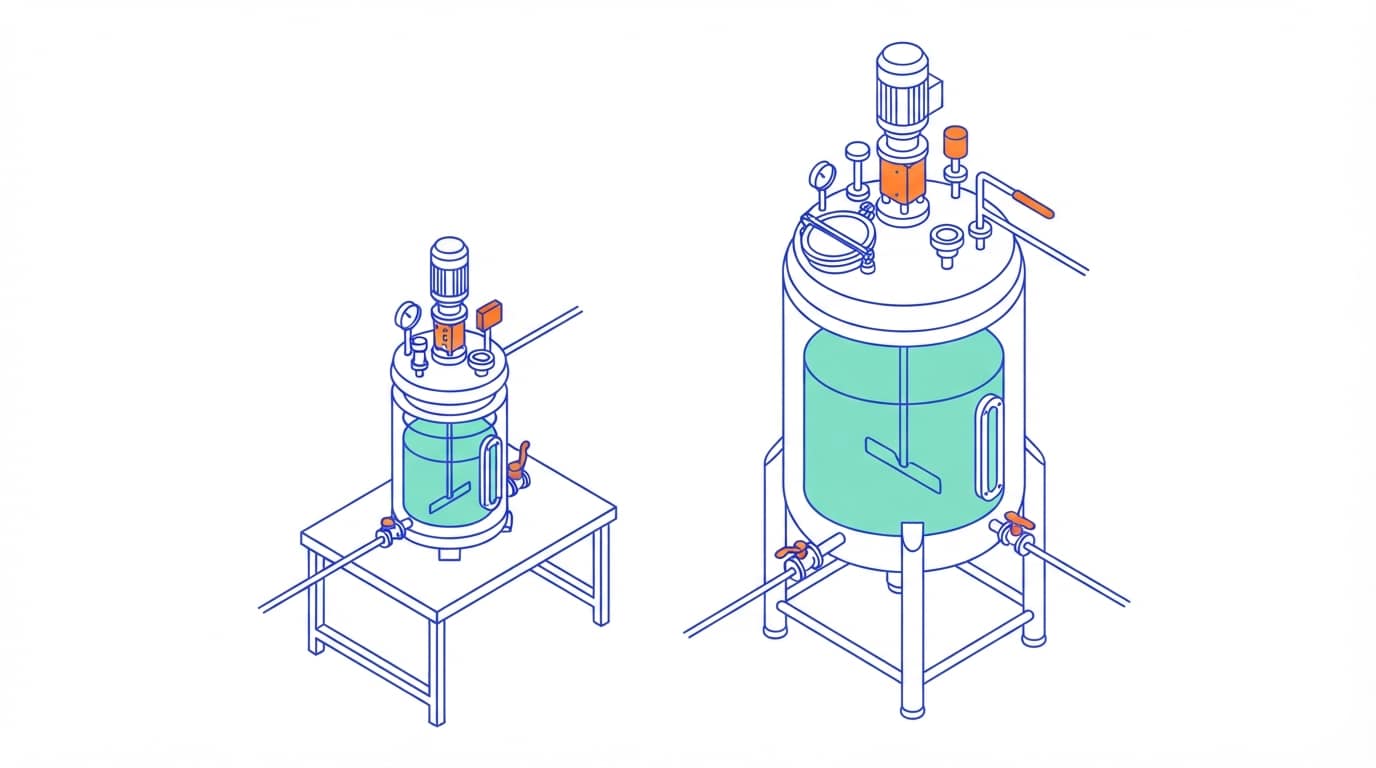
Scale-up is hard because a bigger tank is not a bigger copy of a small one: its oxygen supply and power input per volume change with size, and vessel designs differ in shape, agitation and gassing. Engineers therefore measure these properties at every scale and check them against what the cells need.
What changes in a large tank
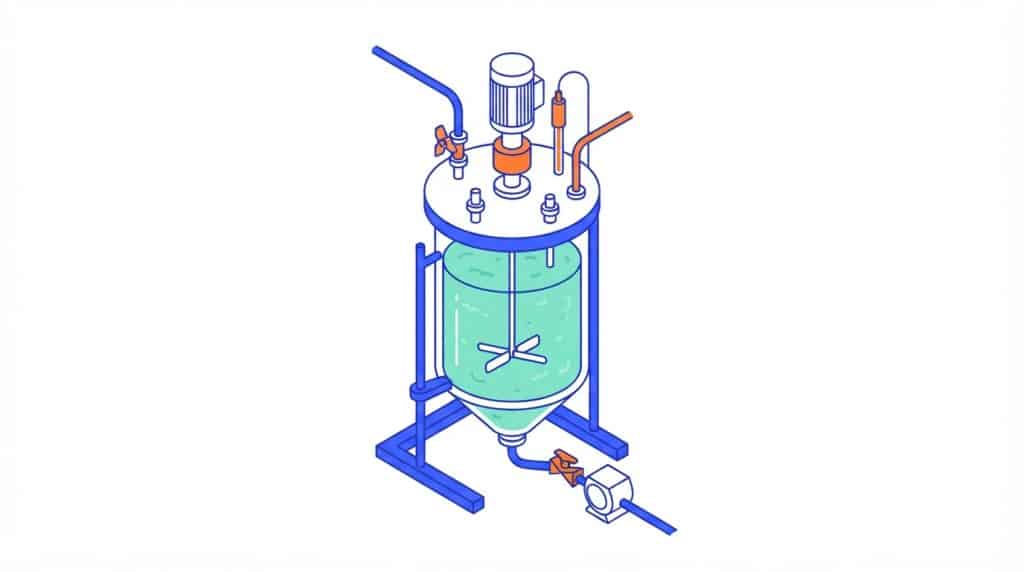
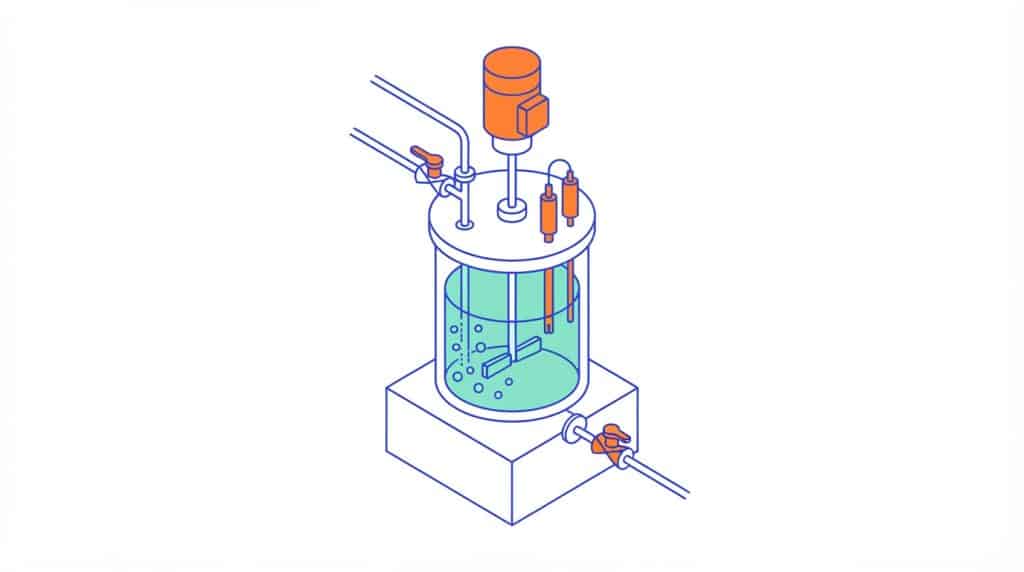
A stirred bioreactor is a tank where an impeller (a rotating paddle) keeps cells suspended while a sparger (a tube or plate that blows gas bubbles) feeds in gas. Energy has to be put in to suspend the cells, mix the liquid and disperse the gas.
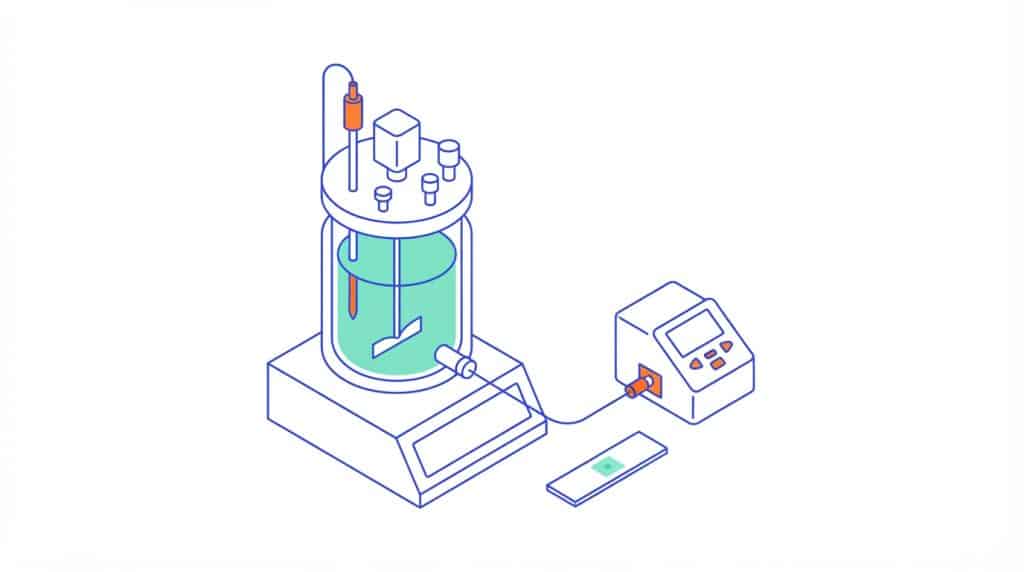
Three things are tracked. Mixing time is how long an added substance takes to spread through the liquid. Good mixing avoids concentration or temperature gradients inside the vessel. kLa is the volumetric mass transfer coefficient, a number that describes how efficiently oxygen moves from gas bubbles into the liquid. Power input per volume is the stirring power delivered to each cubic metre of liquid, in watts per cubic metre (W/m3). In one 50 to 2000 L family described in a 2013 conference poster, at a given impeller tip speed (the speed of the impeller blade tips) the power input per volume decreased as the vessel got larger, while kLa was higher in larger vessels, presumably because gas bubbles stay in the liquid longer.
Design also matters. Single-use bioreactors differ in shape, agitation principle and gassing strategy, so moving a process between different systems can be a challenge. Smaller holes in the sparger significantly raised kLa in the same study.
CO2 removal
Carbon dioxide also has to be stripped out of the culture: a 2015 conference poster lists the CO2 stripping rate among the physical parameters critical for mammalian cell culture. In a 1000 L single-use stirred tank, engineers measured it by bringing a media simulant at 37 °C down to pH 6.5 with CO2 gas, sparging air, and tracking the change in pH.
How engineers characterise a bioreactor family
One approach keeps the geometry the same across sizes: the 50 to 2000 L family held a height-to-diameter ratio of 2:1 and an impeller-to-bag ratio of 0.38 at every scale. Then mixing time, kLa and power per volume are measured at each size and compared with a design space (the allowed range) set by the process. For a CHO (Chinese hamster ovary) cell process reaching a peak of 27 to 28 million cells per mL, that range was impeller tip speed below 2.0 m/s (to keep shear moderate), kLa above 7 per hour (assuming pure oxygen), mixing time below 60 s and power input of 10 to 250 W/m3 from lab to production scale. Mixing times stayed below 30 s at all scales.