Primary source Khanal and Lenhoff, mAbs: Developments and opportunities in continuous biopharmaceutical manufacturing
Perfusion is a way of growing cells in which fresh medium (the nutrient liquid) is fed into the bioreactor and spent medium is removed at the same rate, while the cells are kept inside. Because the cells are not washed out and less waste builds up, the culture can run for a long time at high cell density.
How it works
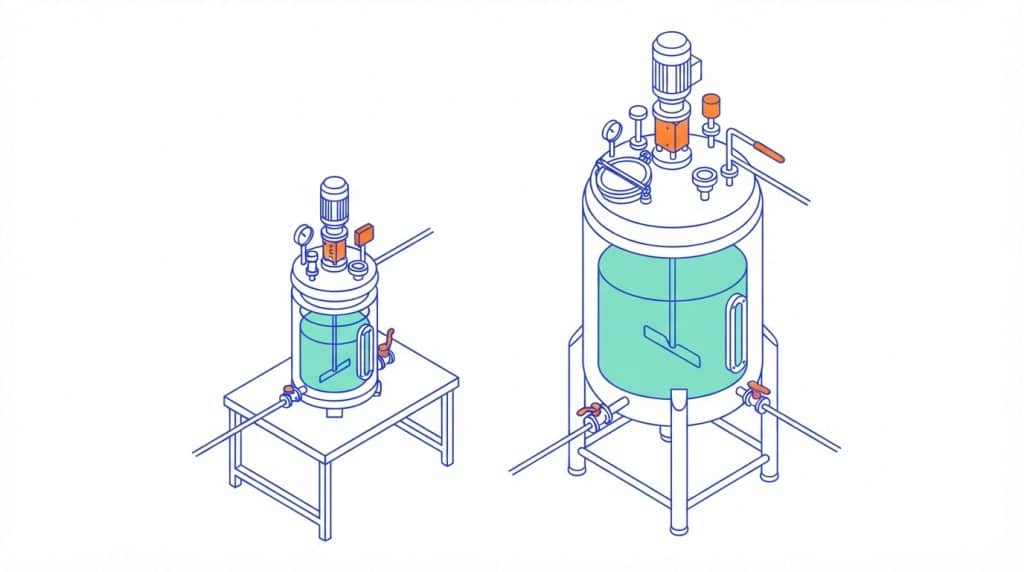
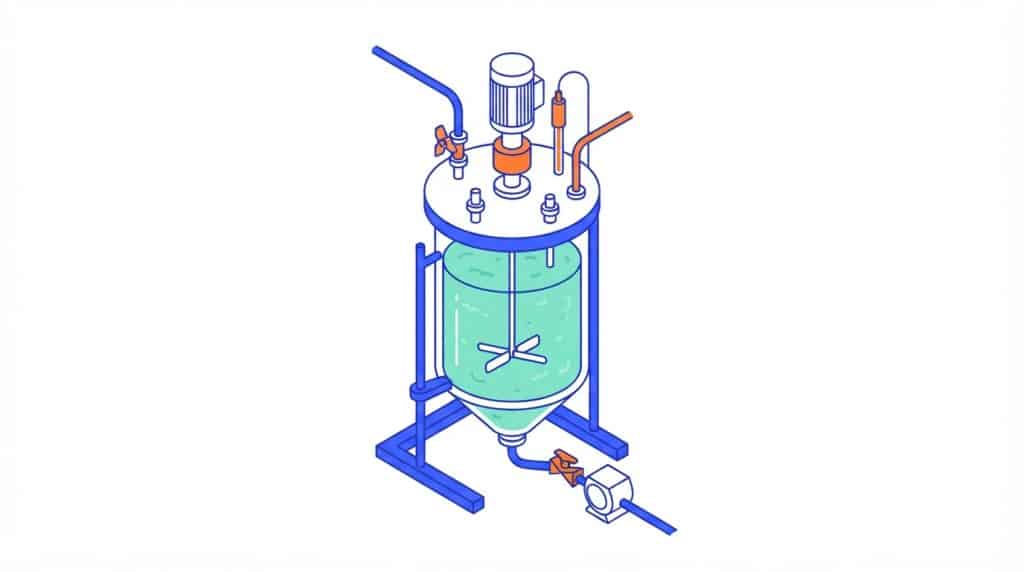
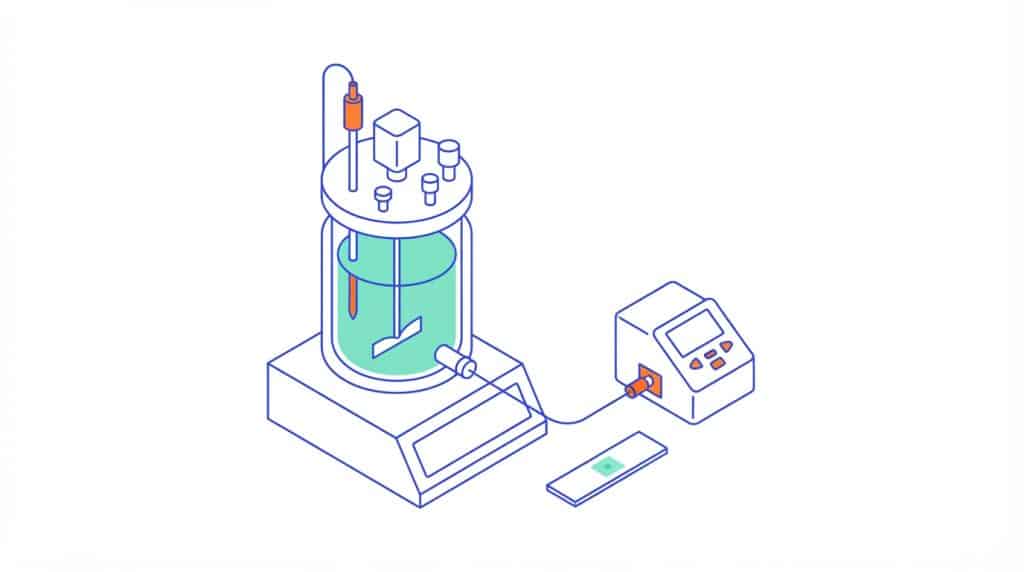
Picture a stirred tank full of cells. A feed line brings in fresh medium. A second line draws off an equal volume of used medium, and that stream passes through a cell retention device (a filter or similar unit that separates cells from liquid). The cells go back into the tank, and the cell-free liquid, which carries the product, leaves as harvest. A small cell bleed also removes dead cells to keep the culture healthy.
In a perfusion bioreactor the product leaves with the spent medium, while the cells stay. Retention devices include spin filters, submerged membrane filters, alternating tangential flow filtration (ATF, where liquid is pumped back and forth across a membrane), acoustic settlers and centrifuges.
Why it reaches higher cell density
A fed-batch culture (nutrients added in portions, nothing removed until the end) builds up waste as it runs. Perfusion keeps removing it. With ATF retention, cell density has been reported as high as 130 million cells per mL at steady state, against about 15 million cells per mL for fed-batch in a 14 to 18 day culture. Because product leaves continuously, it also spends less time in the tank, which matters for products that degrade, for example by aggregating or breaking apart.
What it costs
- Medium: constant feeding and removal needs a large volume of medium, plus the storage and handling that goes with it. Media designed for perfusion can allow a lower perfusion rate and so a smaller volume.
- Complexity: the retention device is the critical part, and membrane fouling (the membrane clogging) remains a challenge. Tangential flow filtration (TFF) that recirculates cells through a peristaltic pump can damage them through shear.
- Product concentration: perfusion harvest is more dilute. One economic analysis (Pollock et al., cited in the review) assumed a perfusion product concentration of 20% and 45% of the fed-batch product concentration.