kLa is the volumetric mass transfer coefficient for oxygen: a number that describes how quickly oxygen can pass from the gas into the liquid culture in a vessel. It is one of the terms that set the maximum amount of oxygen a bioreactor can supply.
What kLa describes
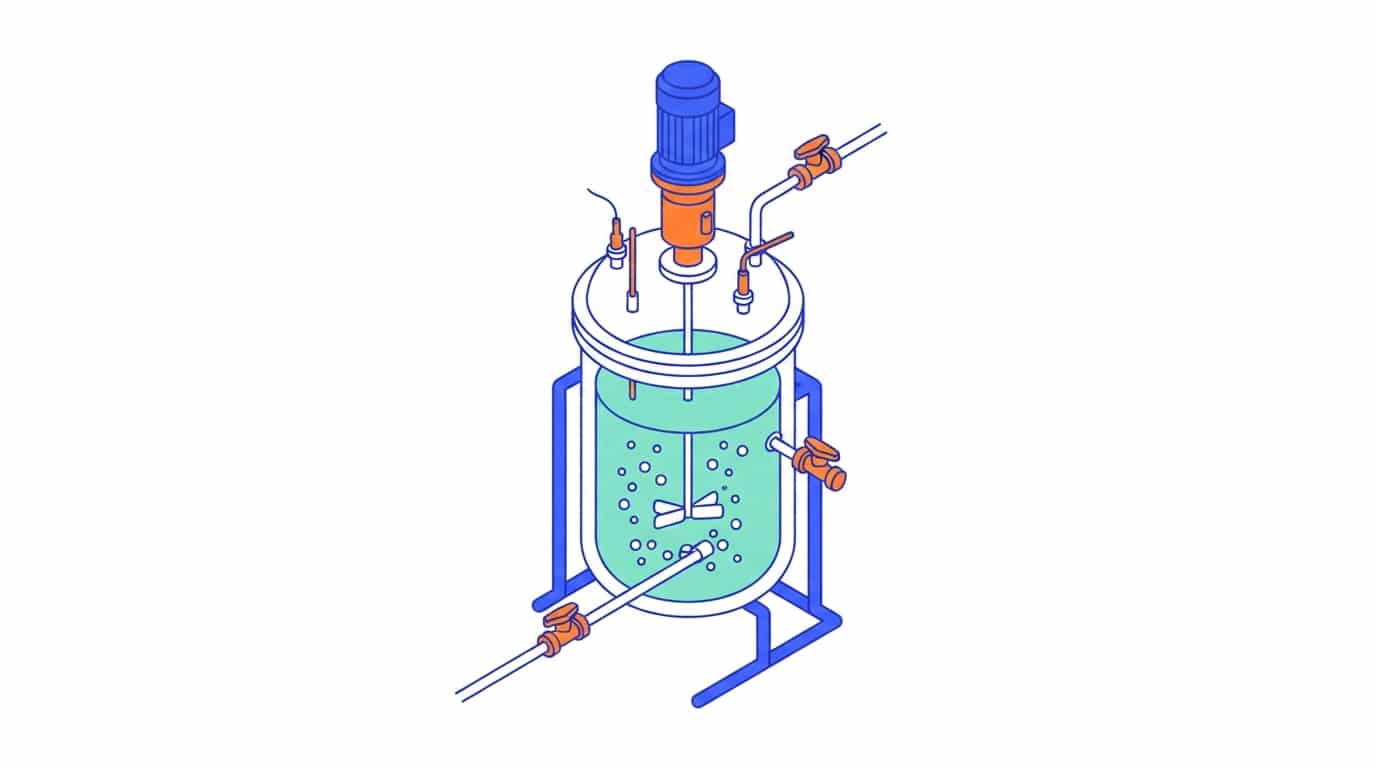
Picture a tank of cell culture with air entering from below or touching the liquid surface. Oxygen has to cross the boundary between gas and liquid before cells can use it. The “k” part is how easily oxygen crosses that boundary. The “a” part is how much gas-liquid boundary exists per volume of liquid. In the source paper, vessels of 10 to 50 L gave similar kLa at the same relative filling (the same fraction of the vessel filled), even though larger vessels have less boundary area per volume; the authors explain this by a higher power input raising the transfer coefficient.
The vessel’s maximum oxygen transfer capacity (OTRmax, oxygen delivered per litre of culture per hour) depends on kLa and on how much oxygen can dissolve in the liquid. The culture’s own oxygen uptake must stay below it.
What drives it
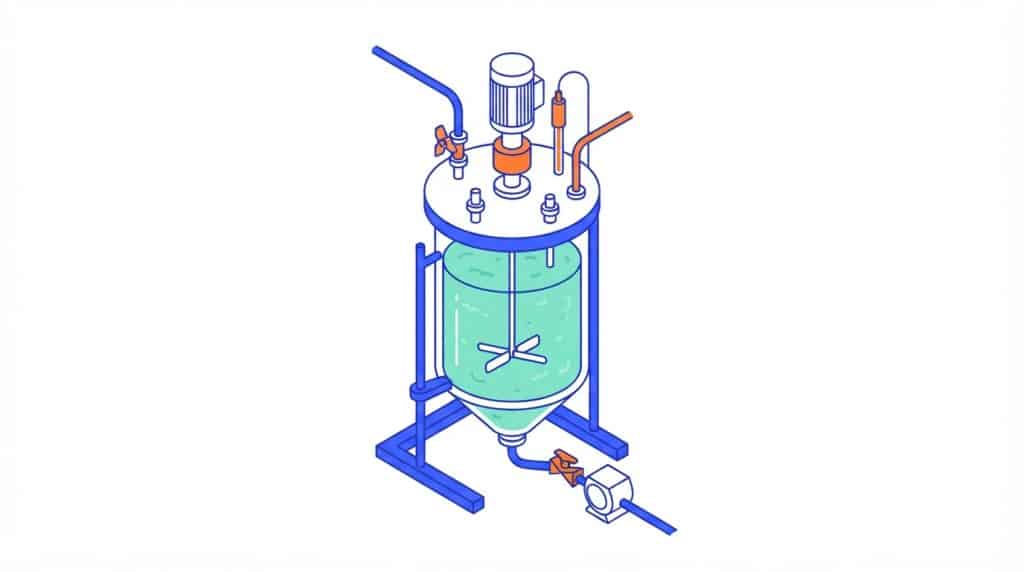
In a bubble-aerated tank, transfer depends on the amount, size, break-up and merging of gas bubbles, and these are strongly influenced by the power put into the liquid. In a vessel aerated only at the surface, with no bubbles, the source paper links kLa to the vessel diameter, shaking frequency, filling volume, liquid viscosity, the oxygen diffusion coefficient (how fast oxygen spreads in the liquid), gravity and shaking diameter. Its correlation, validated in vessels from 2 to 200 L, predicted kLa within +/-30% in the 2 to 50 L vessels. Fill volume matters: kLa fell as the vessel was filled higher. Below a critical shaking speed, the liquid barely moved and oxygen transfer was very low.
Why it matters for scale-up
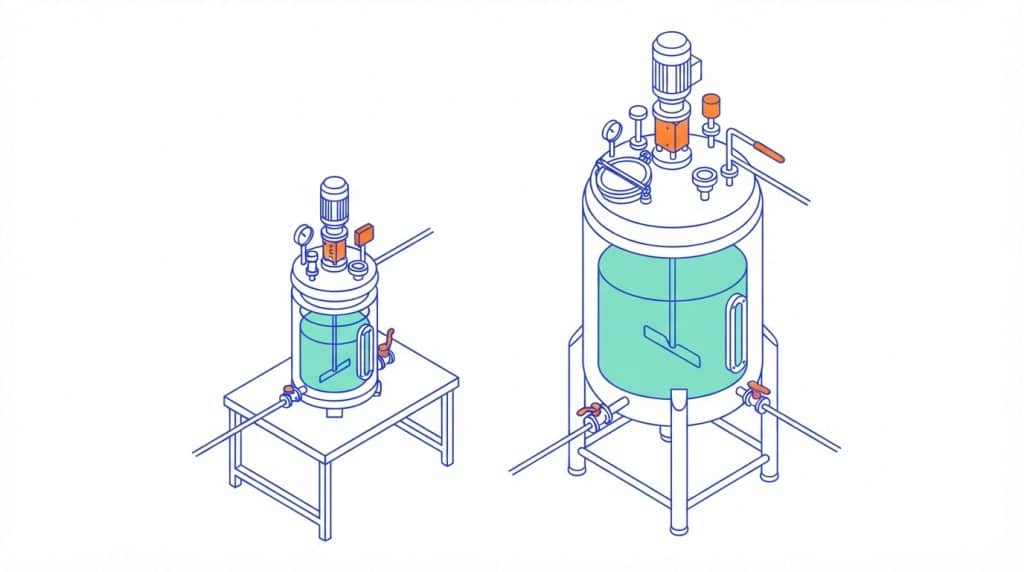
Several studies identified kLa as one of the main parameters for scale-up and for transferring cultivation conditions from stirred tanks to disposable shaken vessels. To avoid oxygen limitation, the vessel must be run where OTRmax is higher than the oxygen uptake of the culture. As an example, tobacco BY-2 plant cells reached a maximum oxygen uptake of 6 to 8 mmol per litre of culture per hour in 250 mL shake flasks, so the authors required an OTRmax of 8 mmol/(L h) in the larger shaken vessels.