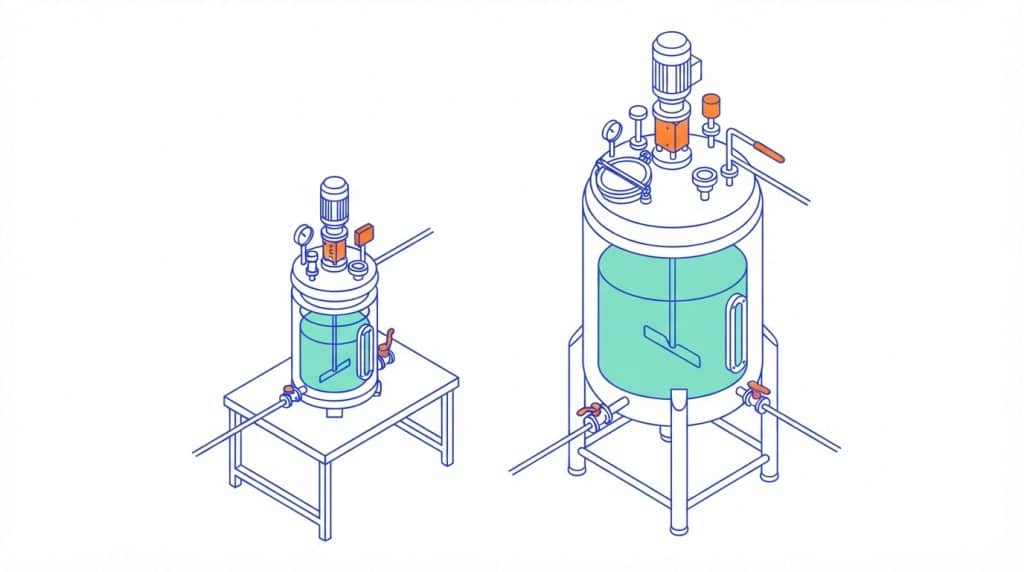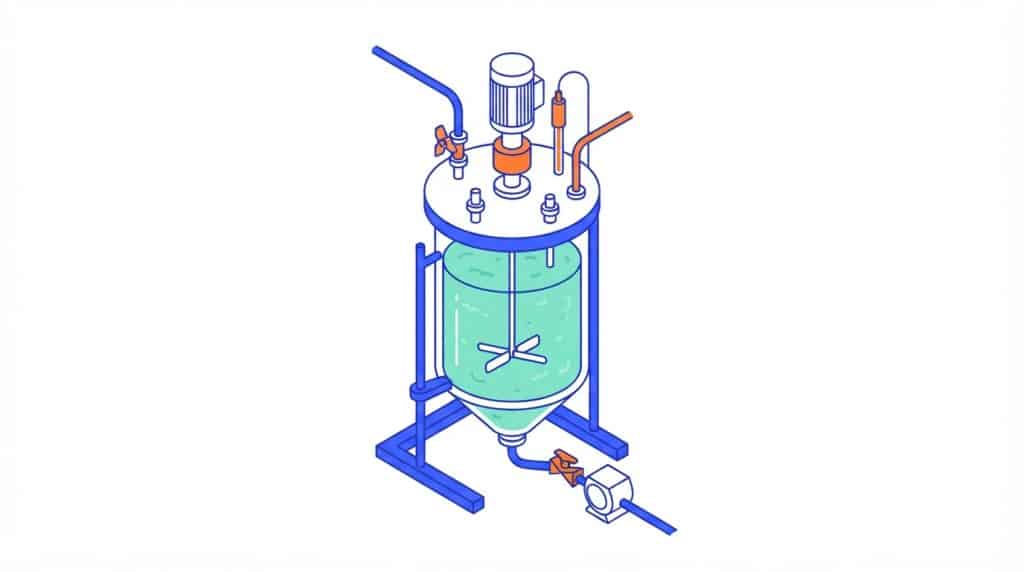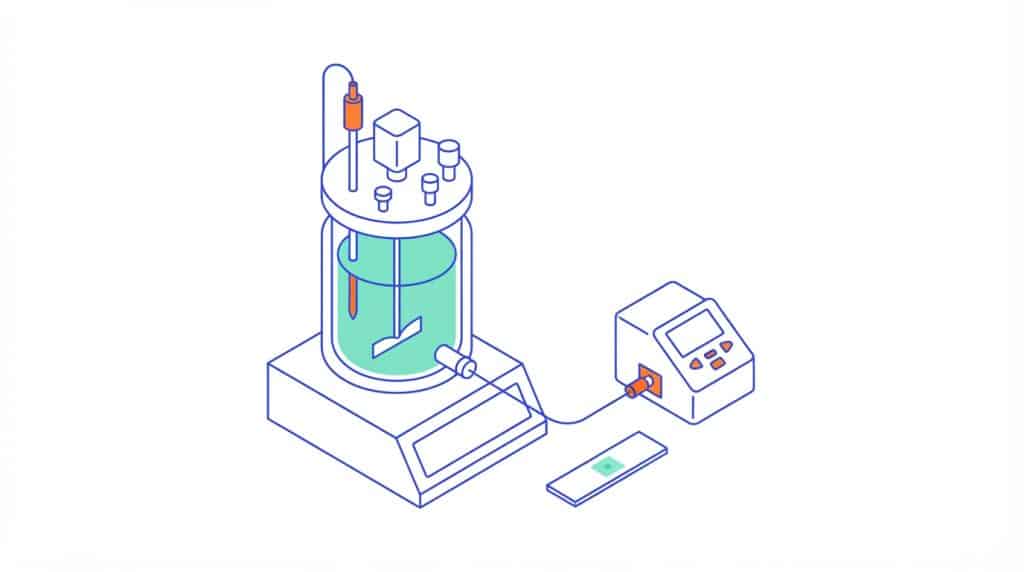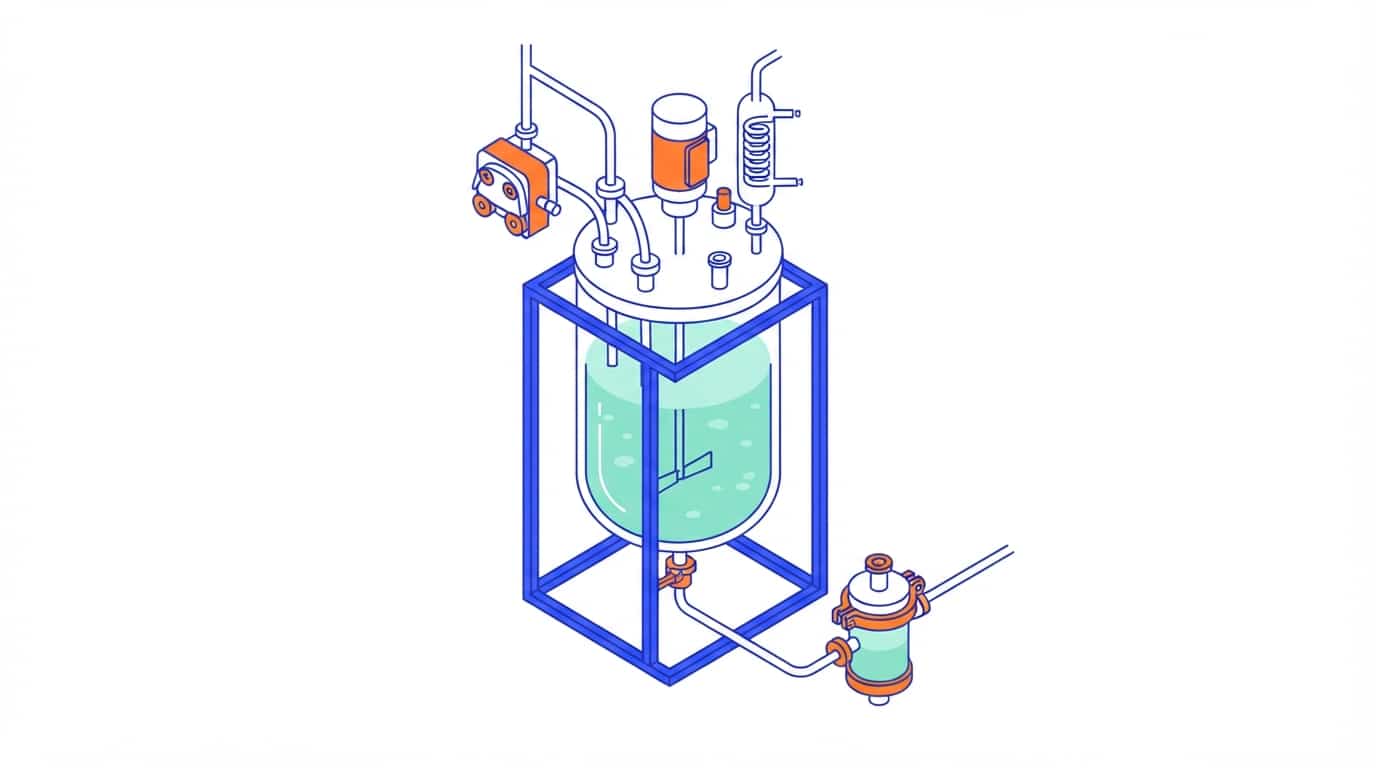
CHO cells are a line of cells that descend from the ovary of a Chinese hamster and now grow in industrial bioreactors, where they are engineered to secrete a therapeutic protein. Plants choose them because they are the most widely used mammalian cells for this job, and because the proteins they make are close enough to human ones to be usable as drugs.
What is in the tank
The CHO-K1 line was originally derived in 1958 from a spontaneously immortalized population of fibroblast cells from the ovary of a Chinese hamster. “Immortalized” means the cells keep dividing indefinitely, so one frozen stock can seed production for decades. In the tank, the cells float in a liquid medium. They carry the gene for the target protein, for example an antibody, and release the protein into the liquid, which is then harvested and purified.
Why industry picked them
- Human-like sugars. Many therapeutic proteins carry sugar chains (glycosylation), and the chains affect how the protein behaves. A draft CHO genome has gene homologues for 99% of human glycosylating enzymes, and the final proteins are similar enough to human forms to minimize unwanted immune reactions. Bacteria such as E. coli cannot yet do authentic eukaryotic modifications of this kind, and yeasts tend to over-attach sugars (hyperglycosylate).
- A long record. The cells are very well characterized, and decades of use without clear adverse effects have allowed regulatory approval of over 100 biopharmaceuticals. For a new product made in CHO, approval is likely to be more rapid than with a less well-known cell line.
- Virus resistance. Most known viral entry genes are not expressed in CHO cells, which helps explain their high resistance to viruses.
- Yield has improved. Titer (grams of product per litre of culture) has risen from about 100 mg/L to 1 to 5 g/L. Two things drove this: better cell lines, and fed-batch culture, in which small amounts of nutrients such as glucose are added during the run so the cells waste less energy making by-products such as lactate and ammonia. A culture that once peaked at about 1 million cells per mL over 7 days can now reach about 10 million cells per mL over about 21 days.
The trade-offs
CHO is not a perfect match for human cells. CHO cells make a small but significant amount of Neu5Gc, a sugar that human cells do not make, and they have some ability to make the gal-alpha-1-3-gal sugar antigen. A human cell line, PER.C6, gives glycosylation of an entirely human type. Also, the sugar pattern depends on feeding: in one study, very low glutamine and glucose levels decreased sialylation (the sialic acid caps on glycans) of the secreted protein. Mammalian cells also grow about ten times more slowly than yeast, and their specific yields are often low compared with microbes.
Sources
- Butler M, Meneses-Acosta A, Recent advances in technology supporting biopharmaceutical production from mammalian cells, Applied Microbiology and Biotechnology, 2012.
- Bill RM, Playing catch-up with Escherichia coli: using yeast to increase success rates in recombinant protein production experiments, Frontiers in Microbiology, 2014.