Primary source bioRxiv: E. coli-produced nanobody fusions as a pan-serotype platform for AAV purification, quantification, and detection
A preprint from Bielefeld University (Haverkamp, Fialho-Gerst and Müller) describes a set of fusion proteins built on a nanobody called AAVX, for purifying, quantifying and detecting recombinant adeno-associated virus (rAAV). A nanobody here is a VHH antibody fragment, a small single-domain binder. The authors describe AAVX as pan-serotype, meaning it binds AAV across serotypes.
This work has not been peer reviewed. It was posted on bioRxiv on 30 October 2026, and this note rests on the abstract only, which is the text we could open.
What the abstract reports
- Production: starting from an amino acid sequence, the team expressed AAVX in the cytoplasm of E. coli, carrying various tags and fusion partners. Soluble production was very efficient. A one-step immobilized metal-ion affinity chromatography (IMAC) run yielded mostly more than 90% pure protein.
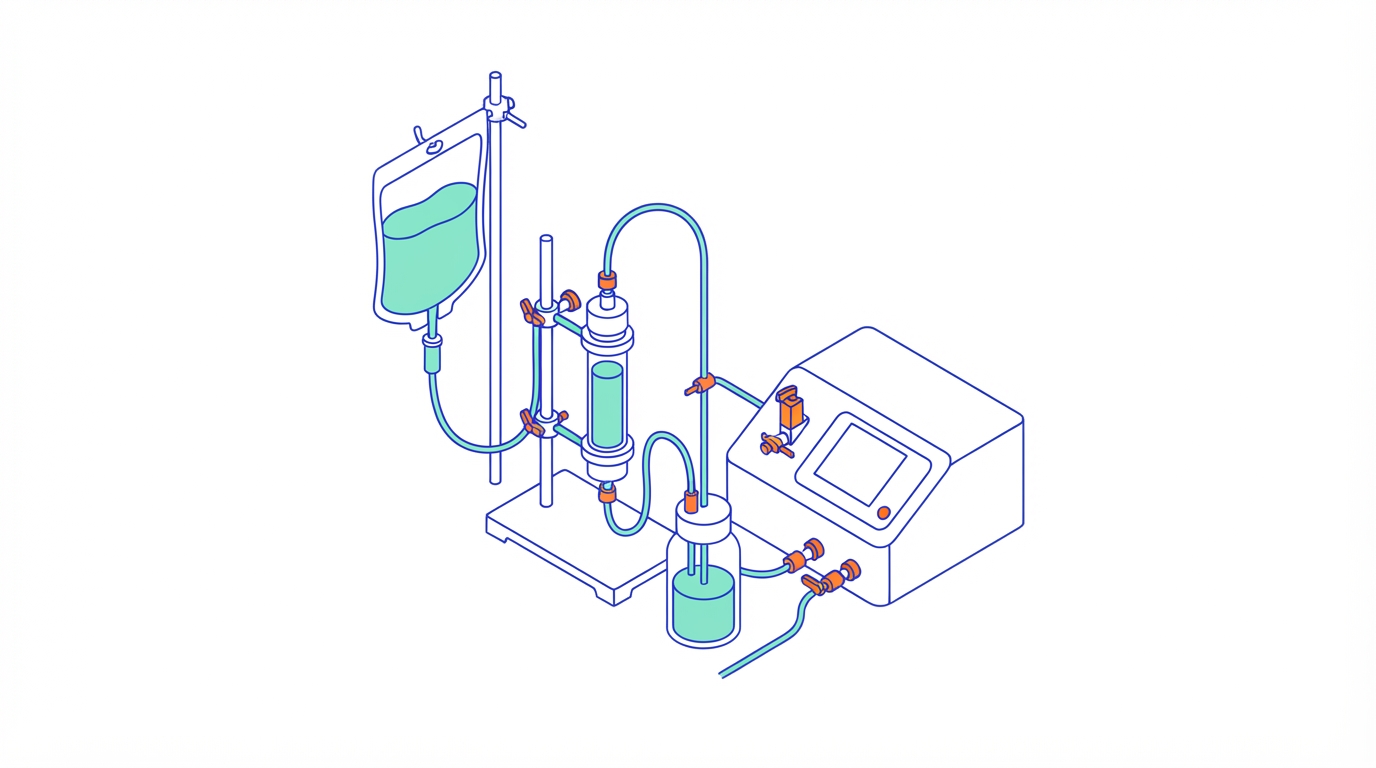
- Purification: AAVX crosslinked to an agarose matrix purified intact AAV2 and AAV5 capsids from cell lysates, as assessed by qPCR and ELISA.
- Quantification by ELISA: AAVX worked as the capture reagent. Fused to luciferase, it also worked as the detection reagent.
- Quantification by BLI: with tagged AAVX and streptavidin biosensors, the authors built a rapid, label-free assay of AAV capsids by biolayer interferometry (BLI), an optical method that reads binding on a sensor tip.
- Detection: an AAVX-eGFP fusion was used to immunostain AAV capsids in fixed HEK-293 cells for fluorescence microscopy.
The abstract concludes that AAVX fusion proteins are versatile and readily customizable tools for AAV research and bioprocessing. The authors declare no competing interest.