Researchers at Prince of Songkla University, Thailand, report a biological route to chitin from shrimp shell waste, published online on 15 October 2026 and in the October 2026 print issue. The publisher page was not accessible from our systems, so this piece is limited to the abstract, read through Europe PMC and Crossref. The abstract is the only part of the paper we could verify.
What the process does
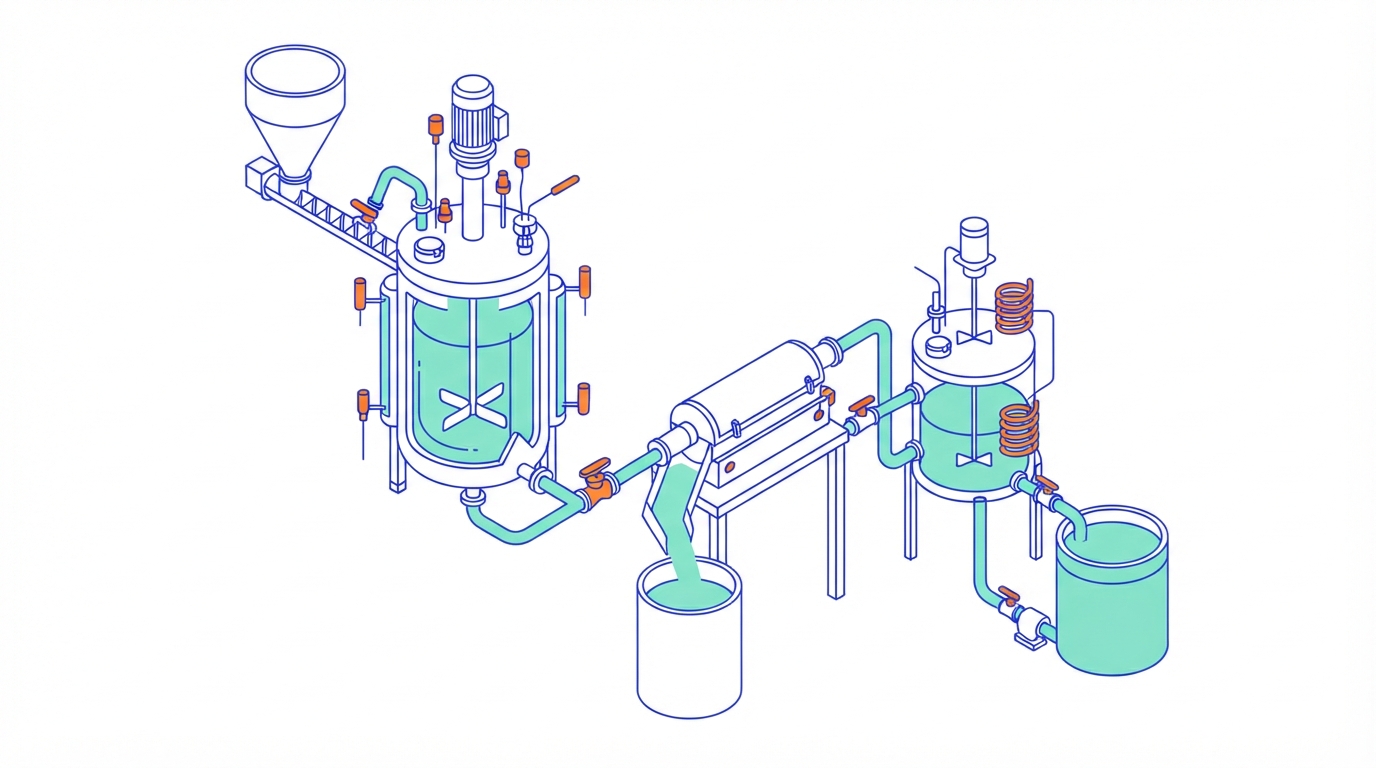
The first step is colactic acid fermentation (Co-LAF), a fermentation by lactic acid bacteria working together. Mature coconut water was the only nutrient source. Demineralization (DM, the removal of minerals from the shell) was above 96%, and deproteination (DP, the removal of protein from the shell) was above 60%.
A second step with an alkaline protease, an enzyme that breaks down protein, raised DM to above 99% and DP to above 98%.
Scale-up and product quality
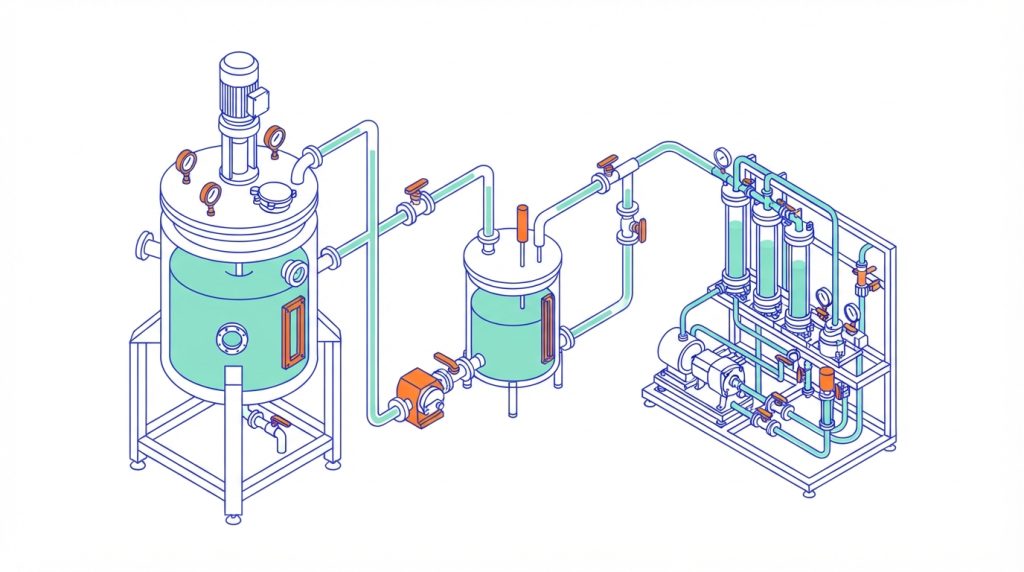
The authors repeated the process in a stirred-tank bioreactor and report comparable DM and DP efficiencies. The abstract also gives a chitin yield for this run but does not say what the yield is measured against, so we do not quote it. It does not give the bioreactor volume either.
The chitin had a crystallinity (the share of the material in an ordered, crystalline form) of 80.3% and a degree of acetylation (the share of its sugar units that carry an acetyl group) of about 100%. The abstract says both values are higher than for chemically extracted chitin, but it does not give the chemical reference values.
The liquid fractions contain calcium, protein hydrolysates (broken-down protein) and carotenoids (pigments). The authors characterized them for antioxidant-related properties and by GC-MS (gas chromatography-mass spectrometry, a method that identifies small molecules) metabolite profiling. They say this indicates potential for food, feed and biobased material uses. The abstract reports no application trials.
Sources
- Ruangwicha, Cheirsilp, Suyotha, Journal of Agricultural and Food Chemistry, Bioprocessing of Shrimp Shell Waste into Chitin and Functional Ingredients with High Bioactive Activity, 15 Oct 2026 (abstract read via Europe PMC and Crossref).