Primary source Biotechnology Progress: Challenges in meeting the mass transfer demands of high-density perfusion cultures in single-use bioreactors
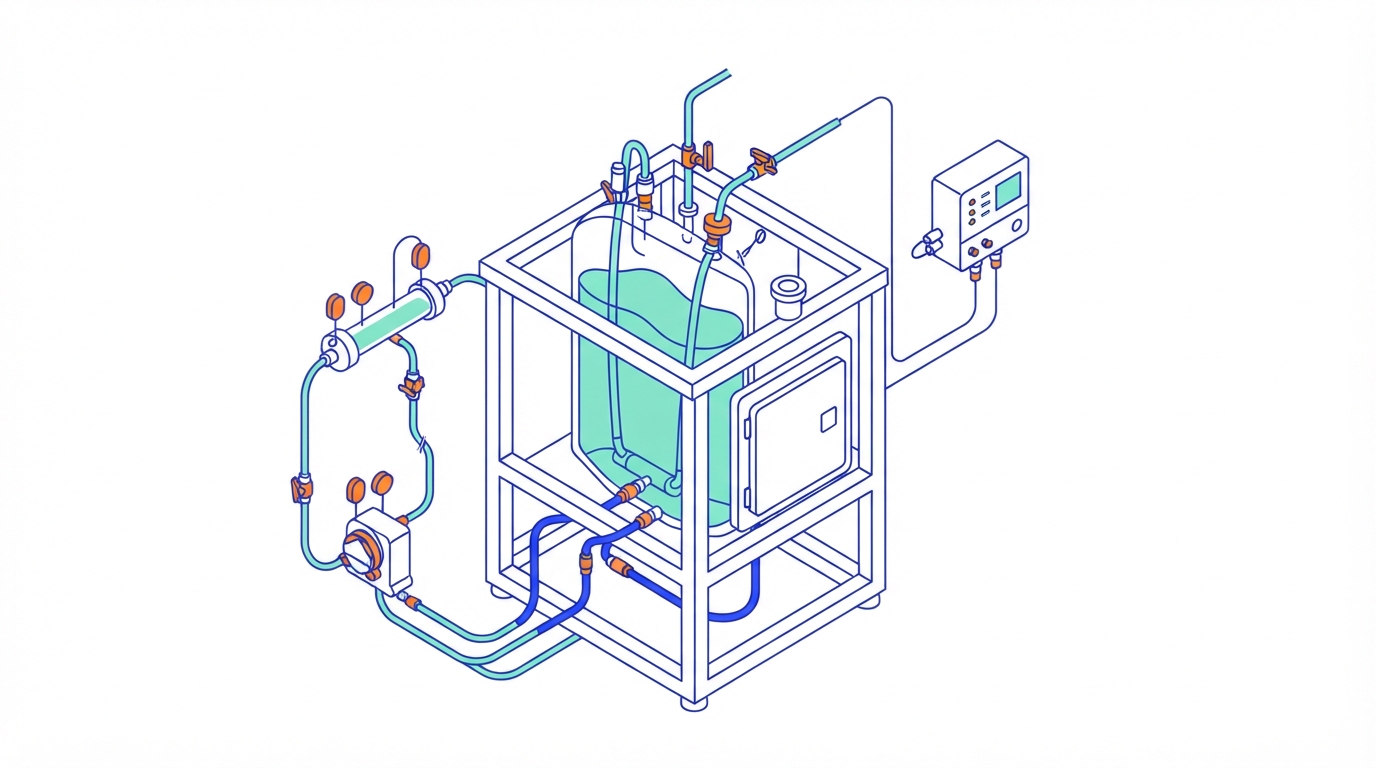
Researchers at Lonza have published a comparison of how well four single-use bioreactor (SUB) designs transfer gas to dense Chinese hamster ovary (CHO) perfusion cultures. The paper appeared online on 30 October 2026. This summary is based on the abstract only, because the full text is behind a subscription and was not available to us.
What was tested
The authors compared the four designs against worst-case oxygen transfer requirements for CHO perfusion. They characterized how power dissipation, gas flow rate, oxygen enrichment, pCO2 (the partial pressure of dissolved carbon dioxide in the culture) and sparge-hole size affect the oxygen transfer rate (OTR) and the CO2 transfer rate (CTR).
What the abstract reports
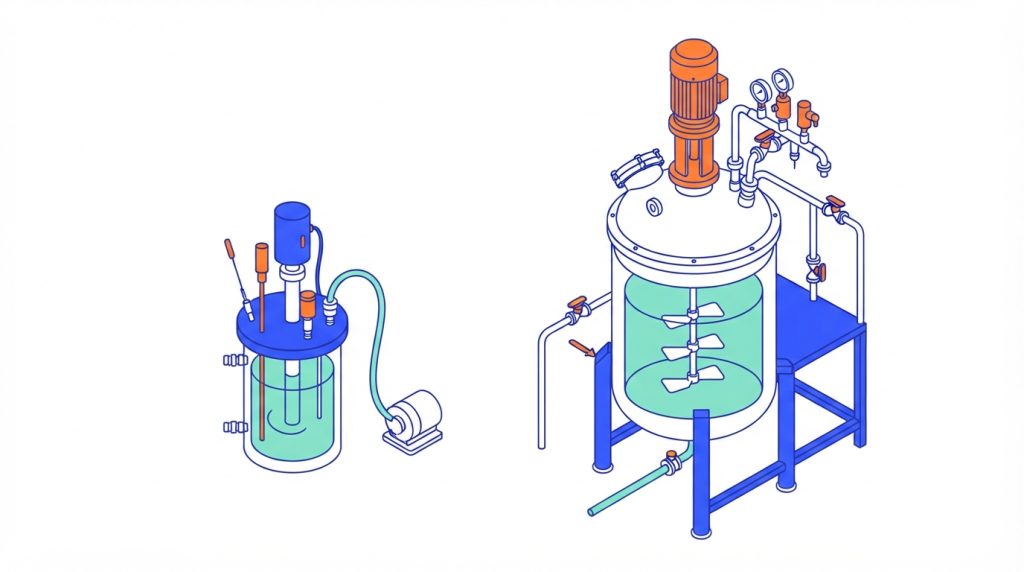
- Only one design delivered enough O2 and removed enough CO2 to support a worst-case cell line at 100 million viable cells per mL with a single sparger, at both 50 and 1,000 L scale.
- Larger-scale versions of three designs were also tested. Performance at 50 L was not predictive of performance at 200 or 1,000 L for any design.
- The volume and composition of the gas phase changed substantially while the gas stayed in the vessels.
- The authors predicted culture pCO2 across the design space, assuming a respiratory quotient of 1 (CO2 produced equals O2 consumed, by moles). They built a response surface from these predictions.
- Most strategies for raising OTR raise it by more than they raise CTR, which increases culture pCO2.
The abstract does not name the four designs or their vendors. It does not give the OTR, CTR or pCO2 values, so those numbers are not reported here.