
Introduction:
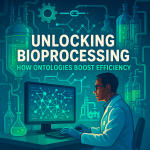
Advancements in computer architecture and data analysis are driving the use of imaging in bioprocessing. Deep learning techniques and high-performance GPUs enable more sophisticated image processing technologies. These imaging technologies provide valuable information for analyzing and optimizing bioprocesses, such as classifying objects and predicting important phenomena. Various imaging methods have been employed to enhance bioprocessing, including deep-learning approaches for analyzing Chinese hamster ovary cells and in situ microscopy for studying antibody production in bioreactors. Imaging-based methods are expected to play a crucial role in improving the efficiency and productivity of biomanufacturing processes in the future.
- Ongoing advances in computer architecture and data analysis are driving the use of imaging in bioprocessing.
- Machine learning and high-performance GPUs enable more sophisticated image processing technologies for classification and prediction.
- Imaging technologies, such as deep-learning approaches and in situ microscopy, provide valuable information for analyzing and optimizing bioprocesses.
- Scientists have used image analysis to study Chinese hamster ovary cells and antibody production in bioreactors.
- Imaging-based methods have the potential to improve the efficiency and productivity of biomanufacturing.
Conclusion:
Advancements in imaging technologies and data analysis techniques are revolutionizing bioprocessing by providing valuable insights into processes and enabling optimization. The use of machine learning and deep learning algorithms enhances image analysis capabilities, allowing for more accurate classification and prediction. As imaging technologies continue to evolve, biomanufacturing processes are expected to become more efficient and productive, leading to significant advancements in the bioprocessing industry.