Lactate and ammonium (the dissolved form of ammonia) are metabolic byproducts: waste that cells excrete into the broth while they consume the feed. As they accumulate they slow cell growth and antibody production, and feeding the culture steadily instead of in large doses can keep them lower.
Where the waste comes from
Cells in a bioreactor live on a medium and feed that supply sugar (glucose) and amino acids. As they burn and rebuild these nutrients, they release byproducts into the liquid around them. Lactate and ammonium (written NH4+) are the two best known, and the source calls them key byproducts of CHO cell metabolism. CHO (Chinese hamster ovary) cells are the workhorse host for therapeutic antibodies.
The effect shows up most in a fed-batch culture, the most common CHO process, where concentrated feed is added during the run and nothing is removed until harvest. Because nothing leaves the vessel, these byproducts pile up in the later stages of the culture. The pattern is not the same for both. In lactate-consuming CHO cells, lactate is usually produced first and then consumed again, while ammonium in glutamine synthetase (GS) cell lines accumulates slowly in the later stages.
Why it matters: growth and yield
High lactate and ammonium are unfavourable for cell growth and antibody expression, and they can make the culture process unstable. This creates a ceiling on the obvious way to raise yield. The easy route to more antibody is more feed, but more feed produces more byproducts. In the study’s bolus-fed runs (feed added once a day or once every two days), a high feeding amount led to lower viable cell density and viability late in the culture. Viable cell density is the number of living cells per millilitre of broth, and viability is the share of cells that are alive.
A third factor travels with the feed: osmolality, a measure of how concentrated the dissolved material in the broth is. After a bolus feed, osmolality rises rapidly and greatly, and the authors report that this also pushes cells to make more byproducts.
Why it matters: product quality
Byproducts can also shift what the cells make, not only how much. IgG antibodies from CHO cells generally carry low levels of high-mannose glycoforms (a type of sugar chain attached to the antibody), typically below 5%. High levels are a concern for therapeutic antibodies, so processes aim to keep them low. In the study, antibody made with continuous feeding had a lower content of high-mannose glycoforms than antibody made with bolus feeding. The authors link this to the lower osmolality of the continuously fed culture. The paper does not give a single number for the size of that shift, so treat it as a direction, not a spec.
A worked example: bolus versus continuous feeding
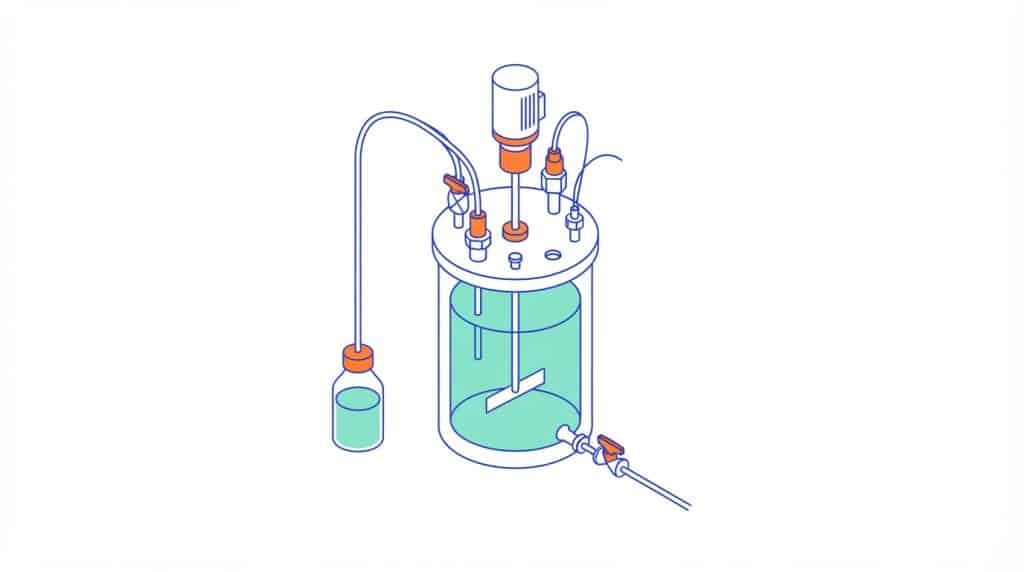
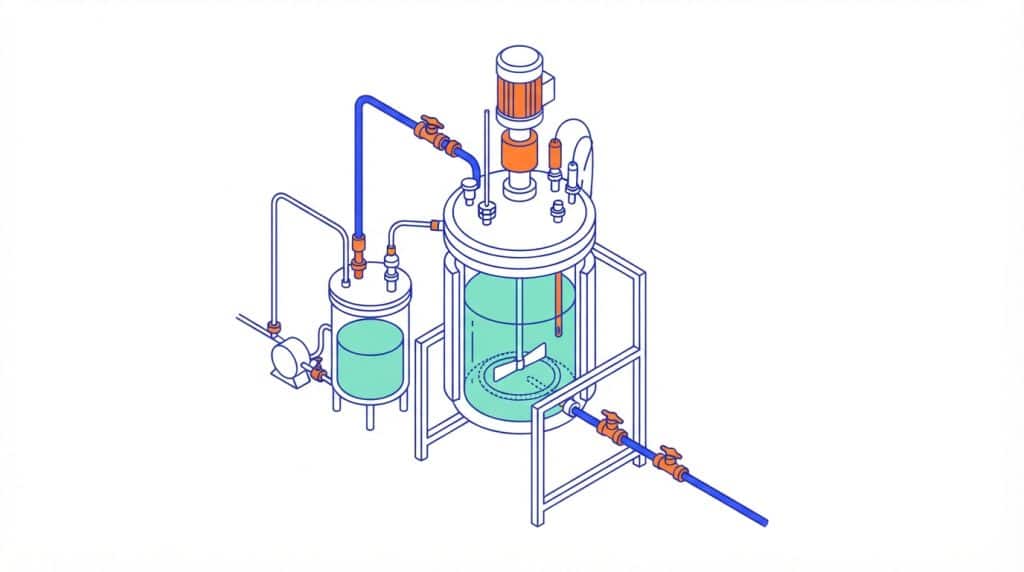
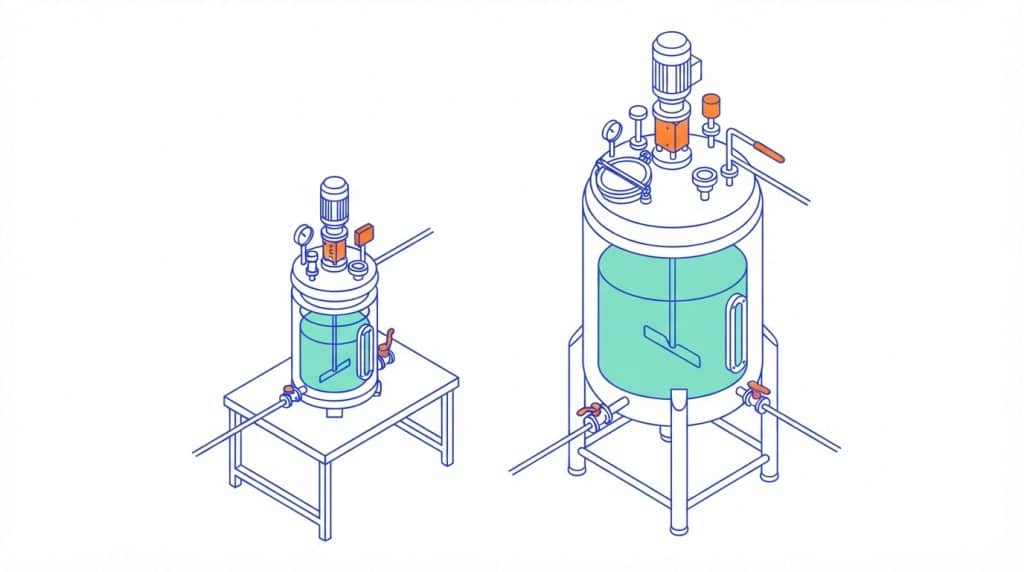
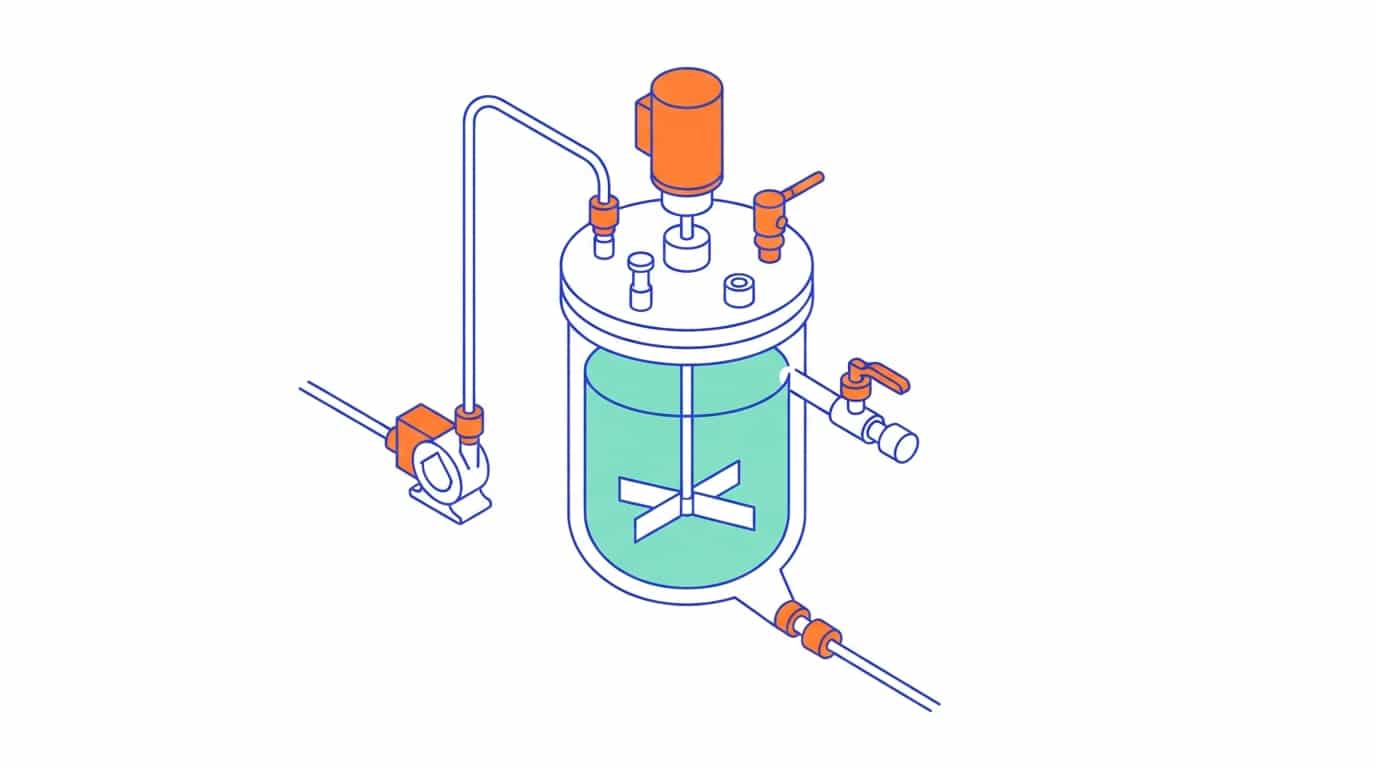
Researchers at East China University of Science and Technology ran CHO-K1 cultures producing an antibody in 7 L bioreactors, starting with 3 L of culture. They compared three ways of giving the same total amount of feed: once every two days, once a day, or continuously. Continuous feeding was done by switching the feed pump on for 2 seconds and off for several hundred seconds, over and over, which approximates a steady trickle.
- Low feeding amount: continuous feeding showed no advantage.
- High feeding amount: by the end of culture, lactate was reduced by approximately 45% and ammonium by approximately 80% compared with bolus feeding.
- Yield: antibody expression was almost 10% higher. For the first of the two cell lines, continuous feeding at the high feeding amount exceeded 10 g/L of antibody, while feeding once every two days gave 8.56 g/L.
The reason, the authors argue, is that a bolus puts a high concentration of nutrients into the vessel in a short time, which induces more byproducts. Continuous feeding keeps nutrient levels within a narrower range. In the first cell line, the total residual amino acid concentration under continuous feeding was only 80% of that under daily feeding or feeding every two days.
There are trade-offs. The cell-specific productivity (antibody made per cell) of continuous feeding was lower for one cell line and not different for the other. The higher peak cell density seen with continuous feeding in one cell line was not reproduced in the second.
Another way to keep byproducts low: remove them
Feeding more gently is one option. The other is to take byproducts out. In perfusion systems, which continuously remove toxic byproducts, cell density, productivity and high viability can be maintained for long periods. A review in a second paper (Yao et al., Metabolites, 2021) reports that the accumulation of ammonium and lactate has been consistently reported to hurt cell viability and growth.
Sources
- Xiao S, Ahmed W, Mohsin A, Guo M, Life (MDPI), Continuous Feeding Reduces the Generation of Metabolic Byproducts and Increases Antibodies Expression in Chinese Hamster Ovary-K1 Cells, 2021.
- Yao G, et al., Metabolites (MDPI), A Metabolomics Approach to Increasing Chinese Hamster Ovary (CHO) Cell Productivity, 2021.