Primary source Minaris: Minaris Evolves Business Model with Addition of Dedicated Viral Vectors Business Unit
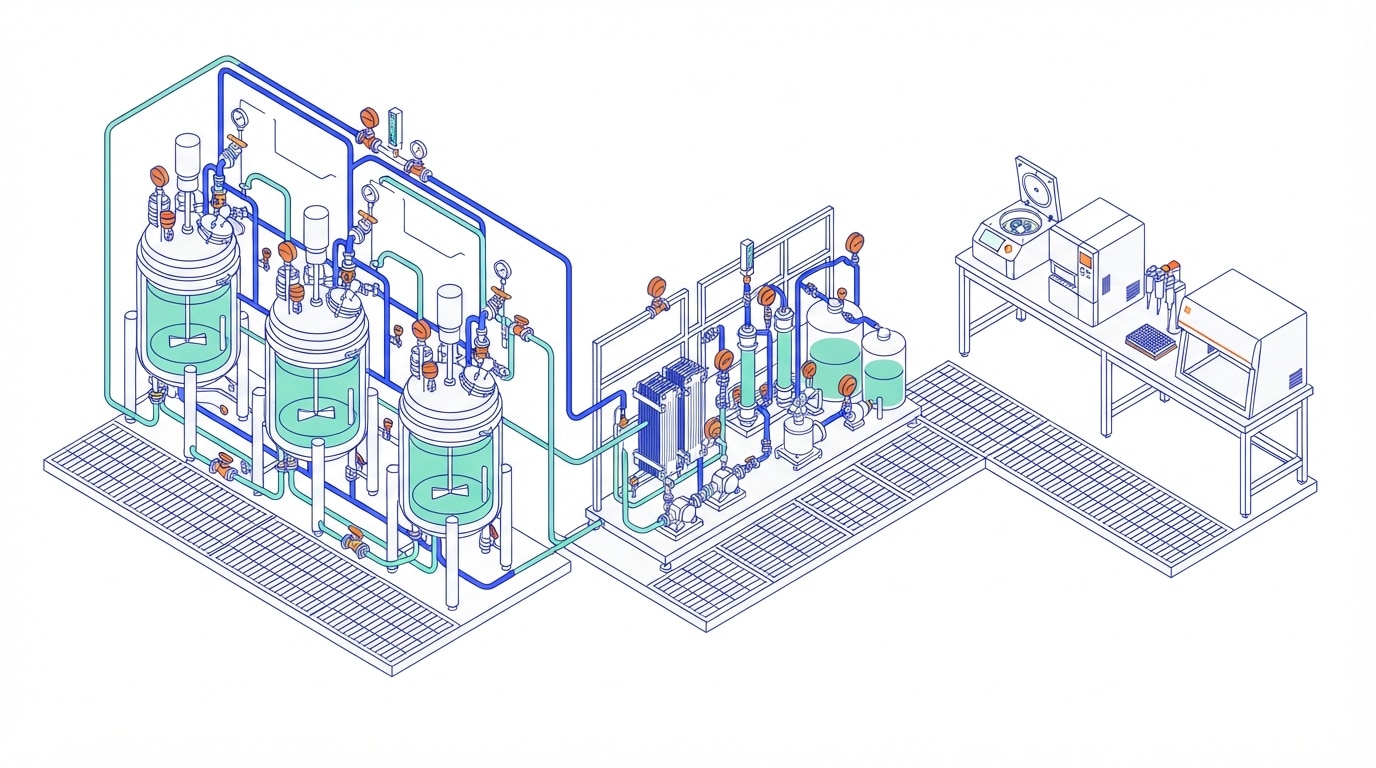
Minaris, a cell and gene therapy (CGT) contract development and manufacturing organization (CDMO) and contract testing company, announced on 29 September 2026 that it is adding a dedicated Viral Vectors business unit. The company now operates through three units: Cell Therapies, Viral Vectors and Advanced Testing. According to the release, the new model is effective October 1, 2026, so it is already in force. This is an organizational change, and the release does not announce new capacity or new equipment.
The three units
- Minaris Cell Therapies covers autologous and allogeneic programs. The release cites 25+ years of cell therapy development and manufacturing. Services run from process development and technology transfer to current good manufacturing practice (GMP) manufacturing, quality systems, and scale-up or scale-out strategies, supported by sites in the US, Europe and Asia.
- Minaris Viral Vectors covers viral vector technologies, development and manufacturing for gene therapy and genetically modified cell therapy programs, including in vivo lentiviral programs. The release cites 10+ years of experience in viral vector process and analytical development, technology transfer, GMP manufacturing and scalable production strategies. It uses a portfolio of plasmids and cell lines developed through OXGENE.
- Minaris Advanced Testing provides GMP biosafety, viral clearance, potency and analytical testing for biologics, vaccines and advanced therapies. The release cites 40 years of experience.
Viral vector CDMO services are centralized at the Philadelphia site, while OXGENE is based in the UK. Customers may engage with one unit or several, depending on program needs.
The company’s stated reasons for the change
The release says the industry is expanding toward in vivo gene therapies, which require viral vector development, scalable manufacturing strategies, analytical and biosafety testing, and a strong quality and regulatory mindset. It says the structure is designed to strengthen customer engagement, accelerate decision making and support more efficient execution across the company’s global network. The release gives no metrics, such as lead times or capacity, to measure those aims against.
For context, the release states that Minaris was formed through the 2025 acquisitions of Minaris Regenerative Medicine and WuXi Advanced Therapies (formerly the WuXi AppTec Philadelphia site) by the US private equity firm Altaris.
What it means for a plant
For sponsors who outsource vector manufacturing, the release points to a single viral vector unit with its own leadership, with its CDMO services centralized at the Philadelphia site. Process development, technology transfer, GMP manufacturing and plasmid and cell line technology sit under that unit, with testing as a separate unit that can be engaged alongside it. The release does not say whether contracts, quality systems or lead times change. Teams with active programs at Minaris should ask which unit holds their agreements and how testing is scheduled across units.