Primary source Khanal and Lenhoff, MAbs: Developments and opportunities in continuous biopharmaceutical manufacturing
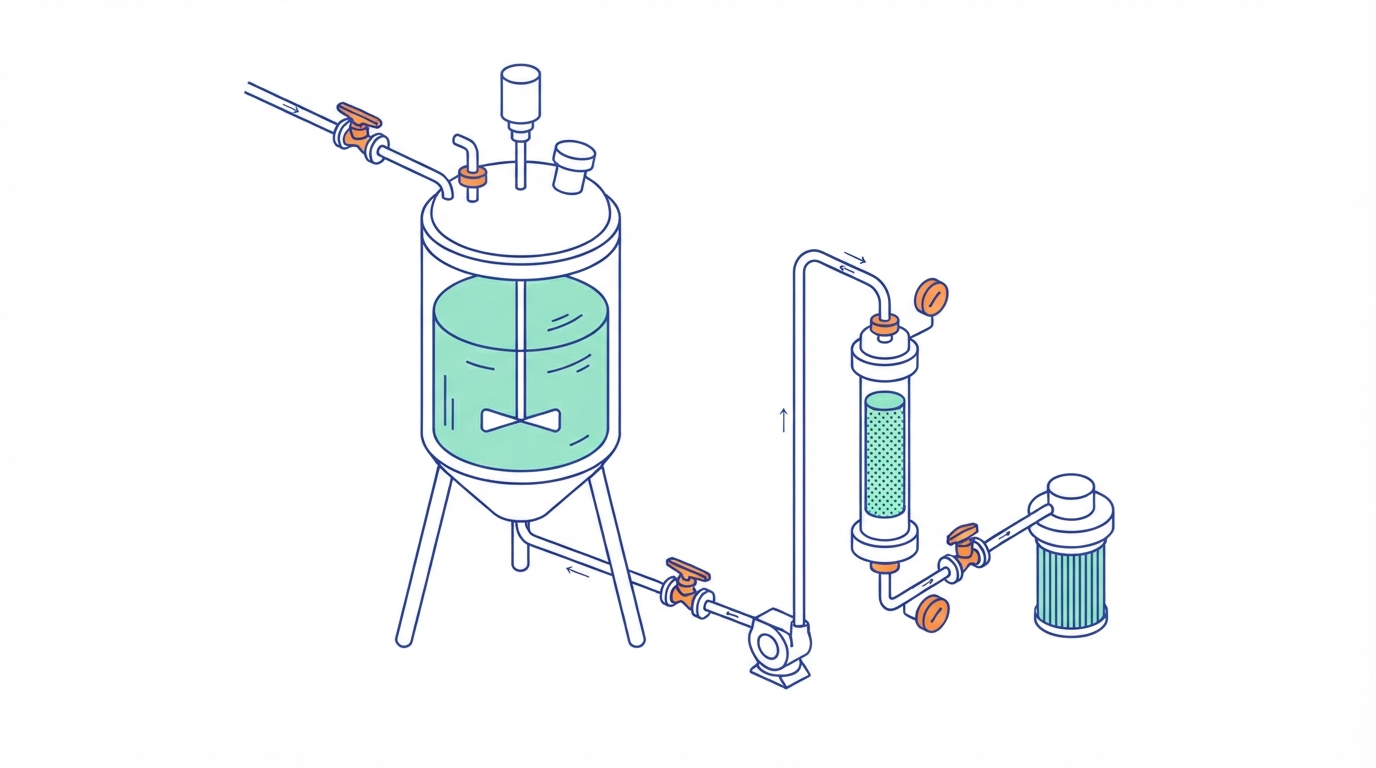
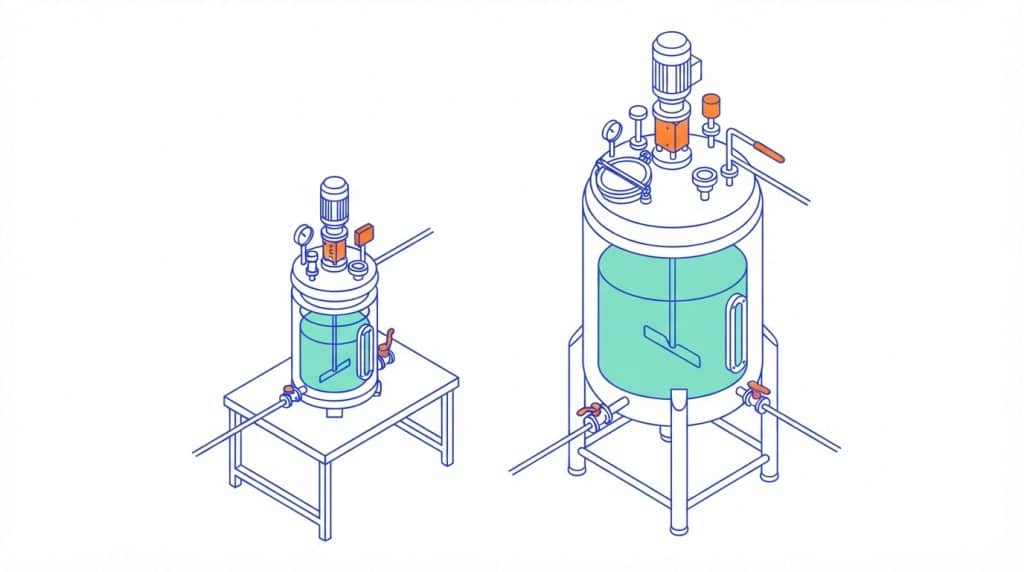
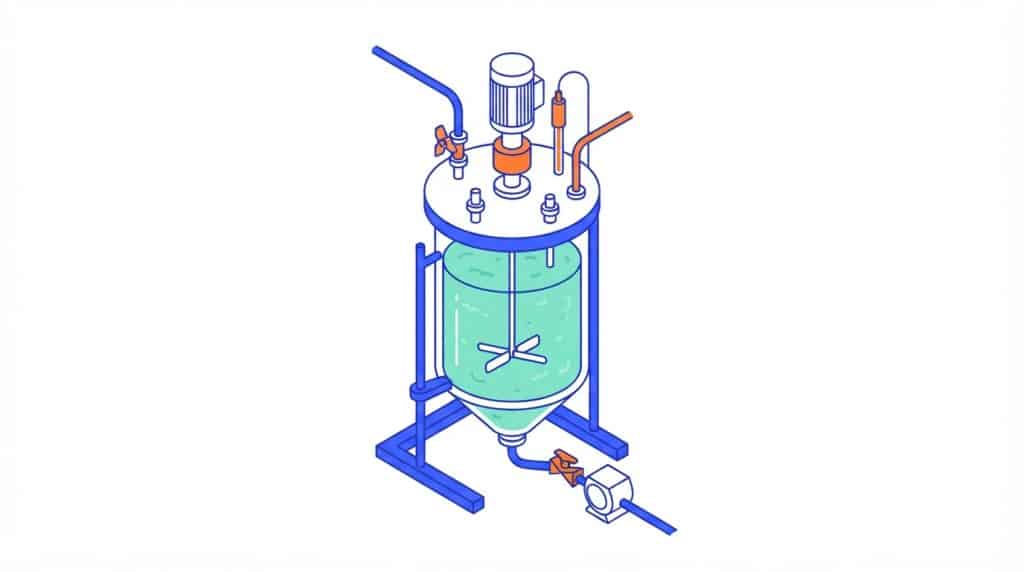
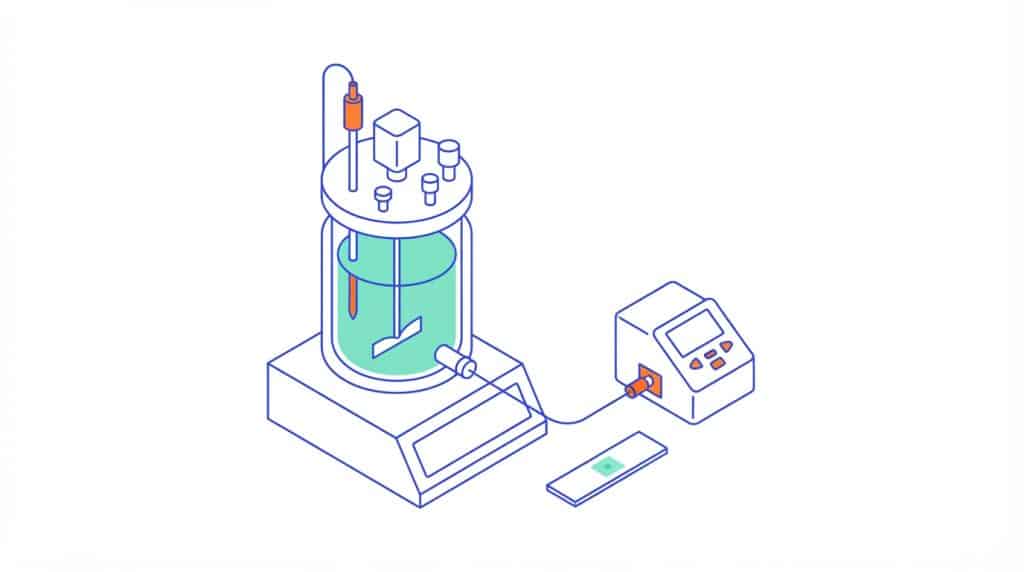
Upstream processing makes the product: cells grow in a bioreactor (a controlled tank) on a nutrient medium and produce the target molecule. Downstream processing recovers that product from the tank and purifies it, using harvest, chromatography and filtration.
Where the split is
The Food Standards Agency’s 2026 review of precision fermentation lists the upstream steps as preparing the growth medium, growing a small starter culture (the inoculum), sterilising the bioreactor and associated equipment, combining the starter culture with sterile medium and starting production. Upstream ends when the broth is harvested and handed to downstream.
Downstream then separates the product from everything else in the broth. For monoclonal antibodies (mAbs, antibody proteins made in animal cells), the typical sequence is: Protein A chromatography, where a column of resin captures the antibody while other proteins flow through; a low-pH hold that inactivates viruses; one or more polishing chromatography steps; a viral filtration step; and a final ultrafiltration/diafiltration step. The steps run one after another.
Why both matter for cost
Upstream sets how much product each litre of broth contains (the titre). In fed-batch culture, where nutrients are added during the run, improvements in cell lines, media and bioreactor design and control raised titres from about 1 to 2 g/L to about 9 to 10 g/L over a 14 to 18 day culture, according to the 2021 MAbs review.
Downstream has not kept pace: purification productivity has not kept up with the rise in titre, which makes purification a potential bottleneck. In mAb purification, Protein A chromatography is the costliest step.
The choice of production host links the two sides. In precision fermentation, the FSA review notes, hosts that secrete the protein into the culture medium, such as the yeast Komagataella phaffii and the fungus Aspergillus niger, simplify downstream processing and reduce purification costs. The trade-off is that filamentous fungi grow more slowly, which increases bioreactor residence time and tank size requirements. Some filamentous fungi also release proteases (enzymes that break down proteins) that can degrade the target product.