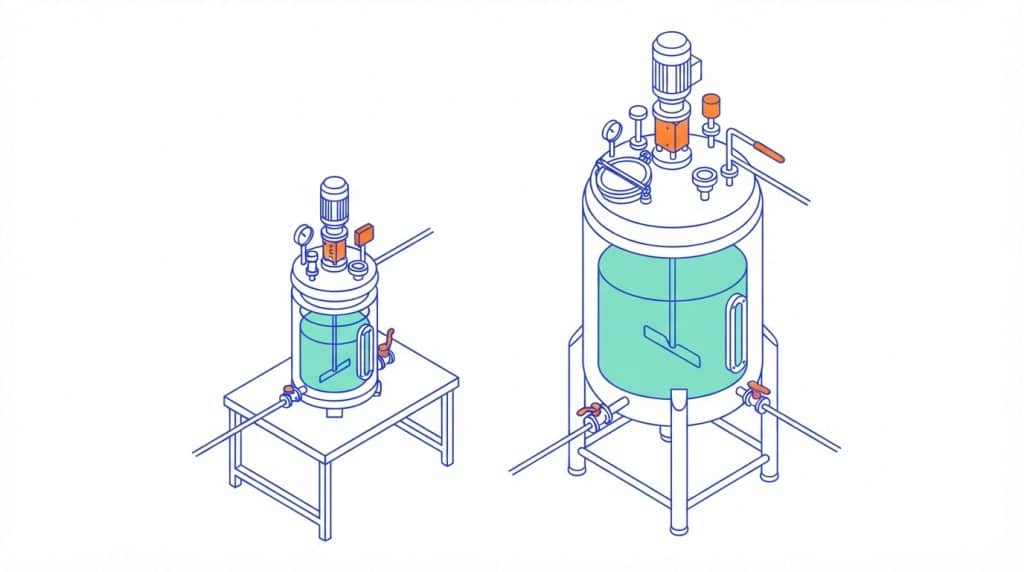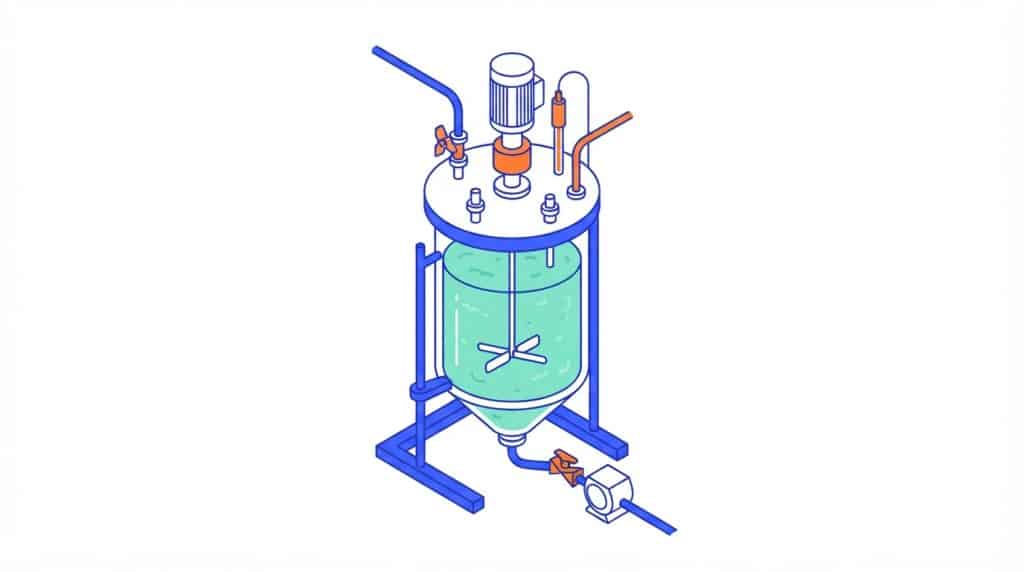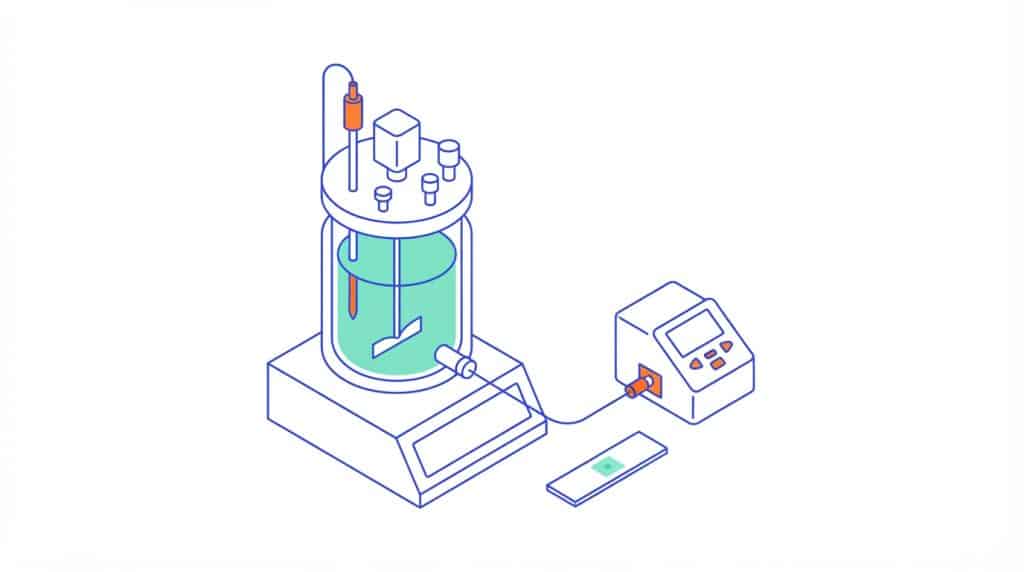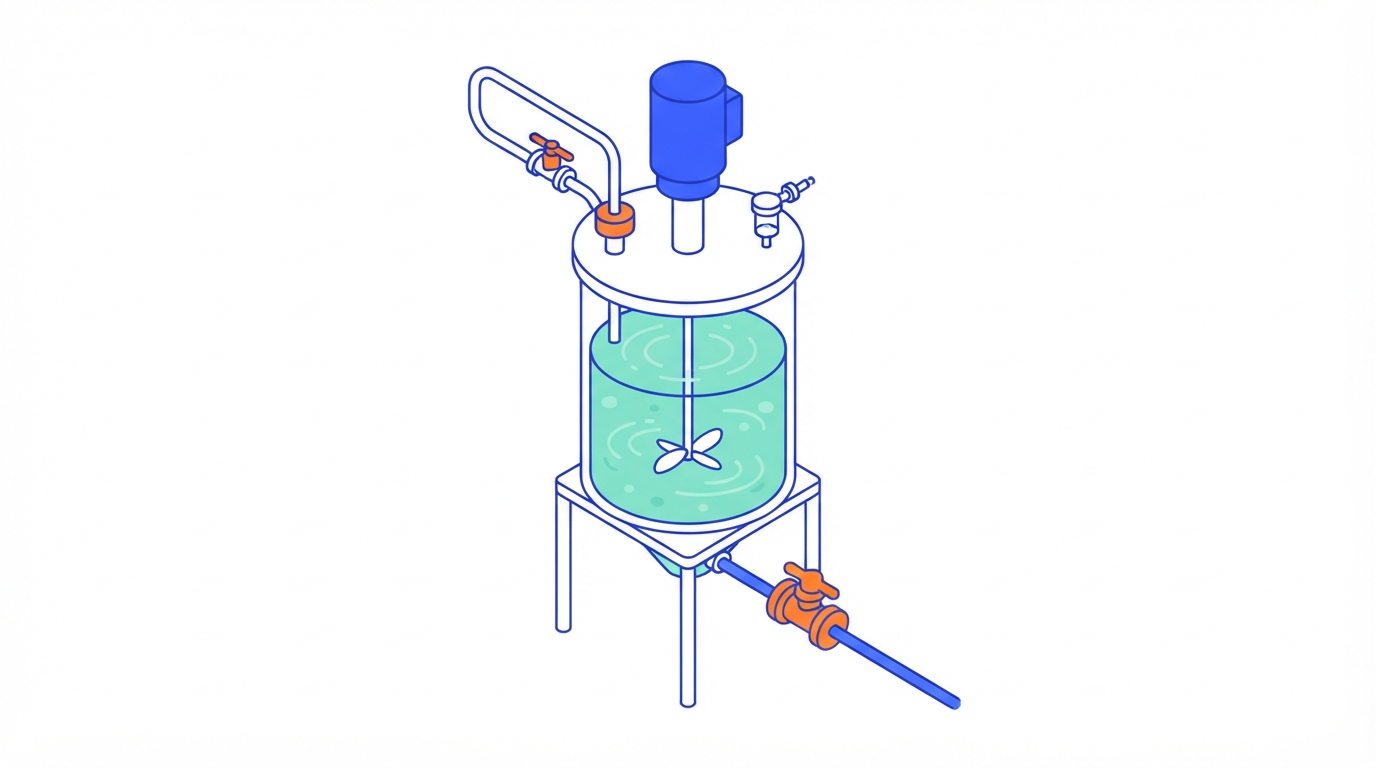
In recombinant protein production, a bioreactor is a tank in which living cells are grown to make a target protein whose gene has been added to them. The three main kinds of cell, called hosts, are bacteria such as E. coli, yeasts such as Pichia pastoris, and mammalian cell lines, and the host shapes which proteins you can make and how.
Three hosts, three strengths
Bacteria (E. coli). E. coli is quick and inexpensive to culture. Its weak point is proteins from higher organisms: they often end up as inclusion bodies (dense clumps of misfolded protein inside the cell) or at low specific yield (little product per cell). E. coli also cannot yet add the authentic post-translational modifications of higher organisms, meaning the chemical decorations a cell attaches to a protein after building it.
Yeasts (Pichia pastoris, Saccharomyces cerevisiae). Yeasts are single-celled fungi. They grow an order of magnitude (about ten times) faster than mammalian cell lines. P. pastoris reaches high biomass, and so high protein yield, with relative ease. A 2020 review adds that it secretes the protein into the surrounding liquid and makes few secreted proteins of its own, so purification is easy. The catch is that yeasts tend to hyperglycosylate, meaning they attach too many sugar chains, although P. pastoris does this less elaborately than S. cerevisiae.
Mammalian cell lines. Their main advantage is that the sugar chains they attach to a protein (glycosylation) are authentic, which no other host matches. The costs are that specific yields are often low and that they grow far more slowly than yeast.
Why host choice matters
According to the 2014 review, about 50% of the biopharmaceutical proteins approved by the US FDA (more than 150 at the time) are made in mammalian cell lines (and hybridomas, a related antibody-producing cell type), 30% in E. coli and 20% in yeasts. No host suits every protein, and it is not yet possible to predict which will give the highest yield of working protein. Conditions are not fixed within one host either: for P. pastoris, a 2020 review says methanol and sorbitol concentration, temperature and incubation time must be tuned for each target protein.
Sources
- Bill RM, Frontiers in Microbiology, Playing catch-up with Escherichia coli: using yeast to increase success rates in recombinant protein production experiments, 5 Mar 2014.
- Karbalaei M et al., Journal of Cellular Physiology, Pichia pastoris: A highly successful expression system for optimal synthesis of heterologous proteins, Sep 2020.