Primary source Frontiers in Bioengineering and Biotechnology: HEK293 Cell Line as a Platform to Produce Recombinant Proteins and Viral Vectors
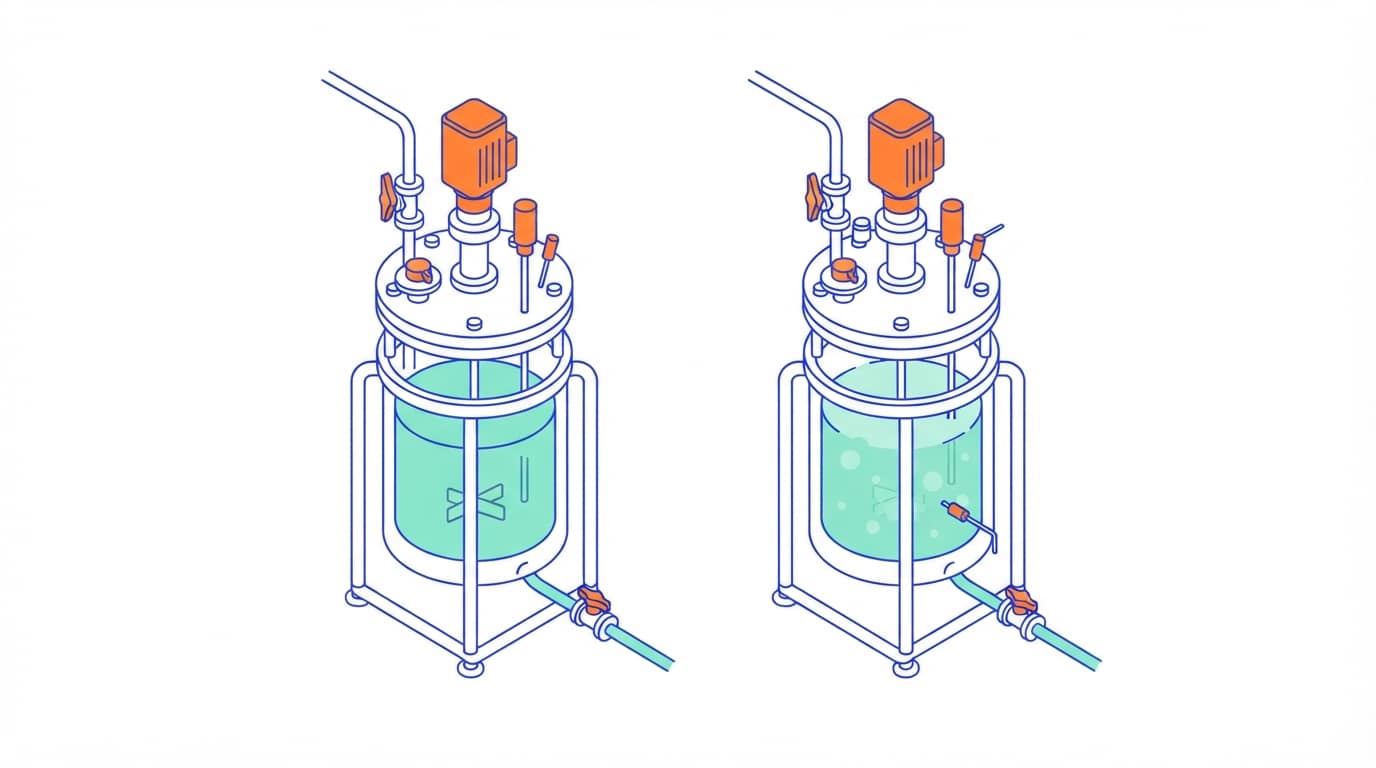
CHO (Chinese hamster ovary) cells make about 70% of recombinant biologics, especially monoclonal antibodies. HEK293 (human embryonic kidney) cells are the choice when a protein needs human-type modifications or when the product is a viral vector.
Two hosts, one basic job
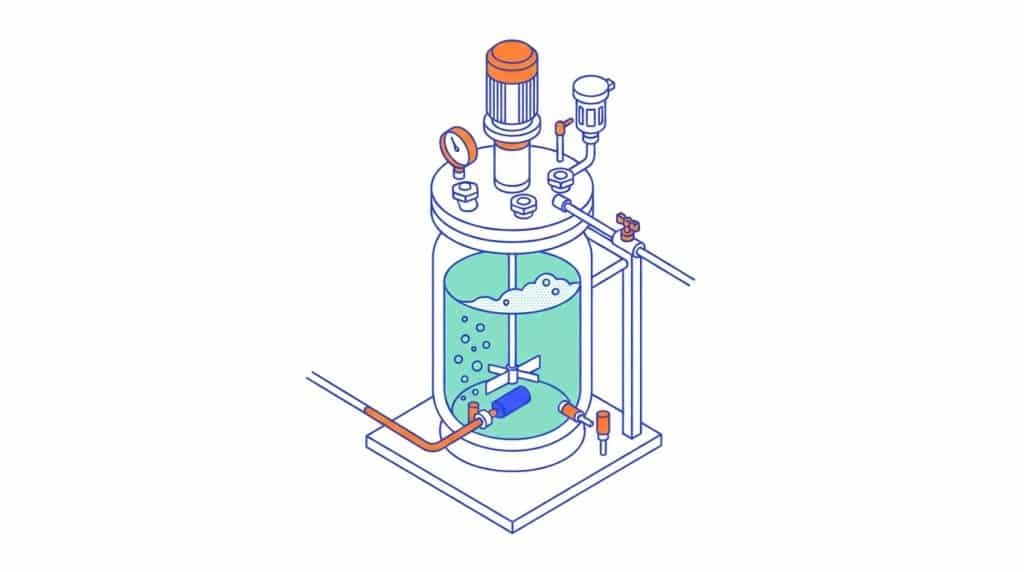
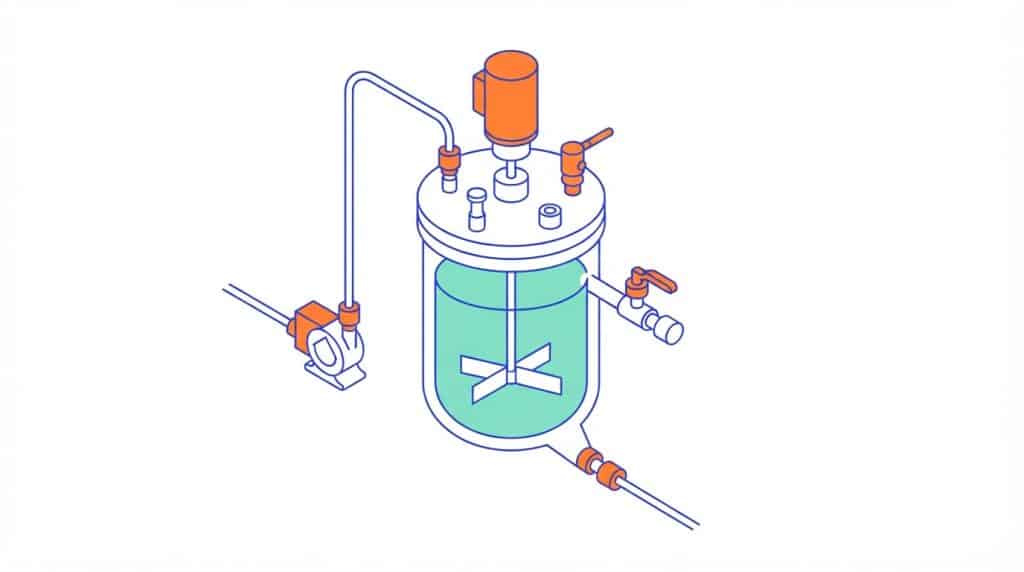
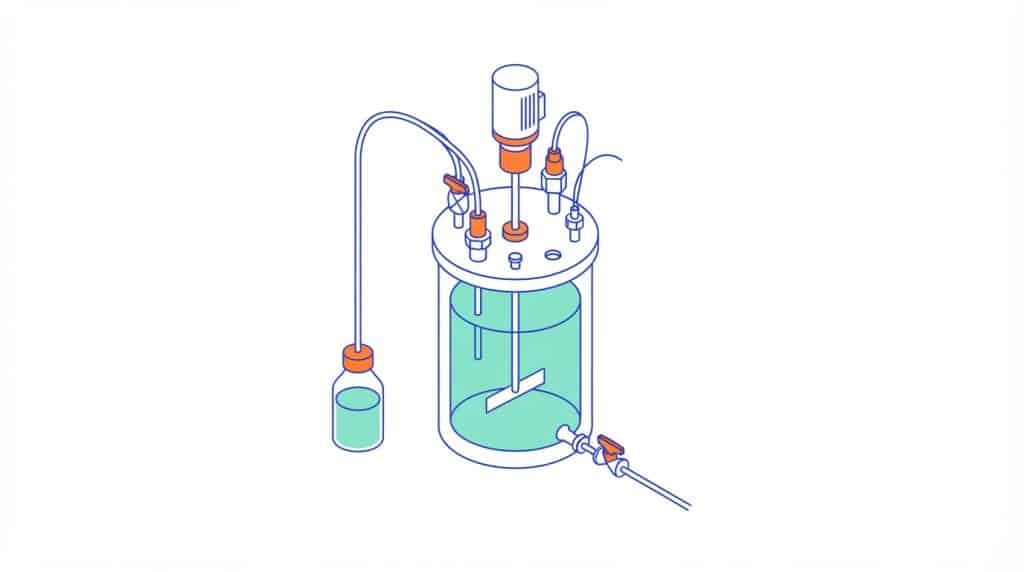
Both lines are mammalian cells that you grow in a stirred tank. Both can grow in suspension (floating freely in the liquid) in serum-free, chemically defined medium. You add a gene for the product, the cells make it, and you harvest it. Mammalian cells are used because complex products such as antibodies, growth factors and clotting factors need post-translational modifications (PTMs, chemical changes the cell makes to a protein after it is built, such as adding sugar chains) to stay stable and potent.
CHO is the established workhorse. For more background, see What are CHO cells and why do antibodies come from them? HEK293 was created by transforming human embryonic kidney cells with DNA from adenovirus type 5, and it is the most widely used human cell line for this work.
Driver 1: the sugars on the protein
The sugar pattern on a protein is called its glycosylation. Because CHO is a hamster cell, it does not make every human sugar structure. It lacks several enzymes that human cells have, and it makes a sugar called N-glycolylneuraminic acid (Neu5Gc), which is potentially immunogenic (it can provoke an immune reaction). HEK293 is human, so it avoids these non-human sugars.
HEK293 also has a greater capacity than CHO for two modifications, gamma-carboxylation of glutamic acid and sulfation of tyrosine, which some therapeutic glycoproteins need. A recombinant factor VIII (a blood clotting protein) made in HEK293 cells is completely sulfated and has no Neu5Gc, unlike versions made in CHO or hamster kidney cells.
This advantage is narrow, though. Most complex recombinant glycoproteins are still made in CHO. CHO cells can also be engineered, by adding human enzymes or knocking out enzymes humans lack, to get closer to human glycosylation. The review’s authors expect this to reduce the use of HEK293 for therapeutic proteins.
Driver 2: viral vectors
A viral vector is a virus particle used as a delivery vehicle for a gene. This is where HEK293 is hard to replace. Most therapeutic viral vectors are produced in HEK293. The cells carry adenoviral E1A and E1B genes, which supply helper functions that adeno-associated virus (AAV) and adenoviral vector production need. For retroviral vectors, including lentiviral vectors, the HEK293T variant is used because it expresses the SV40 large T-antigen, a viral protein that helps plasmids replicate inside the cell.
Here the process looks different from an antibody run. Instead of a stable cell line that makes the product continuously, vectors are often made by transient transfection, meaning you introduce plasmids (small circular DNA carrying the genes) into the cells for a short production window. AAV typically needs three plasmids. Lentiviral vector production widely uses four, because some lentiviral genes are toxic to the cells and so stable producer lines are hard to build.
That has a cost. Transfection-grade DNA and reagents are expensive, and short production periods and batch-to-batch variability make it hard to get consistent high-titer vector.
A worked example: the time to build a stable lentiviral line
Stable producer lines would remove the repeated transfection step, so effort goes into them. One approach cut the time to generate and identify stable producing clones from about 6 months to approximately 4 months, by transfecting a single DNA construct that carries all the lentiviral vector components. For a plant, that is two months of cell line development that no longer sit between a decision and a first batch. It also shows why vector processes are still less settled than antibody processes.
Driver 3: how the cells grow
Adherent cells grow attached to a surface, and suspension cells float in the medium. Adherent culture has traditionally been used for viruses such as AAV and lentivirus, and some steps, such as chemical transfection and viral infection, are more efficient that way. But scaling up from flasks is time consuming, labour intensive and needs large workspaces. Suspension lets you reach a high cell density in a bioreactor without cell clumps, and clumps cause oxygen limitation. See What is kLa and why does oxygen transfer limit a bioreactor? Serum-free suspension processes for HEK293 now show volumetric productivities comparable to adherent ones, which is why vector production is moving to suspension. For the broader picture of what cells need in the tank, see What grows in a bioreactor?
Sources
- Tan E, Chin CSH, Lim ZFS, Ng SK, HEK293 Cell Line as a Platform to Produce Recombinant Proteins and Viral Vectors, Frontiers in Bioengineering and Biotechnology, accepted 25 Nov 2021.
- Malm M et al., Evolution from adherent to suspension: systems biology of HEK293 cell line development, Scientific Reports, accepted 22 Oct 2020.