Primary source Rosano and Ceccarelli, Frontiers in Microbiology: Recombinant protein expression in Escherichia coli: advances and challenges
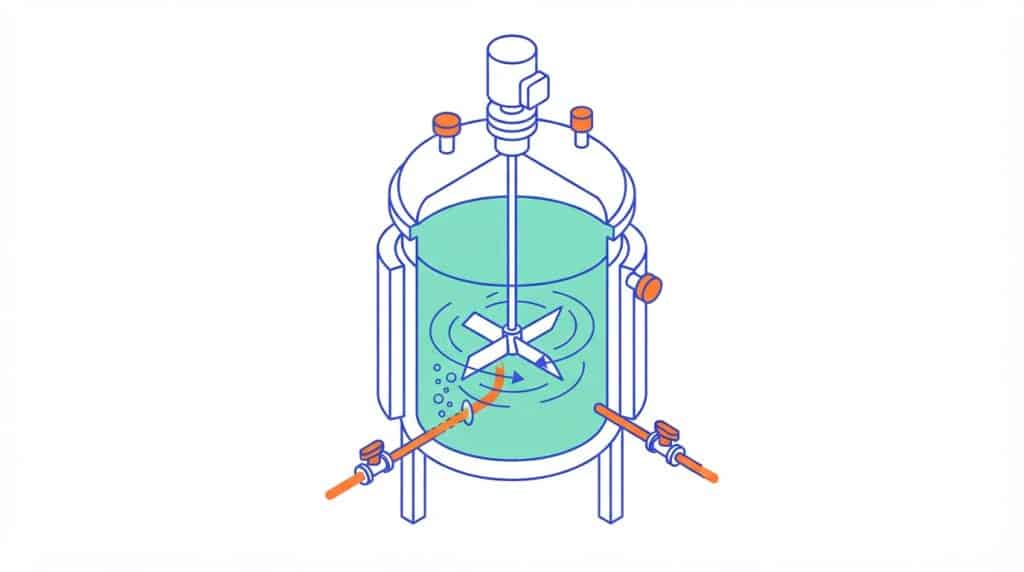
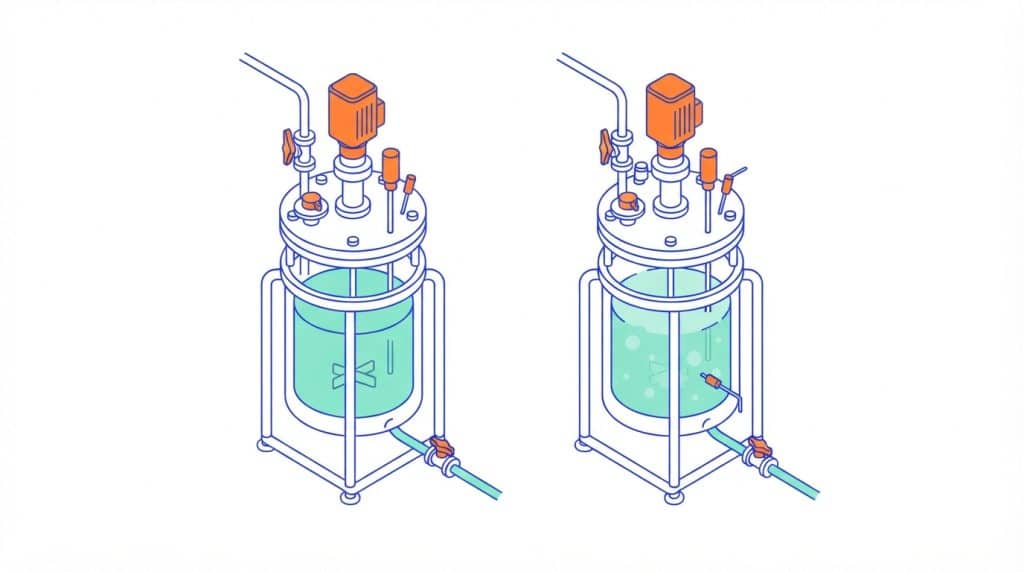
E. coli, a gut bacterium that is the most popular host for making recombinant proteins (proteins made by a gene inserted into a host organism), wins on speed: it doubles in about 20 minutes, reaches very high cell density and lives on cheap medium. Its limits are biological: it is a bacterium, so it cannot add the sugar chains that some proteins need, and some proteins come out misfolded.
What E. coli does well
Growth speed comes first. In a simple glucose-and-salts medium under optimal conditions, E. coli doubles about every 20 minutes. A culture started from a small dilution of a saturated starter culture can reach stationary phase (the point where growth stops) in a few hours. Making the recombinant protein puts a metabolic burden on the cell and can slow this down considerably.
Density is second. The theoretical limit of an E. coli liquid culture is estimated at about 200 g of dry cell weight per litre. A plain laboratory batch in LB (a standard rich lab medium) tops out below 1 x 10¹⁰ cells per mL, under 0.1% of that limit. That gap is why high-cell-density methods exist.
Cost and handling are third. Rich media can be made from inexpensive, readily available components. Putting a new gene into the cell by plasmid transformation (a plasmid is a small circular piece of DNA the cell carries) can take as little as 5 minutes. There is also a large catalogue of ready-made plasmids and engineered strains. With the strong T7 promoter system (a genetic switch that drives very high expression), the target protein can reach 50% of the total cell protein in successful cases.
What E. coli cannot do
If a protein needs eukaryotic post-translational modifications, such as glycosylation (attaching sugar chains), a prokaryotic host like E. coli may not be suitable. That is the main reason many therapeutic antibodies come from mammalian cells instead (see What are CHO cells and why do antibodies come from them?). Folding is the other risk. Poor growth of the host, inclusion body formation (the protein piles up as insoluble clumps inside the cell), inactive protein, or no protein at all are common problems. In one report using a cold-inducible system, several target proteins were obtained in an insoluble form. Fast and cheap does not mean the protein is correct.
How high-cell-density fed-batch is run
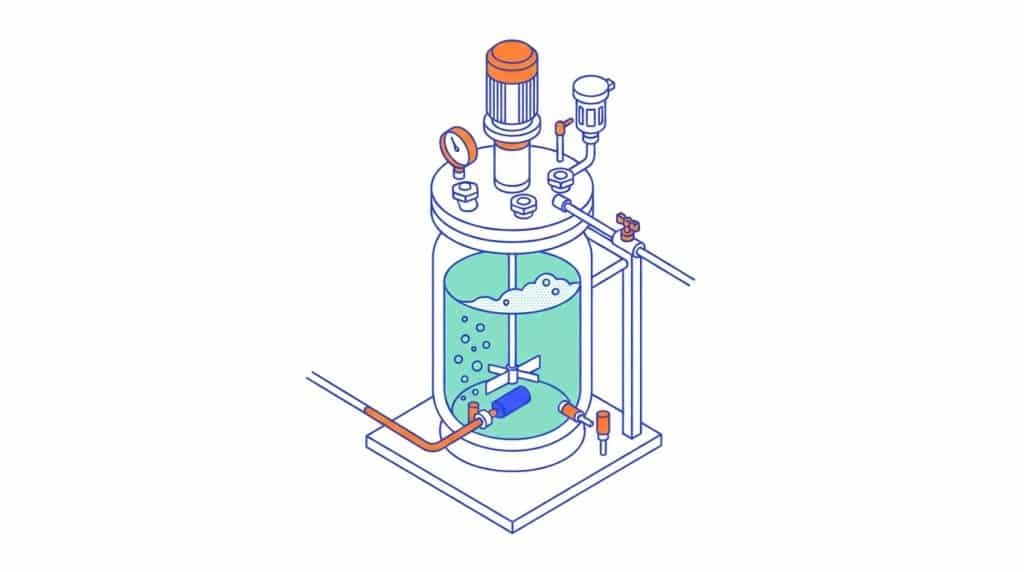
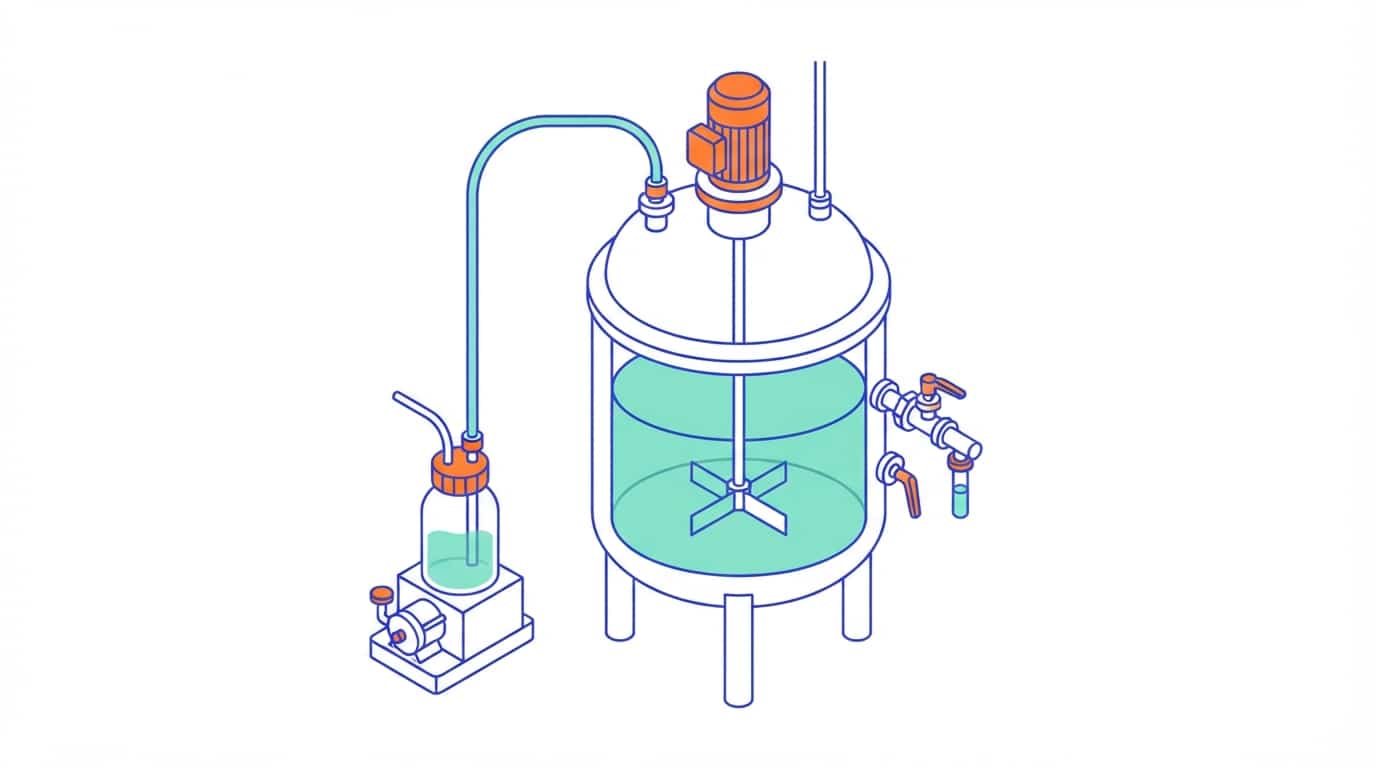
The idea is to keep the cells hungry on purpose. Dense, fast-growing E. coli uses a lot of oxygen, and the bioreactor’s oxygen transfer rate sets the maximum biomass (see What is kLa and why does oxygen transfer limit a bioreactor?). Oxygen limitation in such cultures is generally circumvented by fed-batch: the oxygen uptake of the culture follows how fast it consumes its carbon source, so adding that source slowly caps the oxygen demand. A carbon-limited feed also avoids overflow metabolism (wasteful by-product formation) and the acidification of the medium that comes with it. For the basic difference between modes, see Batch, fed-batch and continuous culture.
A 2010 peer-reviewed study (Glazyrina et al., BMC, with authors from a university and a bioreactor vendor) shows the sequence in a 4 L culture in a single-use rocking bag:
- Start with a batch phase on a medium containing only 10 g/L of glucose, so oxygen transfer can support fully aerobic growth.
- When that glucose is used up (after 13.5 hours), start feeding a concentrated glucose solution (660 g/L).
- Raise the feed rate exponentially over time, to hold a specific growth rate (the fraction of the culture’s biomass added per hour) of 0.13 per hour.
- As oxygen demand rises, increase airflow, then add pulses of pure oxygen to hold dissolved oxygen at 50%.
The feed is so concentrated that the volume grew by only about 150 mL, under 5%.
A worked example with numbers
Optical density at 600 nm (OD600) is a quick light-absorbance reading of how cloudy the culture is. In the study, an uncontrolled batch in the rocking bag reached an OD600 of 3 to 4, similar to a shake flask, and ran into oxygen limitation. With oxygen pulsing, a batch reached an OD600 of 18. The glucose-limited fed-batch reached an OD600 of 60, which the authors equate to 20 g/L of cell dry weight.
Efficiency moved too. Biomass yield on glucose (grams of dry cells made per gram of glucose) was about 0.16 for the batch in the bag and 0.52 for the fed-batch. Same bacterium, same sugar: the feeding strategy roughly tripled the cells made per gram of glucose.
Sources
- Rosano GL, Ceccarelli EA, Frontiers in Microbiology, Recombinant protein expression in Escherichia coli: advances and challenges, 2014.
- Glazyrina J et al., Microbial Cell Factories, High cell density cultivation and recombinant protein production with Escherichia coli in a rocking-motion-type bioreactor, 2010.